



What Is the Most Expensive Part of a Kitchen Renovation? A Complete Budget Guide for Singapore Homeowners
Cabinets are the most expensive part of a kitchen renovation, typically accounting for 25% to 40% of your total project budget. In higher-end renovations, cabinetry costs can climb above 40% of the overall spend. For Singaporean homeowners, where humidity, compact layouts, and long-term durability matter, the material and construction quality of your cabinets is the single biggest driver of cost.

Key Takeaways
- Cabinetry is the most expensive component of any kitchen renovation, consistently taking up 25% to 40% of the total budget across all project tiers.
- Labour costs represent approximately 17% of a kitchen renovation budget, making skilled installation the second-largest single expense you will face.
- Appliances, countertops, and flooring follow cabinetry in cost significance, typically accounting for 14%, 10%, and 7% of the budget respectively.
- Material choice for cabinets has the greatest single impact on your final bill, with options ranging from budget stock units to fully custom aluminium or hardwood cabinetry.
- In Singapore’s humid climate, material durability is a cost factor unique to local homeowners, as moisture damage to poor-quality cabinets can lead to expensive replacements within five to ten years.
- Planning your cabinetry budget first gives you the most control, because all other kitchen elements are sized and priced around the cabinet layout.
Why Are Kitchen Cabinets the Most Expensive Part of a Renovation?
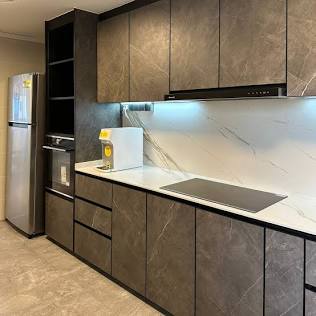
Kitchen cabinetry is the renovation component that commands the largest share of your budget because it combines skilled craftsmanship, significant material volume, and custom sizing into a single line item. Unlike a single appliance purchase, cabinets must cover every wall, wrap every corner, and be built to exact measurements for your specific kitchen. This scope of work, measured in linear metres rather than individual units, adds up faster than most homeowners anticipate.
The National Kitchen and Bath Association (NKBA), a not-for-profit trade association representing tens of thousands of industry professionals, confirms that cabinetry accounts for 25% to 35% of a full kitchen project budget in standard renovations. In premium or fully custom kitchens, that proportion regularly exceeds 40%. The reason is straightforward: you are essentially purchasing the structural skeleton of the entire kitchen.
Cabinet costs are also highly variable depending on the construction method you choose. A stock, flat-pack cabinet system costs a fraction of a semi-custom or fully custom unit built to your precise specifications. The difference in price reflects differences in material thickness, joinery quality, hardware specification, and the number of labour hours required to fabricate and install each piece.
The key point is that cabinetry sets the visual tone, functional layout, and durability benchmark for your entire kitchen, which is why it justifiably receives the largest portion of your renovation budget.
How Does the Full Kitchen Renovation Budget Break Down?
A kitchen renovation budget is a collection of interconnected line items, each competing for a fixed total. Understanding each category helps you allocate funds with confidence rather than guessing after quotes arrive.
The proportional breakdown below is drawn from NKBA guidelines and industry-wide modelling. These percentages apply to full kitchen renovations across a range of project sizes.
| Budget Category | Typical Percentage of Total Budget |
|---|---|
| Cabinetry and hardware | 25% to 40% |
| Labour and installation | 15% to 20% |
| Appliances | 12% to 15% |
| Countertops | 8% to 12% |
| Flooring | 6% to 8% |
| Plumbing and fixtures | 4% to 7% |
| Lighting and electrical | 4% to 6% |
| Painting and finishing | 2% to 5% |
| Contingency buffer | 10% to 15% |
Every budget category interacts with your cabinetry choice. A higher-specification cabinet package often requires more precise installation, which drives up your labour figure as well. The bottom line is that decisions you make about cabinetry create a ripple effect across nearly every other line item in your renovation.
What Makes Labour the Second-Biggest Kitchen Renovation Cost?

Labour is the second-largest expense in a kitchen renovation because skilled tradespeople, including carpenters, electricians, tilers, and plumbers, charge for both their time and their expertise. The NKBA identifies 17% as the median labour allocation within a kitchen renovation budget. In Singapore, where the cost of skilled trades reflects a tight labour market, this figure can sit at the higher end or slightly above the global median.
Labour costs cover more than the physical installation of units. Preparation work, waterproofing, hacking of existing fixtures, disposal of old materials, and finishing touches all contribute to your final labour bill. For HDB flats and condominiums in Singapore, additional compliance requirements around noise control and working hours can also affect the total number of billable days on site.
Choosing a contractor who supplies both the cabinetry and the installation service is one way to keep labour costs predictable. When the fabricator and the installer are the same company, there is less room for miscommunication about specifications, which reduces costly remedial work. The key point is that labour is not a fixed cost: it scales with the complexity of your cabinet design, the condition of your existing kitchen, and the level of finish you require.
How Do Appliances, Countertops, and Flooring Add to Your Budget?
Appliances, countertops, and flooring are the next three most significant cost categories after cabinetry and labour. Together they can account for 25% to 35% of your total renovation spend, depending on the brands and materials you select.
Appliances typically represent 12% to 15% of a kitchen renovation budget. The wide price range for appliances is driven by brand, energy efficiency ratings, and integrated versus freestanding design. Built-in appliances, such as concealed refrigerators and integrated dishwashers, command a premium because they require precise cabinet openings and additional installation complexity.
Countertops account for roughly 8% to 12% of your budget. Material choice is the main variable: engineered quartz, natural granite, solid surface, and sintered stone all carry different price points. In Singapore, quartz and sintered stone are particularly popular because they resist humidity and heat without requiring the sealing maintenance that natural stone demands.
Flooring represents approximately 6% to 8% of a kitchen renovation budget. Porcelain tiles are the standard choice in Singaporean kitchens due to their durability and ease of cleaning. Large-format tiles add material and labour costs because they require more precise levelling during installation. The bottom line is that appliances, countertops, and flooring are three areas where you can make meaningful savings without compromising structural quality, unlike cabinetry, where cutting corners typically shortens the lifespan of your entire kitchen.
Why Does Material Choice Matter More in Singapore Than in Other Markets?
Budgeting a kitchen renovation effectively requires a structured approach that starts with your total available spend and works downward through each cost category.
The following 10 process gives you a reliable framework before you speak with any contractor or supplier.
- Set your total budget ceiling first. Decide the maximum you are willing to spend before receiving any quotes. This prevents scope creep during the design phase.
- Allocate 30% to 40% of your total budget to cabinetry. This is your largest single expense. Research material options, including aluminium, solid timber, and laminate finishes, before deciding.
- Reserve 15% to 20% for labour and installation. Obtain at least three quotes and confirm whether each quote includes hacking, disposal, and finishing work.
- Budget 12% to 15% for appliances. Decide early whether you want integrated or freestanding appliances, as this affects your cabinet design and associated costs.
- Allocate 8% to 12% for countertops. Visit material showrooms in person to assess thickness, edge profiles, and finish quality before committing.
- Set aside 6% to 8% for flooring. Confirm whether your existing floor screed is level, as remediation adds to this figure.
- Include 4% to 7% for plumbing. Factor in any changes to sink position, tap selection, and water filtration if required.
- Hold a 10% to 15% contingency reserve. Unexpected structural issues, delayed materials, and design changes are common in any renovation project.
- Request itemised quotes. Never accept a single lump-sum quote without a line-by-line breakdown that matches your budget categories.
- Finalise your design before works begin. Late design changes are the most common cause of budget overruns in kitchen renovations.
The bottom line is that a disciplined budgeting process, completed before you visit any showroom, puts you in control of every conversation with contractors and suppliers.
How Can You Manage Costs Without Compromising Quality?
Cost management in a kitchen renovation is about identifying where quality directly affects longevity and where you can make practical savings without consequence. Not all budget categories carry equal risk if you choose a lower specification.
Areas where quality should not be compromised include:
- Cabinet construction and material. Inferior materials fail faster in Singapore’s climate, leading to full replacement costs within a few years.
- Waterproofing and hacking work. Poor waterproofing behind wet areas causes damage that is far more expensive to remedy than the cost of doing it correctly the first time.
- Electrical and plumbing installation. Qualified tradespeople working to BCA standards protect both your safety and your property’s resale value.
Areas where practical savings are more achievable include:
- Appliance brands. Mid-tier brands from reputable manufacturers often deliver comparable performance to premium brands at significantly lower price points.
- Countertop material. Engineered quartz offers excellent durability at a lower price than premium natural stone, with less maintenance required.
- Decorative lighting. Pendant lights and decorative fixtures can be upgraded later without disrupting the kitchen’s function or structure.
Working with a specialist who handles both design and fabrication, rather than coordinating multiple separate contractors, is another effective way to control costs. T Se7en Alucraft offers custom aluminium kitchen cabinets designed and built for Singapore homes, combining material durability with a single point of accountability for your project.
The key point is that cost management is not about spending less across the board: it is about spending wisely on the components that affect longevity and redirecting savings toward areas where the trade-off is genuinely low risk.
What Should You Know Before Starting a Kitchen Renovation in Singapore?
Before committing to any renovation contract in Singapore, there are practical and regulatory considerations that directly affect your budget and timeline. Being informed at this stage prevents costly surprises during the project.
In HDB flats, renovation works are governed by the Housing and Development Board’s renovation guidelines. These cover permitted working hours, the types of structural changes allowed, and requirements for appointing licensed contractors. Condominium renovations are additionally subject to management corporation (MCST) rules, which vary by development and may require prior written approval before works begin.
You should also confirm whether your kitchen renovation triggers any requirements under the Building and Construction Authority (BCA) framework, particularly if you are changing load-bearing walls or relocating plumbing stacks. Your contractor should be able to advise on this, but the responsibility for compliance ultimately rests with the homeowner. The key point is that regulatory compliance is not an optional extra in Singapore: it is a cost and timeline factor that must be built into your planning from the very beginning.
What Is the Bottom Line on Kitchen Renovation Costs?
Planning a kitchen renovation in Singapore requires a clear understanding of where your budget will be spent before you sign any agreement. Cabinetry is the most expensive single component, and the decisions you make at that stage cascade across labour, layout, and every other cost category.
In Singapore’s climate, material durability is not a secondary consideration: it is a financial one. Choosing materials that withstand year-round humidity, such as aluminium cabinet construction, reduces the likelihood of premature failure and the repeat renovation costs that come with it. A well-planned kitchen, built with the right materials and the right specialist, is a long-term investment rather than a recurring expense.
The bottom line: cabinets are the most expensive part of a kitchen renovation, accounting for 25% to 40% of your total budget, and choosing the right material and contractor for that single component is the most important financial decision you will make for your entire project.
About the Author
Yuefung Tan, Creative Voice and Interior Design Expert at T Se7en Alucraft, brings extensive experience in translating interior design expertise into practical, story-driven content. With a sharp eye for detail and a deep understanding of how quality materials shape everyday living, he helps homeowners across Singapore make informed decisions about their spaces. Yuefung specialises in showcasing how aluminium-based solutions from T Se7en Alucraft create beautiful, durable, and climate-appropriate homes.
References
- National Kitchen and Bath Association (NKBA): Industry guidelines on cabinetry budget allocation and labour cost benchmarks for kitchen renovations.
- Remodeling Magazine Cost vs. Value Report (2023-2024): Published by Hanley Wood, reporting national average costs for mid-range and upscale major kitchen remodels.
- Houzz 2026 U.S. Kitchen Trends Study: Survey-based research of 1,780 homeowners reporting median spend figures for minor and major kitchen renovation projects.
Last Updated: 26 August 2026
Frequently Asked Questions
Yes, a kitchen renovation is achievable within a $30,000 budget in Singapore, provided the scope is clearly defined. This budget range typically covers mid-tier cabinetry, standard appliances, and a basic countertop replacement in a compact HDB kitchen layout. Structural changes, premium materials, or full hacking of existing fixtures will push costs above this threshold.
Kitchen renovation costs in Singapore vary widely depending on the size of the space, material selection, and scope of work. A basic refresh of a standard HDB kitchen typically starts from around $10,000 to $15,000, while a full renovation with custom cabinetry, new appliances, and quality countertops commonly ranges from $25,000 to $50,000 or more for larger or premium projects.
A kitchen looks expensive when cabinetry, countertops, and hardware are visually consistent and high in finish quality. Full-height cabinets that reach the ceiling, integrated appliances that sit flush with cabinet doors, and thick-edge countertop profiles all contribute to a premium appearance. Concealed hardware, handle-less door profiles, and under-cabinet lighting add further visual richness without necessarily requiring the highest material spend.
Below 90 cm, the space becomes functionally difficult to use safely, particularly when appliance doors are open or when carrying hot cookware. Singapore’s HDB guidelines and most renovation contractors will flag any design that reduces the working corridor below this threshold. If your existing kitchen structure forces a corridor narrower than 90 cm, a single-wall galley, where all cabinetry runs along one side only, is a more practical alternative than trying to fit two opposing runs of cabinets into insufficient space.
A luxury kitchen is defined by fully custom cabinetry built to precise specifications, premium countertop materials such as natural stone or sintered surfaces, and high-end integrated appliances from top-tier brands. In Singapore, luxury kitchens also incorporate smart storage solutions, professional-grade cooking equipment, and bespoke design details that reflect the homeowner’s specific lifestyle requirements rather than standard catalogue configurations.
In Singapore households where entertaining is common, a galley kitchen can feel isolating because the cook is separated from guests in the living or dining area. The linear format also limits the number of people who can work comfortably at the same time, which can be a genuine constraint during festive meal preparation. Storage, while efficient when well-designed, is entirely dependent on vertical utilisation, if upper cabinets are not taken to ceiling height, the layout loses much of its storage advantage over other formats.
Deep, muted tones such as navy, forest green, charcoal, and warm off-whites consistently read as expensive in kitchen design. These colours work because they recede visually, allowing quality materials and hardware to stand out. A two-tone approach, pairing a deep lower cabinet colour with a lighter upper cabinet or a natural stone countertop, is a particularly effective technique for creating a high-end appearance at a controlled budget.
Swapping swing-out lower cabinet doors for full-extension pull-out drawers immediately updates both the look and the functionality of the space. Replacing a solid wall section above the counter with a splashback in large-format tiles or a single sheet of tempered glass adds a contemporary finish without structural work. For homeowners with a slightly larger budget, replacing the rangehood with a slimline or ceiling-mounted model reduces visual bulk in the corridor and gives the kitchen a cleaner, more architectural appearance.
Still Unsure?
Speak to a professional now and get personalized consultation and guidance for your next renovation. Work with a team you can trust!
Best Materials for Kitchen Cabinets in Singapore
Home Blog HIP is HDB’s upgrading programme for older flats. It covers compulsory repairs such as concrete defects and ageing waste pipes at a very...
2 responses