When choosing the right material for your kitchen cabinets in Singapore, stainless steel is a popular option for its durability and modern aesthetic. While exploring alternative materials for your kitchen renovation, aluminium kitchen materials also offer advantages such as sleek designs and good corrosion resistance. However, stainless steel—especially grades like 304 or 316—typically provides greater strength and superior resistance under demanding kitchen conditions, including exposure to salt and acidic foods.
To learn more about aluminium as a material choice, visit our Aluminium Kitchen Materials page.
In this guide, we’ll break down the differences between 304, 316, and 430 stainless steel kitchen cabinets from T Se7en Alucraft, helping you make an informed choice that fits your needs.
At its core, stainless steel is an alloy primarily composed of iron, carbon, and, crucially, chromium. The addition of chromium makes it “stainless” – forming a thin, passive surface layer that is highly resistant to rust and corrosion. This protective layer is why stainless steel is ubiquitous in kitchens, bathrooms, and other environments exposed to moisture and varying temperatures.
For those looking to incorporate this durable material into their kitchen design, stainless steel kitchen cabinets offer an elegant and functional solution. If you’re considering this option for your kitchen in Singapore, visit our Stainless Steel Kitchen Cabinets Singapore page to explore various designs and benefits.
The exact composition of stainless steel varies depending on its “grade.” These grades are meticulously categorized by the proportion of alloying elements such as chromium, nickel, and molybdenum. These subtle yet significant differences directly affect the metal’s resistance to corrosion, its inherent strength, its final appearance, and, of course, its cost.
Let’s explore the individual characteristics of the top three grades you’ll encounter for kitchen cabinetry.
304 Stainless Steel: The Everyday Champion
Often referred to as “18/8” stainless steel, 304 is the most common and versatile grade found in residential kitchen cabinetry and appliances. Its balanced composition makes it a go-to choice for homeowners.
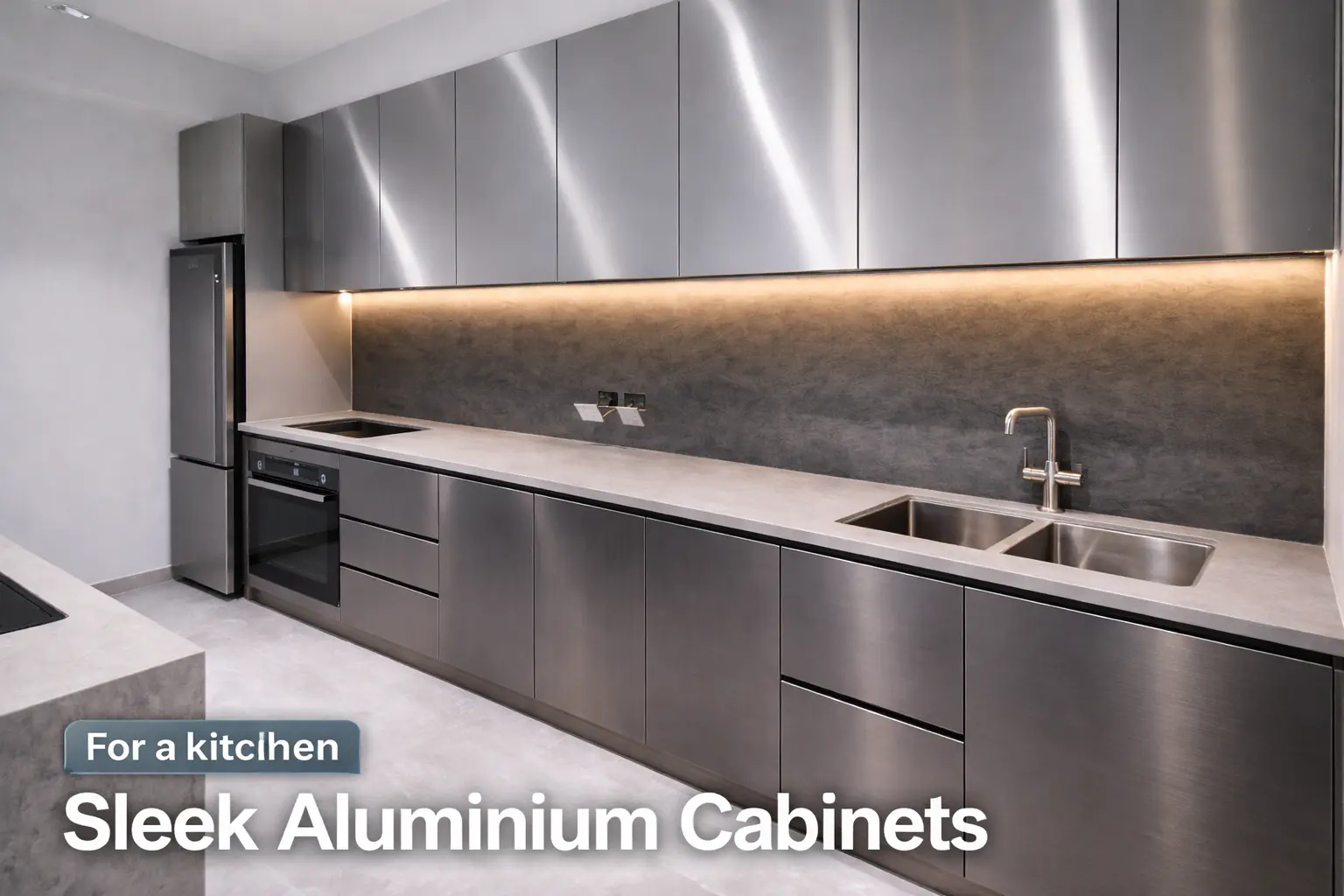
T Se7en Alucraft offer more thant stainless steel we produce high grade Aluminium Kitchen Cabinet For better and long lasting
Often called “marine grade” stainless steel, 316 is a premium alloy engineered for demanding environments requiring superior corrosion resistance.
Composition: About 16% chromium, 10% nickel, and 2–3% molybdenum. Molybdenum is the key addition, dramatically boosting resistance to chlorides, salt, and harsh chemicals.
Pros:
Superior Corrosion Resistance: Outstanding resistance to pitting and crevice corrosion, especially in the presence of salt spray, chlorine, and acidic chemicals.
Extreme Durability: Ideal for highly corrosive settings where 304 may eventually show signs of wear.
Non-Magnetic: Unlike ferritic grades, most austenitic grades like 316 are generally non-magnetic in annealed condition.
Common Uses: Marine applications (boats, docks), chemical processing equipment, medical instruments, and especially kitchens near coastal areas or saltwater pools where chloride exposure is high.
430 stainless steel is a ferritic grade, containing very little to no nickel, which affects its magnetic properties and lowers its cost.
Composition: Primarily 16–18% chromium; very low nickel (usually less than 0.75%). Its structure makes it magnetic.
Pros:
Cost-Effective: More affordable than 304 or 316, great for budget-sensitive projects.
Heat Resistance: Good resistance to oxidation at elevated temperatures.
Magnetic: Unlike 304 and 316, grade 430 is magnetic and can be distinguished by this property.
Common Uses: Often used for inner dishwasher components, some stoves, range hoods, and kitchen appliances where maximum corrosion resistance is not as critical—or for non-critical cabinet areas driven by budget needs
Cost
It’s important to remember that while the grade defines the material’s properties, the surface finish (like brushed, polished, or matte) significantly impacts the final aesthetic.
Feature | 304 Stainless Steel | 316 Stainless Steel | 430 Stainless Steel |
Composition | 18% Cr, 8% Ni | 16% Cr, 10% Ni, 2% Mo | 16-18% Cr, <0.75% Ni |
Corrosion Resistance | Excellent for general kitchen environments. | Superior, especially against chlorides, salt, and acids. | Good for dry, low-moisture environments. More prone to rust. |
Strength/Durability | Great balance of strength and flexibility. | Slightly stronger, excels in harsh chemical exposure. | Lowest tensile strength, can be prone to damage. |
Cost | Mid-range, best balance of performance/cost. | Most expensive, justified by superior resistance. | Most affordable, good for budget-conscious projects. |
Magnetic? | No (generally) | No (generally) | Yes, strongly magnetic |
Typical Use | Residential kitchen cabinets, sinks, appliances. | Coastal/outdoor kitchens, marine, chemical. | Inner appliance components, budget cabinets. |
When selecting stainless steel grades for your kitchen cabinets, consider these factors to ensure the best decision:
Budget: If you’re on a tight budget and need a cost-effective material for areas not exposed to extreme moisture or chemicals, 430 stainless steel might be a viable choice. Note its trade-offs in corrosion resistance; it’s better suited for drier, less demanding environments.
Corrosion Resistance: For kitchens near the ocean, pools, or frequently exposed to harsh cleaning chemicals (like a busy family kitchen), 316 stainless steel is the best option due to its superior resistance to chlorides and pitting.
Durability & Everyday Use: If you want a robust material for everyday family use that balances cost and longevity, 304 stainless steel is an excellent choice. It’s highly durable, offers strong resistance to common kitchen corrosion, and performs well in most residential environments.
Aesthetics: For a classic, sleek, and shiny finish that enhances your kitchen’s modern look, both 304 and 316 stainless steel are top contenders. Your choice often comes down to budget and environment; 430 is a more practical but less visually striking option.
Regardless of the stainless steel grade, proper care will keep your cabinets looking pristine for decades. (For a more in-depth guide, check out our full [Cleaning and Maintenance Guide].)
Clean Regularly: Use a soft microfiber cloth with mild dish soap and warm water to wipe down surfaces daily. Always wipe with the grain of the finish for best results.
Remove Fingerprints: For stubborn smudges, a specialized stainless steel cleaner or a mixture of white vinegar and water works well. Rinse with clean water and dry immediately.
Prevent Rust: Though highly resistant, stainless steel isn’t entirely “stain-proof.” Avoid prolonged contact with highly corrosive substances, harsh abrasive cleaners, or steel wool, which can damage the passive layer and lead to rust. Maintain dry surfaces to prevent water spots and rust.
Polish Occasionally: Apply a high-quality stainless steel polish, a tiny amount of mineral oil, or olive oil to restore shine, provide a protective barrier, and minimize water spots.
Dry Thoroughly: After cleaning, always dry surfaces completely to prevent water spots and streaks
Choosing the right stainless steel kitchen cabinets for your Singapore home is essential for long-lasting durability and style. Stainless steel cabinets are known for being highly durable, easy to maintain, heat- and moisture-resistant, and resistant to scratches and stains—making them an outstanding investment for busy, modern kitchens in Singapore’s humid climate.
Whether you opt for 304, 316, or 430 stainless steel, understanding the strengths and applications of each grade ensures you invest in a cabinet that meets your kitchen’s needs.
304 stainless steel is the most popular grade for residential kitchens due to its superior resistance to corrosion, robust durability, and sleek appearance.
316 stainless steel is recommended for homes near the coast or subject to harsh cleaning chemicals, as it provides even greater resistance to pitting and corrosion.
430 stainless steel can be a cost-saving alternative for less demanding applications, where corrosion risks are lower and a budget-friendly solution is prioritized.
By thoroughly understanding the differences between these grades and carefully considering your specific kitchen needs and environment, you can confidently select the perfect stainless steel for your cabinets, ensuring they deliver both stunning aesthetic appeal and unparalleled functionality for years to come.
Ready to upgrade your kitchen with the unmatched durability and modern elegance of high-grade stainless steel?
Contact T Se7en Alucraft today for a free design consultation and discover how our premium 304-grade stainless steel kitchen cabinets can transform your home. Call us at +65 9615 9273 or email marketing@tse7en.com to get started on your lasting kitchen investment.
Yes, 430 stainless steel can rust, especially in moist or corrosive environments such as kitchens with high humidity or exposure to saltwater. Its low nickel content means it lacks the enhanced rust-inhibiting properties found in grades 304 and 316, making it more susceptible to corrosion over time.
304 and 316 stainless steel have higher nickel and, in the case of 316, molybdenum content, which strengthens their protective oxide layer and provides greater resilience against pitting and rust—even when exposed to harsh chemicals or saltwater.
430 stainless steel is suitable for drier, low-humidity environments or non-critical kitchen components, but it’s not recommended where maximum corrosion resistance is essential.
304 stainless steel is generally non-magnetic because it’s an austenitic alloy, and the presence of nickel stabilizes its austenite (gamma iron) crystal structure, which is not magnetic. However, some fabrication processes—like cold working (bending, stretching, drilling), welding, or certain heat treatments—can induce partial magnetic properties by changing austenite into ferrite or martensite phases.
In everyday use, most 304 stainless steel kitchen cabinets are non-magnetic, but edges or highly deformed/worked areas may show slight magnetic attraction.
430 stainless steel is ferritic, with a crystal structure that is strongly magnetic—making it easy to identify compared to 304 or 316.
Visually, it’s nearly impossible to tell the difference between 304 and 316 stainless steel with the naked eye. Both have a very similar appearance and surface finish. The real differences lie in their chemical composition and performance, especially in corrosive environments due to 316’s added molybdenum content.
Common ways to accurately distinguish them:
Molybdenum Spot Test: A chemical test that detects the presence of molybdenum (present in 316, absent in 304). Kits are available for quick field checks.
X-ray Fluorescence (XRF) Analyzer: A specialized device that can accurately identify 316 from 304 by their elemental makeup.
Performance in Harsh Conditions: In practical terms, 316 will resist pitting and corrosion in salty or chemically aggressive environments much better than 304.
Stainless steel kitchen cabinets, while highly durable, can show scratches over time—especially if handled roughly or if abrasive items are dragged across the surface. High-gloss or polished finishes display scratches more easily, while brushed, matte, or satin finishes hide minor marks much better.
Proper care—such as cleaning with soft microfiber cloths, using non-abrasive cleaners, and always working with the grain—helps prevent scratches.
It’s important to use cutting boards, trivets, and avoid direct cutting or dragging objects on cabinet surfaces.
Some manufacturers offer anti-scratch finishes and protective films to improve resistance, especially on smooth surfaces.
Location: 39 Woodlands Cl, #05-21, Singapore 737856
Phone: +65 9615 9273
Email: marketing@tse7en.com
Website: https://www.tse7en.com
Follow Us on Social Media:
Speak to a professional now and get personalized consultation and guidance for your next renovation. Work with a team you can trust!
Home Blog When choosing between aluminium profile and panel kitchen cabinets, profile designs use an extruded aluminium frame with an infill (glass, acrylic, or compact...