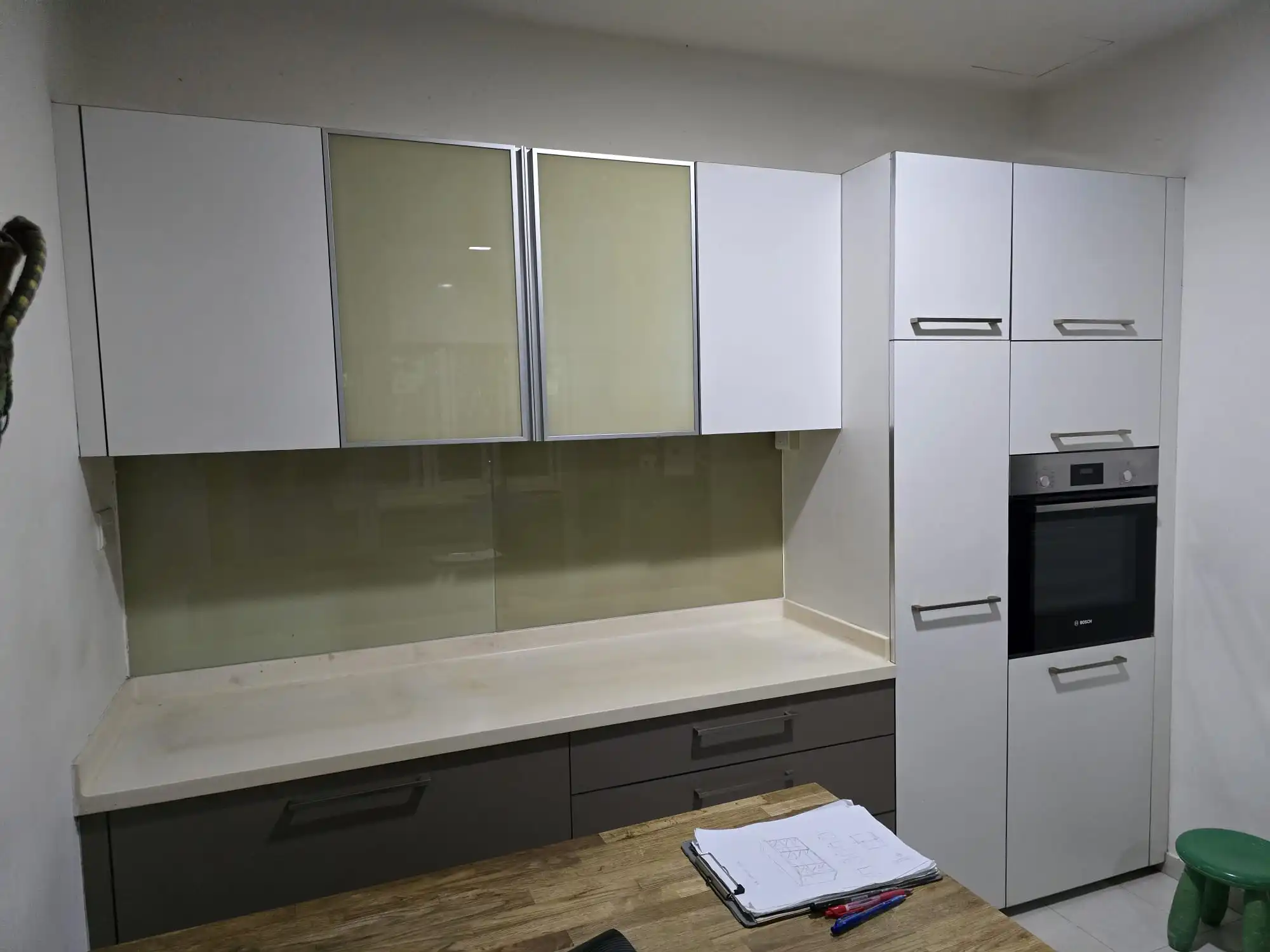
The main kitchen cabinet door types in Singapore are flat-panel, shaker-style, raised-panel, glass-front, and handleless cabinet doors. For most HDB and condo kitchen renovations, the best choice depends on your preferred design style, cleaning needs, cabinet material, hardware choice, opening system, and how simple or detailed you want the finished kitchen to look.
Cabinet door type is not just a visual detail. It affects how the kitchen feels, how easy the cabinet fronts are to clean, how handles or handleless systems work, and whether the overall cabinet design suits a compact HDB kitchen, condo layout, or larger landed home.
If you are planning a full kitchen renovation, this guide compares the most common kitchen cabinet door styles in Singapore and explains how to choose the right option for your layout, material, finish, and daily cooking habits.
For broader planning, it also helps to review Kitchen Cabinets Singapore and Top Kitchen Cabinet Designs Singapore before finalising the full cabinet direction.
Kitchen cabinet door types are the visible front styles attached to cabinet boxes. They shape the visual style of the kitchen and influence how the cabinet system performs in daily use.
Cabinet door type affects:
Cabinet door type is not the same as cabinet material. The material defines what the cabinet structure or front is made from. The door type defines the front design and profile.
These three terms should be planned together, not separately.
Example:
That is why kitchen cabinet door style should always be reviewed together with:
Cabinet door style affects more than visual preference. It changes how the full cabinet run looks, feels, and performs.
In a full kitchen renovation, cabinet door type influences:
This matters more in Singapore homes because many kitchens are compact and used heavily for daily cooking. A cabinet front that looks attractive in a showroom may not be the most suitable option for an active HDB or condo kitchen.
For most kitchen renovation projects in Singapore:
For many compact kitchens, the safest choices are flat-panel, shaker-style, or handleless cabinet fronts because they balance style, practicality, and visual control.
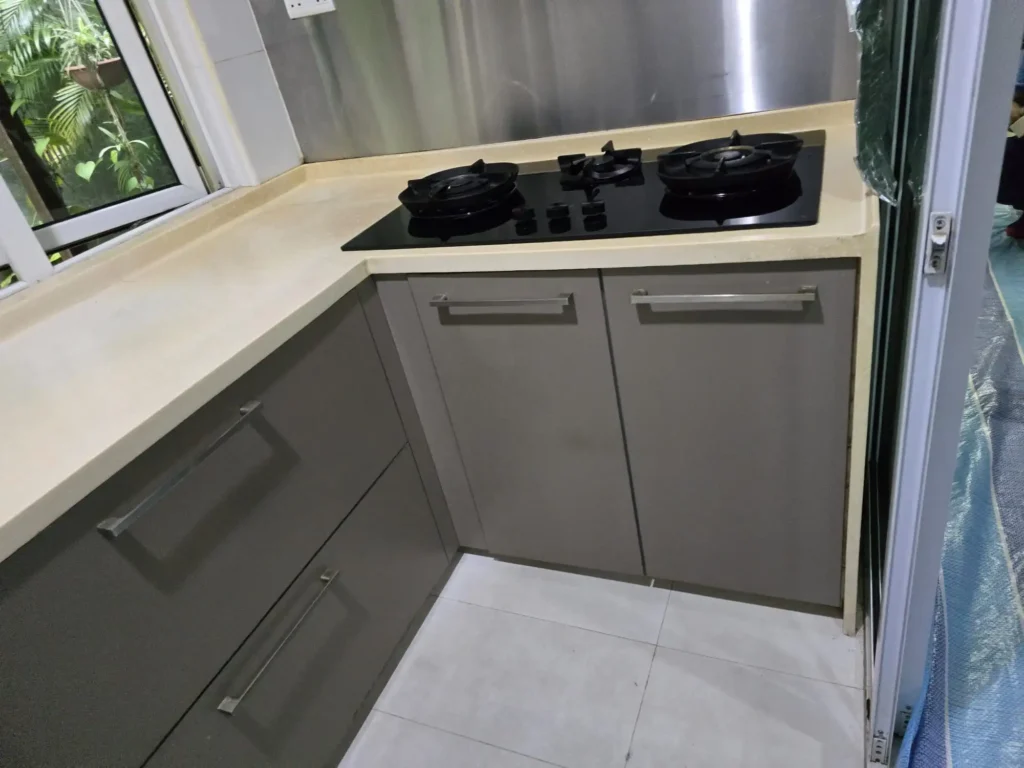
Flat-panel cabinet doors, also called slab doors, have a smooth front surface with no framing or decorative profile. They are one of the most common choices for modern kitchen cabinets.
Best for:
Less suitable if:
Maintenance level: low
Works well in:
Flat-panel doors reduce visual clutter because the surface is simple and uninterrupted. In smaller kitchens, that makes the cabinet run feel cleaner and more controlled. The flat face is also easier to wipe because it has fewer grooves and edges.
Shaker-style cabinet doors have a framed outer border and a recessed center panel. They create more visual depth than slab doors while remaining simpler than traditional decorative styles.
Best for:
Less suitable if:
Maintenance level: medium
Works well in:
Shaker cabinet doors are flexible because they sit between minimal and decorative. They work well when the kitchen should feel refined, familiar, and long-lasting rather than sharply modern or heavily traditional.
Raised-panel cabinet doors have a decorative front profile with stronger depth and more detailing than shaker fronts. The center panel projects outward instead of sitting recessed.
Best for:
Less suitable if:
Maintenance level: medium to high
Works well in:
Raised-panel doors create a stronger decorative effect. In small kitchens, that extra profile depth can make the cabinet run feel heavier. They are usually better suited to larger kitchens where the design has more space to carry visual detail.
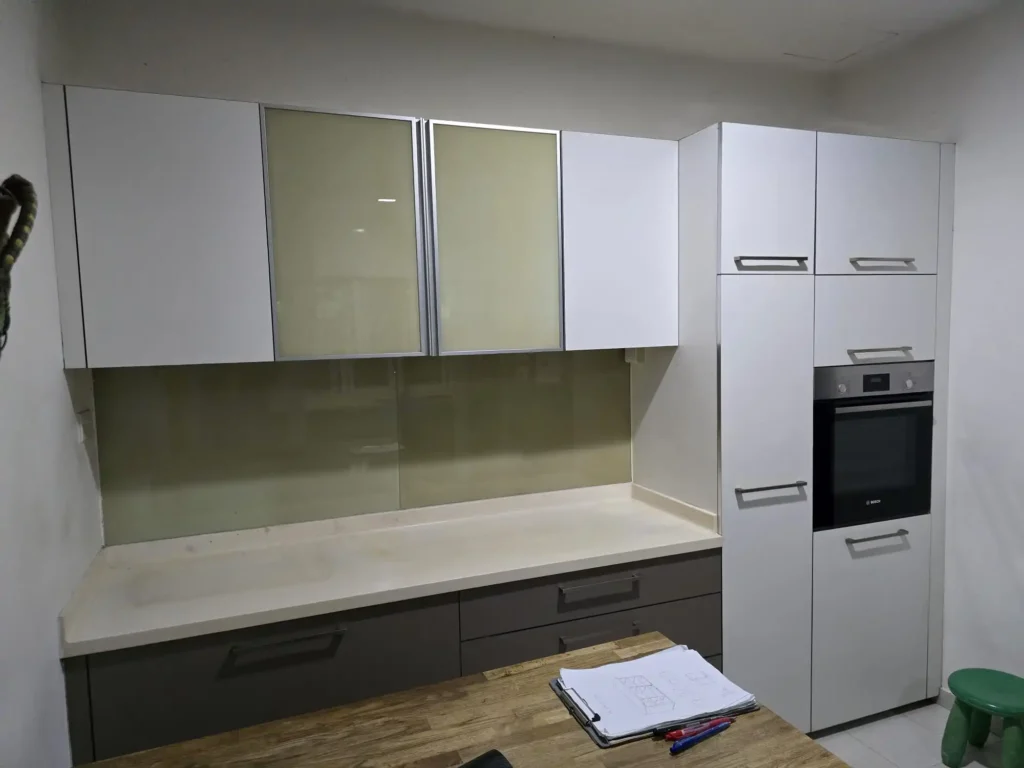
Glass-front cabinet doors include clear, frosted, tinted, fluted, or semi-transparent glass sections inside a cabinet frame. They are usually used in selected areas rather than across the full cabinet run.
Best for:
Less suitable if:
Maintenance level: medium
Works well in:
Glass-front doors break up large blocks of solid cabinetry. They can make upper cabinets feel lighter and less bulky. They are most effective when used selectively.
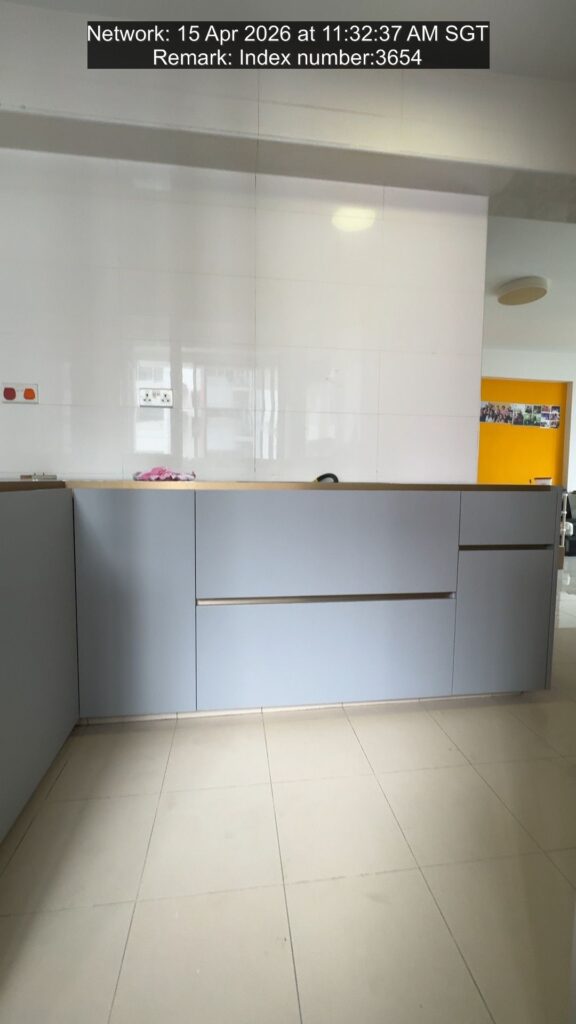
Handleless cabinet doors remove visible external handles and create a cleaner cabinet front. Instead of opening with a pull or knob, the door or drawer opens through an integrated grip system built into the cabinet design.
Common handleless systems include:
J-pull profiles
recessed grip channels
integrated aluminium profile gaps
push-to-open mechanisms
Best for:
minimalist kitchens
sleek modern renovations
uninterrupted cabinet lines
streamlined condo and HDB layouts
Less suitable if:
visible hardware is part of the design style
grip comfort is the top priority
the kitchen direction is traditional
Maintenance level: low to medium, depending on the finish and grip profile
Works well in:
modern condo kitchens
streamlined HDB kitchens
contemporary aluminium cabinet systems
Handleless cabinet systems create a more seamless and modern appearance. Their practicality depends on grip comfort, profile design, and finish behavior. Some finishes show fingerprints more easily, while some grip profiles are more comfortable for daily use.
| Cabinet door type | Front profile | Visual style | Cleaning ease | Best use case | Small kitchen suitability | Handleless compatibility |
|---|---|---|---|---|---|---|
| Flat-panel | smooth, no frame | clean, modern, minimal | high | modern renovations | high | high |
| Shaker-style | framed, recessed center | timeless, balanced | medium | transitional kitchens | high | medium |
| Raised-panel | decorative, projecting center | classic, traditional | lower | formal kitchens | lower | low |
| Glass-front | framed with glass insert | lighter, display-oriented | medium | upper cabinet accents | selective use | low |
| Handleless | depends on grip system | sleek, continuous | medium | minimalist kitchens | high | full system |
This is one of the most common cabinet design decisions.
Main difference:
Flat-panel doors emphasize simplicity and wipe-down ease. Shaker doors emphasize depth and design character.
For many Singapore kitchens, the decision is simple:
This is an important planning question in Singapore because many full kitchen renovations use aluminium cabinet systems.
These options work well because aluminium cabinet systems usually suit cleaner lines, slimmer detailing, and more modern finishes.
Raised-panel designs are usually less aligned with the visual language of aluminium kitchens. The cabinet system and the front profile can feel inconsistent if one is sleek and modern while the other is heavily traditional.
Cabinet system design and door style should support each other. A modern aluminium cabinet system usually performs best with:
These styles create simpler cabinet lines and a more updated appearance.
These options reduce visual clutter and help the cabinet run feel less bulky.
Flat surfaces are easier to wipe because they have fewer grooves and profile lines.
Shaker doors balance detail and restraint. They are less trend-sensitive than very minimal or highly decorative fronts.
Raised-panel doors work best when the full interior direction is clearly classic.
Glass inserts are most effective in selected upper cabinets or display sections.
In Singapore, cabinet door choice should match both style and practical use.
HDB kitchens are often compact. Visual simplicity matters because cluttered cabinet fronts can make the space feel tighter.
Best options:
Condo kitchens often favor cleaner and more modern finishes. Slimmer cabinet lines usually fit better.
Best options:
Larger kitchens can support more visual detail because the cabinet run has more space.
Best options:
Cabinet door style directly affects maintenance effort after renovation.
Flat-panel doors are usually the easiest to maintain because they have smooth front faces with fewer edges.
These styles have more profile lines and edge transitions:
Those edges can collect grease, dust, or cooking residue more easily in active kitchens.
Handleless systems should also be reviewed for:
A handleless door can look cleaner visually but still need more regular wiping if the finish shows marks easily.
Door style and opening style should be planned together. If they conflict, the finished cabinet design can feel inconsistent.
A flat-panel front usually suits simpler hardware. A shaker front can support visible hardware more naturally because the cabinet face already has framed detail. A handleless cabinet system should be designed around the grip profile from the start, not added as an afterthought.
To compare hinges, fittings, and functional cabinet components, review the Kitchen Cabinet Hardware Guide. For more design-specific advice on handle choices, finishes, and matching styles, see Choosing Top Cabinet Handles in Singapore.
Door style is only one part of the full cabinet system. Material and finish determine how the front is built and how it behaves in daily use.
Cabinet door style should not be selected in isolation. It should support the full cabinet system. If you are planning an aluminium-based project, the Custom Aluminium Kitchen Cabinet Design Process explains how cabinet profiles, materials, finishes, and layout decisions are developed together.
In smaller kitchens, the cabinet front affects whether the space feels visually controlled or crowded.
In many Singapore kitchens, simpler front styles work better because they reduce visual interruption and make the cabinet run feel more streamlined.
In many Singapore kitchens, simpler front styles work better because they reduce visual interruption and make the cabinet run feel more streamlined.
A cabinet style may look attractive online but not suit the kitchen layout, maintenance needs, or cooking habits.
Better approach: choose based on layout, practicality, and long-term fit.
Highly profiled cabinet fronts can be harder to maintain in kitchens used heavily for daily cooking.
Better approach: match the door style to real cleaning conditions.
Hardware that does not match the door profile can make the final cabinet design feel mismatched.
Better approach: confirm the door style first, then choose compatible hardware.
Overly decorative cabinet fronts can make a small kitchen feel tighter.
Better approach: use simpler lines when space is limited.
The final cabinet system can feel inconsistent when the front style, material, and finish are selected in isolation.
Better approach: review all three together.
Use these questions to guide the decision:
After finalising the door style, it also helps to understand the next project stage by reviewing the Kitchen Cabinet Installation Process Singapore so you know how cabinet planning moves into measurement, fabrication, and installation.
Kitchen cabinet door types affect both visual design and daily practicality. Flat-panel, shaker-style, raised-panel, glass-front, and handleless systems each suit different renovation goals.
For most Singapore homes, the right cabinet door style depends on:
In many HDB and condo kitchens, flat-panel, shaker-style, and handleless cabinet fronts are the strongest options because they balance design control, maintenance practicality, and compact-space suitability.
The best cabinet door type is the one that fits the full cabinet system, not just the surface appearance. It should support the material, finish, hardware, layout, and the way the kitchen is used every day.
A well-designed kitchen cabinet system starts with the right planning. Contact T Se7en Alucraft for a tailored kitchen cabinet consultation based on your space, style, and renovation goals.
The main kitchen cabinet door types are flat-panel, shaker-style, raised-panel, glass-front, and handleless designs.
Flat-panel cabinet doors are usually the easiest to clean because the surface has fewer grooves and edges.
Flat-panel doors have a smooth front with minimal detailing. Shaker doors have a framed design with a recessed center panel, which creates more visual depth.
Yes. They can be practical when the grip system is comfortable and the finish is easy to maintain.
Flat-panel and handleless cabinet doors usually work best in smaller Singapore kitchens because they reduce visual clutter and suit compact layouts.
No. Glass-front cabinet doors are usually better used selectively in upper cabinets or feature sections.
Cabinet door style should be reviewed together with cabinet material, finish, hardware, and layout rather than selected on its own.
Flat-panel and handleless cabinet styles usually work best with aluminium cabinet systems because they match cleaner lines and more modern cabinet construction.
Speak to a professional now and get personalized consultation and guidance for your next renovation. Work with a team you can trust!
Home Blog HIP is HDB’s upgrading programme for older flats. It covers compulsory repairs such as concrete defects and ageing waste pipes at a very...