


Aluminium Grade for Kitchen Cabinets: Which Alloy Should You Choose?
When choosing materials for your kitchen cabinets, the aluminium grade for kitchen cabinets you select will determine how well they resist moisture, heat, and daily wear. Not all aluminium alloys perform the same way, and understanding the differences between grades is essential before you invest in a renovation.
Key Takeaways
- The most common aluminium grades used in kitchen cabinetry are the 1000-series, 5000-series, and 6000-series, each with distinct properties suited to different applications.
- 6061 and 6063 alloys offer the best balance of strength, corrosion resistance, and machinability for structural cabinet frames in Singapore’s humid climate.
- 5005 aluminium is widely used for cabinet panels because of its excellent anodising quality and surface finish.
- Aluminium cabinets outperform wood in moisture resistance, a critical advantage given that more than 60% of kitchen renovation callbacks relate to moisture damage, according to the NKBA 2024 Design Trends Report.
- Choosing the right grade is only half the equation; quality workmanship and proper finishing are equally important for longevity.
- T Se7en Alucraft brings over 30 years of carpentry and aluminium expertise to every custom cabinet project in Singapore.
Why Aluminium Grade Matters More Than Most People Realise
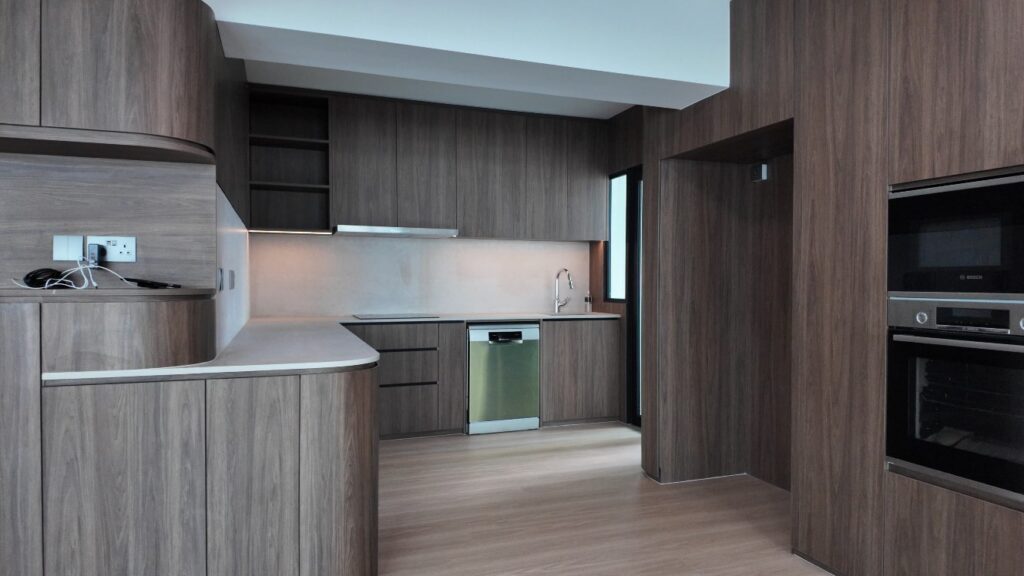
Most homeowners shopping for kitchen cabinets focus almost entirely on aesthetics: door styles, colour palettes, and handle designs. The grade of aluminium used in the frame and panels rarely comes up in conversation with suppliers, yet it is arguably the most consequential specification in the entire cabinet system.
Aluminium is not a single material. It is a family of alloys, each blended with different proportions of magnesium, silicon, copper, manganese, or zinc to achieve specific mechanical properties. The grade determines tensile strength, corrosion resistance, formability, weldability, and how well the surface holds a finish. For kitchen cabinets, these properties translate directly into how well your cabinetry handles humidity, heat from cooking, cleaning chemicals, and the physical stress of daily opening and closing.
Singapore’s climate adds another layer of urgency to this decision. With average humidity levels sitting above 80% for much of the year, cabinet materials face relentless moisture exposure. This is precisely why questions such as can aluminium kitchen cabinets rust matter so much to local homeowners: the wrong alloy or finish can lead to surface oxidation and structural degradation far sooner than expected.
The Main Aluminium Series Used in Cabinetry
Aluminium alloys are grouped into series numbered from 1000 to 7000. For kitchen cabinet applications, three series are practically relevant.
1000-Series: Pure Aluminium
The 1000-series contains at least 99% aluminium and is the softest and most ductile of the groups. It has excellent corrosion resistance and is easy to work with, but its low strength makes it unsuitable for structural cabinet frames. You may find it used in decorative trims, thin back panels, or edging profiles where load-bearing is not a concern.
5000-Series: Magnesium Alloys
The addition of magnesium in the 5000-series significantly improves strength without sacrificing corrosion resistance. Grade 5005 is the most common specification in Singapore’s aluminium cabinetry market. It anodises exceptionally well, producing a uniform, attractive surface that holds colour consistently across large panel areas. If your supplier quotes you “anodised aluminium panels,” they are almost certainly referring to 5005 or a close variant. The 5052 grade, with a higher magnesium content, offers even greater strength and is often used in thicker structural panels or high-impact zones such as base cabinet shelving.
6000-Series: Magnesium and Silicon Alloys
The 6000-series is where structural performance peaks for cabinetry applications. Grade 6061 is widely regarded as the benchmark for aluminium fabrication, offering a tensile strength of around 270 MPa in its T6 temper state, excellent weldability, and strong resistance to atmospheric corrosion. Grade 6063 is a slightly softer variant that extrudes beautifully into complex profiles, making it the standard choice for cabinet frame extrusions, door frames, and handle profiles. When you see slimline aluminium frame doors on a high-end kitchen cabinet system, the frame is almost certainly extruded 6063.
Understanding how long do aluminium cabinets last is closely tied to which series is used, combined with the quality of the surface treatment applied.
How Aluminium Grades Translate Into Cabinet Door Styles
The grade of aluminium you choose is directly connected to which door designs are structurally achievable. At T Se7en Alucraft, three core door configurations are offered, each making use of different aluminium specifications.
Compact Plus Door with Aluminium Frame
This design uses a robust aluminium frame, typically extruded 6063, encasing a high-pressure laminate or compact panel core. The frame provides rigidity while the panel delivers the visual finish. This is ideal for kitchens with heavy daily use, as the frame resists warping and the compact core is inherently moisture-resistant.
Glass Door with Aluminium Frame
Glass-infill doors require a frame with tight dimensional tolerances to hold the glass securely without flex. The 6063 extrusion profile shines here, as it can be produced with wall thicknesses and rebate depths precisely calibrated to accept standard 4mm or 6mm glass panels. This door style is popular in Singapore HDB and condominium kitchens where the homeowner wants a lighter, more open visual aesthetic.
Compact Panel Door with AVS Edging
This configuration uses a full compact panel door with aluminium edging applied around the perimeter for protection and finish. The edging is typically 5005-grade strip aluminium, anodised to match or complement the panel colour. It is the most cost-effective of the three styles while still delivering excellent durability.
For homeowners considering layout decisions alongside material choices, the question of should kitchen cabinets go to the ceiling is also worth addressing early in the planning process, as it affects both the volume of material required and the structural load on the cabinet system.
Grade Comparison Table: Aluminium Alloys for Kitchen Cabinets
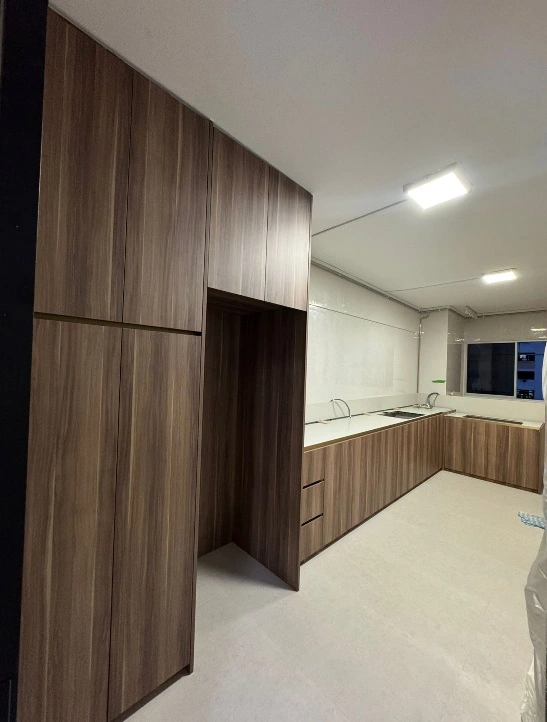
| Grade | Series | Typical Use in Cabinets | Corrosion Resistance | Strength | Anodising Quality |
|---|---|---|---|---|---|
| 1050 | 1000 | Decorative trims, back panels | Excellent | Low | Good |
| 5005 | 5000 | Cabinet panels, doors | Excellent | Moderate | Excellent |
| 5052 | 5000 | Structural shelving, base panels | Excellent | Good | Good |
| 6061 | 6000 | Structural frames, load-bearing components | Very Good | High | Moderate |
| 6063 | 6000 | Extruded door frames, profiles | Very Good | Moderate-High | Good |
The Role of Surface Treatment in Grade Performance
Choosing the right grade is necessary but not sufficient. The surface treatment applied to the aluminium has an enormous impact on real-world performance, particularly in a kitchen environment where cooking fumes, steam, grease, and cleaning products all come into contact with cabinet surfaces.
Anodising creates an electrochemical oxide layer directly on the aluminium surface. It increases surface hardness, dramatically improves corrosion resistance, and creates a substrate that accepts dye colouring well. Grade 5005 anodises most evenly and is the preferred choice when colour consistency across multiple panels is required.
Powder coating applies a dry polymer finish electrostatically and then cures it under heat. It can be applied to all common cabinet grades and offers a wide colour palette. The finish is thick, durable, and resistant to chipping. For Singapore kitchens, powder coating in a matte or satin finish is practical because it shows fewer fingerprints than gloss.
Mill finish refers to aluminium that has been extruded or rolled but not further treated. This is not appropriate for exposed kitchen cabinet surfaces as it is prone to surface oxidation over time.
When evaluating a supplier’s quote, always ask specifically which treatment they are applying and to which grade. Vague answers are a warning sign. Understanding aluminium kitchen cabinet workmanship standards will help you ask the right questions before signing any agreement.
Why Singapore Homeowners Are Switching to Aluminium Cabinets
The global kitchen cabinet market was valued at approximately $167 billion in 2024 and is projected to grow at a 6.2% CAGR through 2033, according to Fortune Business Insights (2025). Within this market, wood still dominates, with the wood segment expected to account for 45.49% of the global market in 2026. However, aluminium is gaining ground in tropical climates like Singapore’s, where wood’s vulnerability to moisture, termites, and humidity makes it a less practical long-term choice.
One compelling data point from the NKBA 2024 Design Trends Report: more than 60% of kitchen renovation callbacks relate to moisture damage. This single statistic captures precisely why the aluminium grade for kitchen cabinets is not a peripheral concern for Singapore homeowners. It is central to whether your renovation will hold up or require expensive remediation within a few years.
Unlike timber, aluminium does not swell, crack, or delaminate when exposed to humidity. It is also inherently resistant to pests. For homeowners who have wondered whether are aluminium kitchen cabinets termite proof the answer is yes: aluminium provides no nutritional value to termites and cannot be burrowed into, making it a superior choice in older buildings or landed properties where termite risk is elevated.
T Se7en Alucraft: Over 30 Years of Aluminium Expertise in Singapore
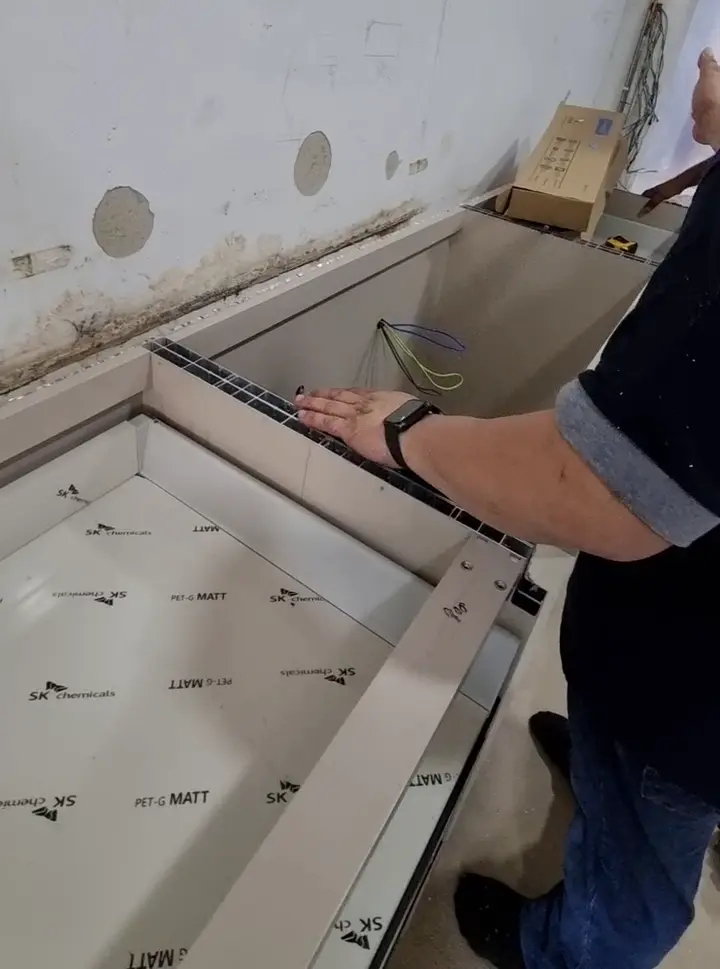
T Se7en Alucraft has been at the forefront of Singapore’s aluminium cabinetry market, with over 30 years of combined experience in the carpentry industry and a focused specialisation in custom aluminium fixtures. Their approach is built on the understanding that strong material science must be paired with skilled fabrication, precise installation, and honest communication with homeowners.
Every cabinet system produced by T Se7en Alucraft uses verified alloy grades matched to the specific application, whether that is a compact HDB kitchen, a landed property’s full wet and dry kitchen layout, or an office environment requiring commercial-grade durability. Their team can advise on which grade is most appropriate for your specific usage patterns, kitchen layout, and aesthetic preferences.
For homeowners in the east of Singapore, T Se7en also serves the local community directly, with kitchen cabinets Bedok projects forming a regular part of their portfolio.
What to Ask Your Supplier Before Committing to Any Cabinet System
Before signing a quotation, these are the specific questions you should be putting to any cabinet supplier in Singapore:
- Which aluminium grade is used for the frame extrusions? Insist on a specific alloy number, not just “aluminium frame.”
- Which grade is used for the panel substrate or infill? Ask whether it is 5005 anodised or powder-coated, and what the panel thickness is in millimetres.
- What is the wall thickness of the extrusions? Thicker walls mean more rigidity and longer service life.
- What surface treatment is applied, and what is the process? Ask for the anodising thickness in microns or the powder coat specification.
- Is the aluminium locally tested or certified to any standard? Reputable suppliers will reference SS (Singapore Standard) or equivalent quality frameworks.
- What warranty is provided on the finish and on the structural components separately? These are often different durations.
A supplier who answers these questions clearly and with specific figures is demonstrating the kind of technical fluency that correlates with genuine quality output. One who deflects or gives vague answers warrants further scrutiny.
Maintenance Considerations by Grade and Finish
Aluminium cabinets require far less maintenance than wood alternatives, but the right care routine depends on the finish applied.
Anodised surfaces should be cleaned with a mild soap solution and a soft cloth. Avoid abrasive pads or acidic cleaners, which can damage the oxide layer. The 5005 anodised finish is particularly durable and will retain its appearance with minimal intervention.
Powder-coated surfaces are more forgiving and can handle slightly stronger cleaning agents, though bleach-based products should still be avoided near powder-coated aluminium as they can cause discolouration over time.
Extruded 6063 frame profiles used in door frames are highly resistant to corrosion and rarely require specific maintenance beyond the routine cleaning of adjacent surfaces.
The Aluminium Kitchenware Market, broadly defined, is expected to grow from USD 5.2 billion in 2024 to USD 8.4 billion by 2033 at a CAGR of 6.5%, according to Verified Market Reports (2025). This growth reflects a broader consumer shift towards materials that offer longer service lives with lower maintenance burdens, a trend that is particularly visible in Singapore’s renovation market.
Ready to Choose the Right Aluminium Cabinet for Your Kitchen?
Selecting the correct aluminium grade for your kitchen cabinets is a decision that will affect your home for decades, and it is far too important to leave to guesswork or a vague supplier quote. T Se7en Alucraft’s consultants are ready to walk you through every alloy option, surface treatment, and door configuration that suits your kitchen layout, budget, and lifestyle.
Book your appointment with T Se7en Alucraft today and get expert, grade-specific advice tailored to your Singapore home. Reach out via phone at +65 9615 9273, email sales@tse7en.com, or ask about a WhatsApp consultation or virtual showroom tour to get started from the comfort of your home.
The Bottom Line on Aluminium Grade for Kitchen Cabi
The aluminium grade for kitchen cabinets you choose is not a minor technical footnote. It is the foundation of how your cabinetry will perform year after year in one of the most demanding environments in your home. Selecting 6063 for extruded frames and 5005 for anodised panels, paired with quality surface treatment and skilled installation, gives you a cabinet system built to handle Singapore’s climate without compromise.
T Se7en Alucraft has spent over 30 years refining this expertise, and their team is ready to help you make the right material decisions from the very first consultation. Contact T Se7en Alucraft at +65 9615 9273 or email sales@tse7en.com to begin planning your kitchen today.
Frequently Asked Questions
For kitchen cabinet frames, 6063 aluminium is the top choice, while 5005 is the preferred grade for panels and anodised surfaces.
The 6063 grade extrudes into precise profiles with excellent surface quality and strong corrosion resistance, making it ideal for door frames and structural components. For panels, 5005 aluminium anodises with exceptional colour uniformity and resists surface degradation in humid conditions, which is critical in Singapore kitchens where steam and moisture are constant factors. Using these two grades in combination gives you a cabinet system that is both structurally sound and visually consistent over the long term.
Yes, aluminium is an excellent material for kitchen cabinets, particularly in Singapore’s humid tropical climate.
Unlike timber or medium-density fibreboard, aluminium does not warp, swell, delaminate, or rot when exposed to moisture. It is also resistant to termites, fire, and the formaldehyde off-gassing associated with some engineered wood products. When the correct grade is selected and a quality surface treatment is applied, aluminium cabinets can outperform wood alternatives significantly in terms of lifespan and maintenance requirements. The main trade-off is a higher upfront cost compared to basic wood-based options, but this is generally offset by lower long-term repair and replacement costs.
Aluminium kitchen cabinet pricing in Singapore typically ranges from around S$3,000 to S$10,000 or more, depending on kitchen size, grade specifications, door style, and supplier.
Entry-level aluminium cabinet systems using simpler panel configurations and standard powder-coated finishes tend to sit at the lower end of this range, while fully custom systems with 6063 extruded frames, glass infill doors, and premium anodised 5005 panels will command higher prices. The size of your kitchen, the number of cabinets, and whether you are fitting an HDB flat or a larger landed property kitchen all affect the final quotation. It is advisable to obtain at least two to three detailed quotes from reputable suppliers and to compare them on a grade-by-grade, specification-by-specification basis rather than on total price alone. T Se7en Alucraft provides transparent, itemised quotations so you understand exactly what you are paying for.
In the cabinetry trade, cabinets are broadly classified into three tiers: stock, semi-custom, and fully custom.
Stock cabinets are pre-manufactured in fixed sizes and configurations, offering the lowest cost but very limited flexibility. Semi-custom cabinets are produced in a wider range of sizes and allow some choice of finish, material, and door style, though they still follow a manufacturer’s set framework. Fully custom cabinets are designed and built to your exact specifications, including precise dimensions, chosen materials, grades, and finishes. For aluminium cabinets in Singapore, the fully custom tier is by far the most common, since the material lends itself to precise fabrication and most homeowners require configurations that match their specific kitchen footprint rather than a standard module size.
For Singapore homes, aluminium is increasingly regarded as the most practical material for kitchen cabinets, given its resistance to humidity, pests, and heat.
Timber and timber-based boards such as moisture-resistant MDF or plywood remain popular for their warmth and lower upfront cost, but they require careful sealing and are vulnerable to Singapore’s persistent high humidity over time. Stainless steel is highly durable and hygienic but is generally reserved for commercial kitchens due to its industrial aesthetic and higher fabrication cost. PVC-based cabinets are affordable and water-resistant but lack the structural rigidity and premium finish of aluminium. Aluminium sits in a strong middle ground: it is durable, lightweight, non-toxic, termite-proof, and available in a wide range of finishes that suit both modern and traditional kitchen aesthetics.
Still Unsure?
Speak to a professional now and get personalized consultation and guidance for your next renovation. Work with a team you can trust!
Best Materials for Kitchen Cabinets in Singapore
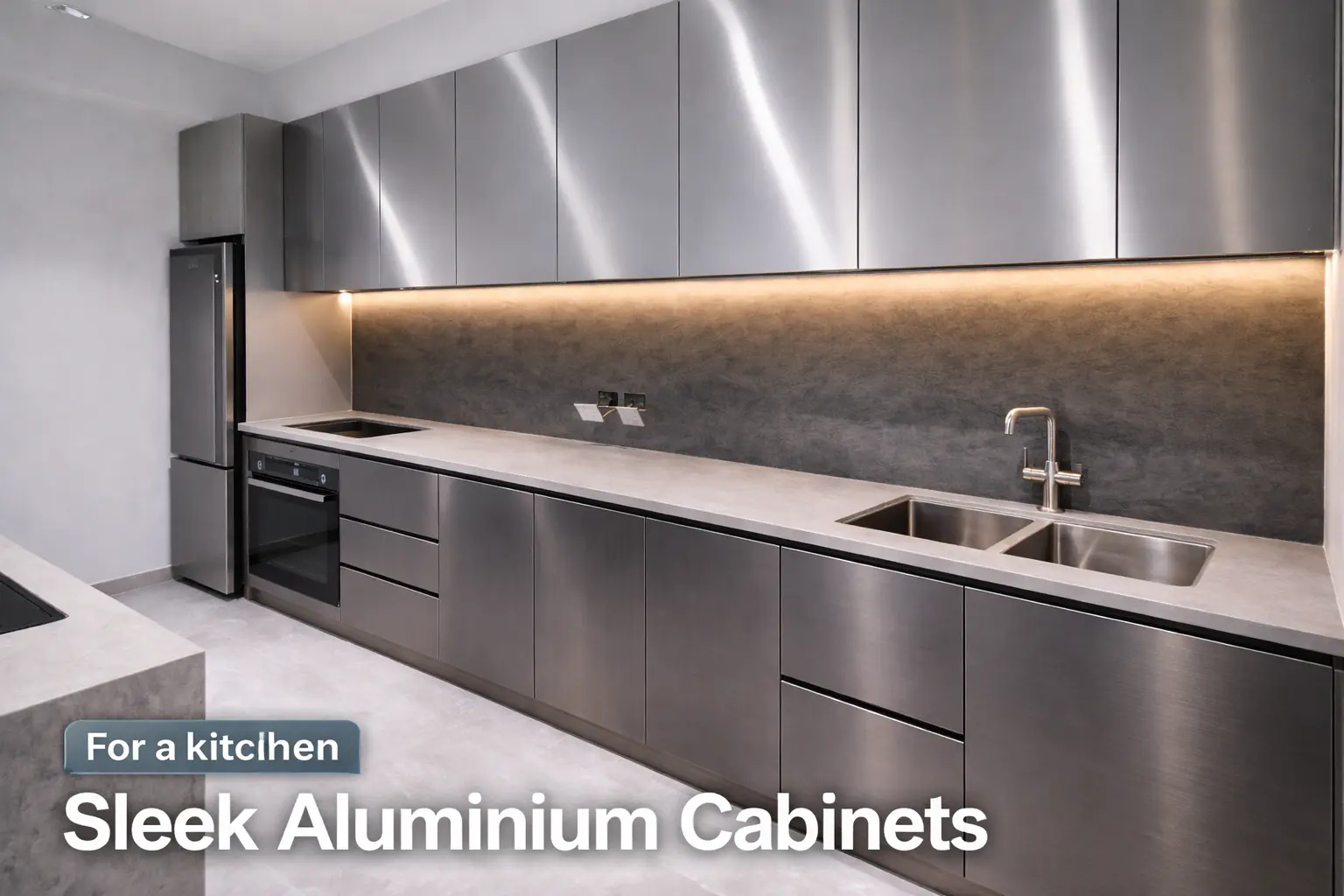
Home Blog When choosing between aluminium profile and panel kitchen cabinets, profile designs use an extruded aluminium frame with an infill (glass, acrylic, or compact...
One Response