


Aluminium Kitchen Cabinet Carcass: What Singapore Homeowners Need to Know in 2026
An aluminium kitchen cabinet carcass is the structural skeleton of your kitchen cabinet, built entirely from aluminium rather than wood, plywood, or MDF. In Singapore’s humid, moisture-heavy environment, choosing the right carcass material is one of the most consequential decisions you will make during any kitchen renovation.
Key Takeaways
- An aluminium carcass is completely waterproof, termite-proof, and will not warp or swell in Singapore’s tropical climate.
- Aluminium carcasses outlast wood-based alternatives by a significant margin, particularly in wet kitchens where moisture exposure is constant.
- The carcass is the structural frame of the cabinet; the door, finish, and fittings are separate components added on top of it.
- Different aluminium grades perform differently in kitchen environments; selecting the correct alloy matters for long-term durability.
- T Se7en Alucraft has over 30 years of experience building custom aluminium fixtures for Singapore homes and businesses.
- Cost per unit varies depending on size, configuration, and finish, but aluminium carcasses generally offer better value over their lifespan compared to wood alternatives.
What a Cabinet Carcass Actually Is (And Why the Material Matters)
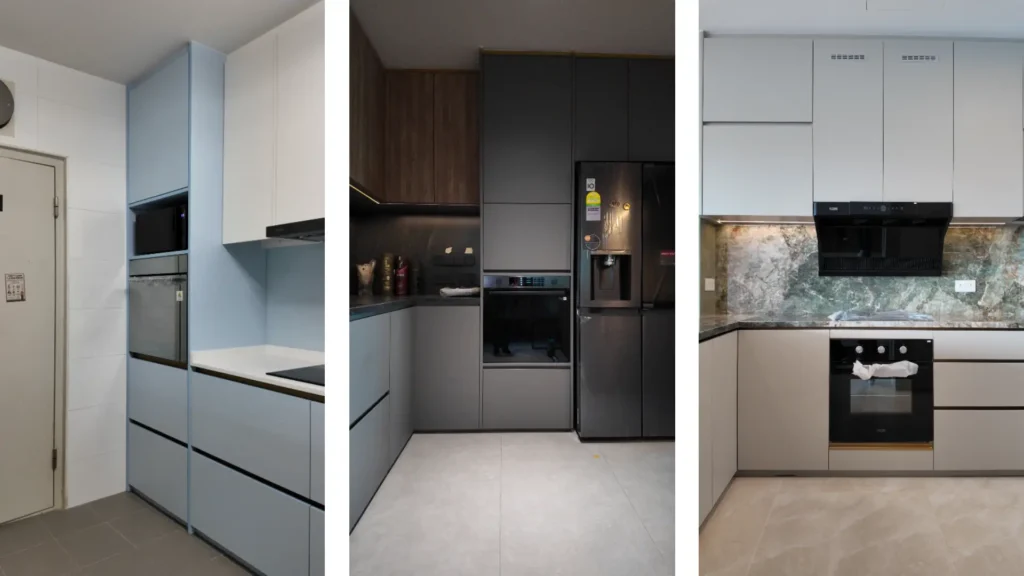
The carcass is the box. It is the four walls, the floor panel, and the top panel of a kitchen cabinet unit, assembled before any doors, drawers, hinges, or decorative finishes are added. Every kitchen cabinet you have ever seen has a carcass at its core; what differs is what that carcass is made from and how well it holds up over time.
In Singapore, traditional kitchen cabinetry relies on plywood, particle board, or MDF carcasses, and when you compare aluminium cabinets vs plywood, the performance differences become immediately apparent. These materials work reasonably well in dry environments, but Singapore is not a dry environment. According to the National Kitchen and Bath Association (NKBA, 2024), more than 60% of kitchen renovation callbacks relate to moisture damage. That figure alone explains why homeowners here are increasingly turning to metal alternatives.
An aluminium kitchen cabinet carcass replaces all wood-based panels with extruded or panel-formed aluminium. The result is a frame that does not absorb water, does not swell, does not harbour termites, and does not off-gas formaldehyde. These are not marketing claims; they are inherent material properties of aluminium as an element.
T Se7en Alucraft: Over 30 Years of Aluminium Expertise in Singapore
T Se7en Alucraft is not a newcomer to aluminium fabrication. With over 30 years of experience in the carpentry and custom aluminium fixture industry, the company has established itself as Singapore’s specialist in building strong, waterproof, and eco-friendly kitchen solutions for both residential and commercial clients.
What sets T Se7en Alucraft apart from general renovation contractors is depth of expertise, particularly when it comes to understanding the aluminium grade for kitchen cabinets that performs best in Singapore’s climate. The team does not simply source aluminium panels and assemble them; they engineer each carcass to suit the specific spatial, load-bearing, and aesthetic requirements of the client’s kitchen. This includes custom sizing, concealed joinery, and finish selection across a range of door styles.
T Se7en Alucraft holds Green Label certification, reflecting their commitment to zero-formaldehyde materials and environmentally responsible manufacturing. For Singapore homeowners who are conscious about indoor air quality, particularly in compact HDB flat kitchens where ventilation may be limited, this matters.
The product range extends well beyond kitchen cabinetry. T Se7en Alucraft also fabricates wardrobes, bathroom vanities, TV cabinets, display units, office desks, reception counters, and custom aluminium items for commercial spaces. However, the aluminium kitchen cabinet remains their flagship product and the application where their 30 years of domain knowledge shows most clearly.
Technical Specifications: What Goes Into an Aluminium Carcass
Not all aluminium is equal. The alloy grade, panel thickness, and joinery method all determine how a carcass performs over a 20-plus-year lifespan in a tropical kitchen environment. Understanding these specifications before you purchase is essential.
Alloy Grade and Panel Thickness
The alloy composition selected for your carcass affects structural rigidity, corrosion resistance, and workability. Common grades used in cabinet fabrication include 6061 and 6063 series alloys, both of which offer good strength-to-weight ratios and excellent resistance to oxidation without surface treatments.
Panel thickness for carcass walls typically ranges from 1.2mm to 2mm for extruded profile systems, and up to 4mm to 6mm for solid panel constructions. Thicker panels contribute directly to load-bearing capacity, which is particularly relevant in tall pantry units or full-height storage configurations.
Joinery and Assembly Methods
Aluminium carcasses are joined using one of two primary methods: extrusion-based interlocking profiles or mechanical fasteners (screws and brackets). Profile systems offer cleaner finishes with no visible fixings, while mechanical systems are easier to disassemble if the unit needs to be relocated.
Understanding the difference between aluminium profile vs panel kitchen cabinets is useful here, as the choice affects both the visual outcome and the structural behaviour of the finished unit.
Door Finish Options
The carcass determines structure; the door determines aesthetics. T Se7en Alucraft offers several door configurations that pair with their aluminium carcasses:
- Compact Plus Door with Aluminium Frame: A high-pressure laminate panel set within an aluminium perimeter frame. Extremely durable, moisture-resistant, and available in a wide range of colours and textures.
- Glass Door with Aluminium Frame: Tempered glass panels within an aluminium frame. Suitable for display cabinets or upper units where visual openness is desired.
- Compact Panel Door with AVS Edging: A solid compact panel with protected edges, offering a seamless, modern appearance without visible aluminium profiles.
Each door type is compatible with the same carcass base, which means you can mix styles across upper and lower units without compromising structural integrity.
Load Capacity and Long-Term Durability
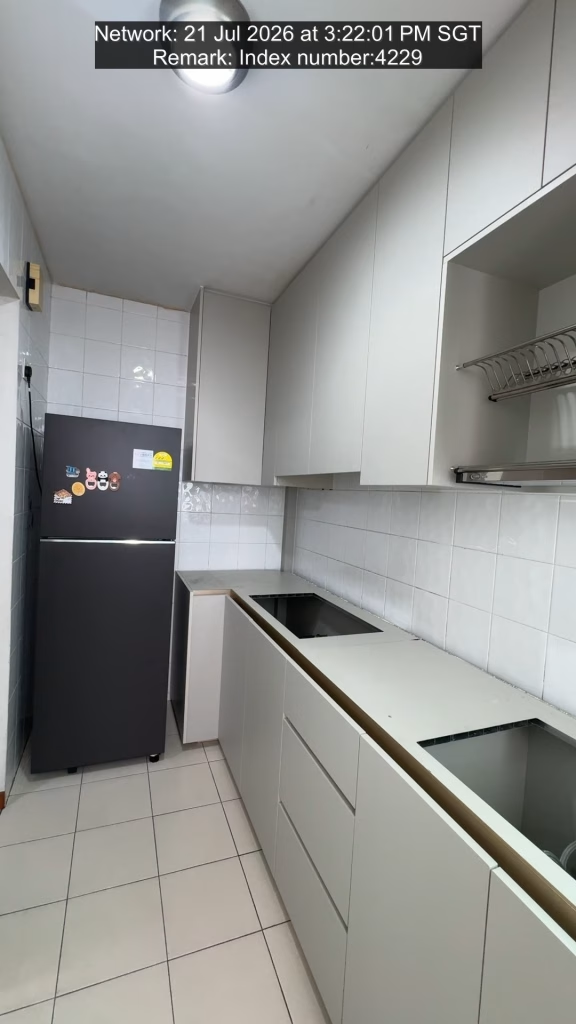
A kitchen cabinet carcass carries real weight: appliances, cookware, pantry stock, small electrical equipment, and the doors themselves. Understanding the structural performance parameters of your chosen material is therefore not a secondary concern; it is fundamental to safe, functional cabinetry, which is why knowing the aluminium kitchen cabinet load capacity is critical before installation.
Aluminium carcasses, when correctly specified, handle comparable or superior loads to plywood equivalents at similar thicknesses. Unlike plywood, which can deflect over time under sustained load, aluminium does not creep. The shelf will hold the same weight in year 15 as it did in year one, provided the joinery was correctly engineered at the outset.
For applications where heat is a factor, such as base units beneath a built-in oven or beside a hob, the non-combustible nature of aluminium provides an additional safety advantage, and reviewing the specifications for an aluminium cabinet for built in oven will clarify the ventilation and thermal management requirements for that specific configuration.
Corrosion, Moisture, and Singapore's Climate
One of the most common concerns homeowners raise when considering aluminium cabinetry is rust, but the answer becomes clear when you explore whether can aluminium kitchen cabinets rust, as aluminium does not rust in the way iron does. Rust is the oxidation of iron, and aluminium contains no iron. Aluminium does oxidise, forming a thin aluminium oxide layer on its surface, but this layer is protective rather than destructive. It seals the metal and prevents further oxidation from progressing inward.
For Singapore specifically, where ambient humidity frequently exceeds 80% and wet kitchens are standard in HDB flats, this property is directly relevant. Wood-based carcasses absorb moisture over months and years, leading to swelling at joints, delamination of laminate finishes, and ultimately structural failure. Aluminium carcasses are dimensionally stable regardless of humidity level.
Wet and Dry Kitchen Planning in Singapore
Singapore’s kitchen layouts are shaped by HDB guidelines and the practical distinction between wet kitchens (where washing, raw food preparation, and high-moisture cooking occurs) and dry kitchens (typically an open-plan area adjacent to the living room, used for lighter cooking and social dining).
Aluminium carcasses are equally at home in both environments, but their performance advantage is most pronounced in the wet kitchen, where splash zones, steam, and drainage proximity create conditions that accelerate the deterioration of wood-based alternatives.
For a wet kitchen, T Se7en Alucraft typically recommends full aluminium carcass construction throughout, including base units and tall pantry units. For the dry kitchen, an aluminium carcass paired with decorative panel doors offers the structural reliability of metal with the warm aesthetic finish many homeowners prefer for a space that opens onto the living area.
Home Renovation Costs and Budget Context in Singapore
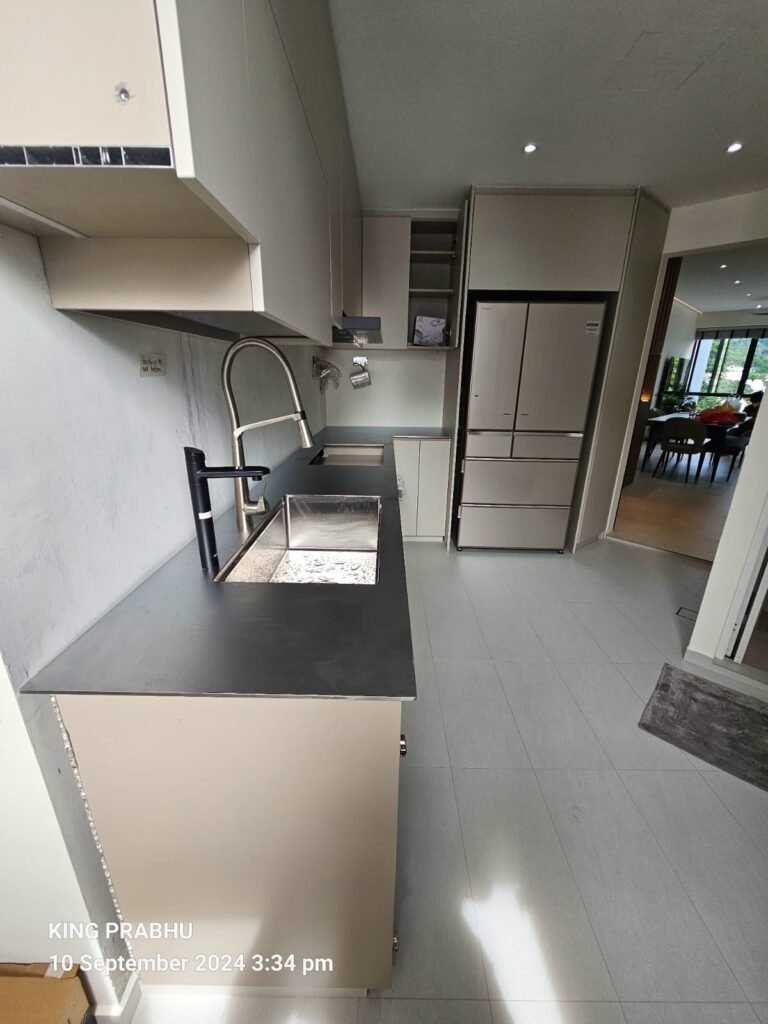
Kitchen renovation costs in Singapore vary widely depending on scope, materials, appliances, and the scale of structural work involved. For aluminium cabinetry specifically, the carcass is one component of the overall budget alongside worktops, backsplashes, appliances, plumbing, and installation labour.
According to SkyQuest (2024), the global kitchen cabinet market was valued at S$115.64 billion in 2024, projected to reach S$236.22 billion by 2033. While this reflects global figures, it signals sustained demand and a maturing market for premium cabinet materials, including aluminium.
At T Se7en Alucraft, pricing is project-specific, reflecting the custom nature of each installation. For an accurate cost estimate tailored to your kitchen’s dimensions and configuration, contacting their consultants directly at sales@tse7en.com or calling +65 9615 9273 is the fastest route to a meaningful figure.
What is consistent across projects is that aluminium carcasses typically cost more upfront than MDF or particle board alternatives, but the absence of replacement costs, moisture damage repairs, and pest-related remediation over a 15- to 20-year lifespan makes the total cost of ownership more competitive.
Design Customisation: What You Can Specify
T Se7en Alucraft’s approach to customisation is comprehensive. Rather than selecting from a catalogue of standard modules, clients work with the design team to define:
- Cabinet dimensions to the millimetre, critical in Singapore kitchens where space efficiency is non-negotiable.
- Internal fittings including drawer inserts, pull-out pantry systems, and adjustable shelf configurations.
- Door style and finish, chosen from the Compact Plus, Glass, or AVS Panel options described earlier.
- Colour and texture, available across a range of laminates, solid colours, and wood-effect finishes.
- Hinge and handle hardware, which affects both the tactile experience of the cabinets and their long-term mechanical reliability.
Virtual showroom tours, video call design sessions, and WhatsApp consultations are all available, making it straightforward to begin the design process without an in-person visit.
Maintenance and Care Over the Long Term
One of the practical advantages of an aluminium carcass that is rarely discussed in detail is how easy it is to maintain. Unlike wood, aluminium does not require periodic sealing, polishing, or treatment against moisture or insects. Routine care is limited to:
- Wiping down with a damp cloth to remove cooking grease or condensation from surfaces.
- Checking hinge tension annually and adjusting where necessary.
- Cleaning drawer runners with a dry cloth to remove dust or debris that might affect smooth operation.
- Inspecting silicone seals at wall junctions in wet kitchens for any signs of lifting or cracking, typically every two to three years.
There is no risk of the aluminium itself degrading under normal kitchen conditions. The components most likely to require attention over time are the mechanical fittings, such as hinges, runners, and handles, which are standard replacement parts available through any hardware supplier in Singapore.
Book Your Kitchen Design Consultation with T Se7en Alucraft
If you have spent time weighing up materials, door styles, and layouts, the next step is speaking with someone who has designed and installed hundreds of aluminium kitchens across Singapore. T Se7en Alucraft’s consultants are available via WhatsApp, video call, or virtual showroom tour to discuss your specific project in detail.
Book your kitchen consultation today and get a custom quotation based on your kitchen’s exact dimensions, layout, and finish preferences. Reach the team directly at +65 9615 9273 or email sales@tse7en.com to arrange your session.
Start Your Aluminium Kitchen Renovation With Confidence
Your kitchen deserves a foundation that holds up for decades, not just a few years. At T Se7en Alucraft, every aluminium kitchen cabinet carcass is custom-engineered to suit your space, your lifestyle, and Singapore’s demanding climate conditions. Whether you are renovating an HDB flat, a condominium, or a landed property, the team brings over 30 years of specialist experience to every project.
Book your appointment with a T Se7en Alucraft consultant today and receive a detailed quotation tailored to your kitchen’s exact dimensions and requirements. Contact the team directly at +65 9615 9273 or email sales@tse7en.com, and ask about WhatsApp consultations, video call design sessions, and virtual showroom tours to get started from wherever you are.
Frequently Asked Questions
The carcass is the bare structural box of the cabinet unit, while the full cabinet includes the carcass plus doors, drawers, hinges, handles, and internal fittings.
The carcass alone has no moving parts and no decorative finish applied to it. It is the foundational frame onto which every other component is mounted, and it is the part of the cabinet most directly exposed to moisture, heat, and structural stress over time. When suppliers quote carcass pricing separately from door pricing, they are giving you the flexibility to choose construction quality and aesthetic finish independently of each other.
The most affordable kitchen carcasses in Singapore are typically flatpack MDF or particle board units available from large furniture retailers, but these materials are poorly suited to wet kitchen environments.
Cheaper carcasses save money at the point of purchase but often require partial or full replacement within five to ten years as moisture infiltrates the board material, causes swelling at joints, and leads to delamination of surface finishes. For Singapore homeowners who factor in the full cost over a renovation’s lifespan, aluminium carcasses from a specialist supplier like T Se7en Alucraft frequently represent better value despite a higher upfront investment.
Yes, a kitchen carcass can be replaced without necessarily removing your existing worktop, doors, or appliances, although the feasibility depends on how the original unit was constructed and fixed.
Carcasses that were built in place using structural adhesives or that share wall fixings with adjacent units are more complex to remove without collateral damage. Modular aluminium systems, which T Se7en Alucraft specialises in, are considerably easier to disassemble and replace on a unit-by-unit basis. If you are dealing with a failing wood-based carcass in a wet kitchen, replacing it with an aluminium alternative is a practical upgrade that does not require a full kitchen strip-out.
For Singapore’s tropical climate, an aluminium carcass is the most durable, moisture-resistant, and long-lasting option currently available for residential and commercial kitchens.
Plywood is a reasonable secondary choice in dry kitchen zones where direct water exposure is minimal and humidity is better controlled. However, in wet kitchens, near sink areas, or in any space where steam and condensation are regular occurrences, aluminium outperforms wood-based materials across every meaningful metric: dimensional stability, resistance to biological growth, load retention over time, and fire safety. The absence of formaldehyde off-gassing is a further advantage for indoor air quality in Singapore’s typically compact kitchen layouts.
The carcass in kitchen cabinets is the box-shaped structural frame that forms the body of each individual cabinet unit, constructed before any doors, shelves, drawers, or finishes are added.
It comprises the side panels, base panel, top panel, and back panel of the cabinet box. In wood-based cabinetry, these panels are typically cut from plywood, MDF, or particle board and joined with dowels, screws, or cam locks. In aluminium cabinetry, the same panels are formed from extruded or sheet aluminium and joined using profile interlocks or mechanical fasteners. The carcass is the most structurally critical component of any kitchen cabinet, and the material it is made from determines how the cabinet performs in the long term, particularly under Singapore’s persistently high humidity.
Still Unsure?
Speak to a professional now and get personalized consultation and guidance for your next renovation. Work with a team you can trust!
Best Materials for Kitchen Cabinets in Singapore
Home Blog An aluminium kitchen cabinet carcass is the structural skeleton of your kitchen cabinet, built entirely from aluminium rather than wood, plywood, or MDF....