


Aluminium Kitchen Cabinet Workmanship: What Sets Quality Builds Apart in Singapore
Good aluminium kitchen cabinet workmanship comes down to precision joinery, surface finishing, and structural integrity that holds up in Singapore’s humid, high-heat environment. When the craftsmanship is right, your cabinets will outlast trends, resist moisture, and perform reliably for decades.
Key Takeaways
- Workmanship quality directly determines how long aluminium kitchen cabinets last in Singapore’s climate.
- Key markers of good craftsmanship include tight joinery, consistent welding or extrusion quality, and flush door alignment.
- Powder-coated or anodised finishes applied with proper preparation resist moisture, staining, and UV far better than basic painted surfaces.
- Custom-made aluminium cabinets, built to your kitchen’s exact dimensions, outperform off-the-shelf options in both fit and longevity.
- Always ask a cabinetmaker about frame thickness, hinge quality, and whether carcasses are sealed at joins before you commit.
- T Se7en Alucraft brings over 30 years of experience to every custom aluminium build across Singapore.
Why Workmanship Matters More Than Material Alone
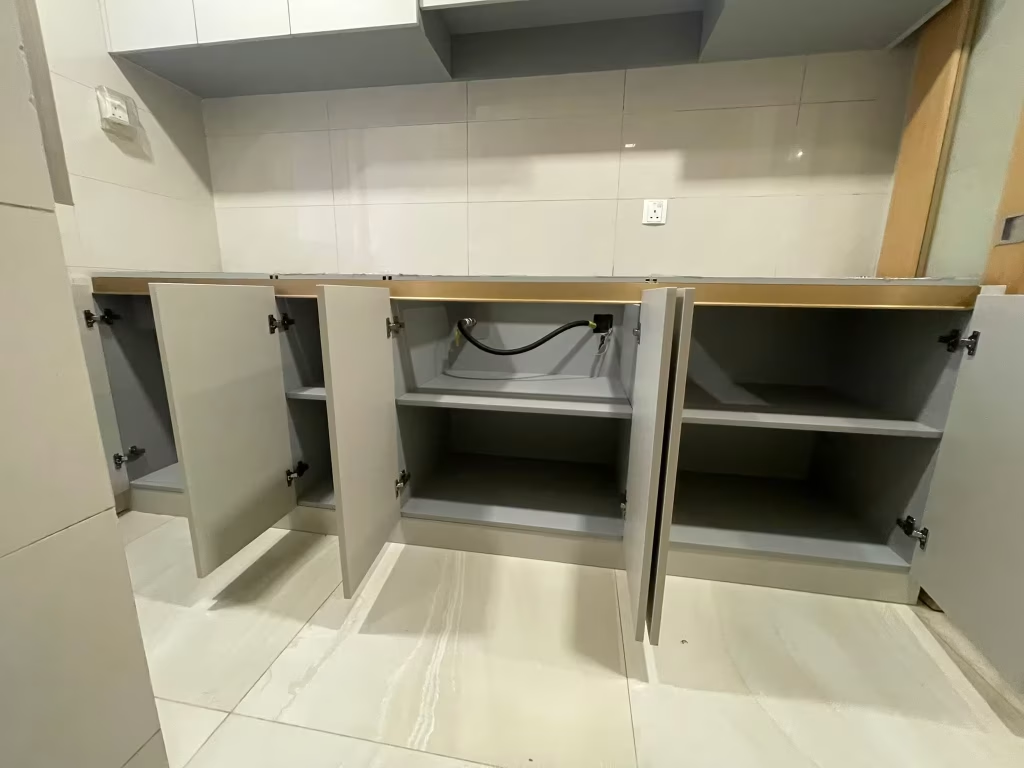
Aluminium is an excellent material for kitchen cabinets. It resists moisture, does not warp in humidity, and is significantly lighter than timber while maintaining structural rigidity. But the material itself is only part of the story. Even the best-grade aluminium profile will underperform if the workmanship behind it is poor.
In Singapore, where humidity hovers consistently above 80% and kitchens face daily heat from cooking, the precision with which a cabinet is built determines whether it stays tight, square, and functional over time. Gaps at joins, poorly fitted hinges, or inconsistent welds can allow moisture to penetrate. Over time, that leads to rattling doors, sagging shelves, and structural weakening at stress points.
According to Technavio (2026), quality is paramount in the cabinetry market, evidenced by growing demand for features like dovetail drawer boxes and full-overlay cabinet doors. The same principle applies to aluminium: the craftsmanship standard sets the baseline for performance, not the material specification alone.
If you are weighing up whether are aluminium kitchen cabinets termite proof is a benefit you need, the answer is yes, but that benefit is only fully realised when the cabinet is built to a standard that leaves no organic material exposed at joins or backing panels.
The Anatomy of a Well-Made Aluminium Kitchen Cabinet
Understanding what goes into a quality aluminium kitchen cabinet helps you evaluate quotes and compare contractors with confidence. Here are the structural elements where craftsmanship makes the most difference.
Frame and Carcass Construction
The frame is the skeleton of the cabinet. In well-made aluminium cabinets, the frame profile is extruded to a consistent wall thickness, typically between 1.0 mm and 1.5 mm for residential use. The joints are either precision-welded or use interlocking extrusion systems that are mechanically fixed. There should be no visible gaps, no misalignment between vertical and horizontal members, and no flex when moderate pressure is applied.
Carcasses must be sealed at all internal corners. Unsealed joins in a kitchen environment are a direct path for moisture, grease, and food residue, which compromises hygiene and structural stability over years of use.
Drawer Systems and Runners
Drawer runners are one of the first places poor workmanship reveals itself. Quality builds use full-extension soft-close runners from established hardware brands, mounted at precisely the correct height so drawers run flush and level. Runners that are misaligned even slightly will cause drawers to catch, tilt under load, or jam over time.
The drawer box itself should be rigid and square. In premium aluminium builds, the box is fully aluminium with welded or precisely joined corners. In mid-range builds, aluminium-framed boxes with board inserts are acceptable, provided the frame is square and the insert is moisture-resistant.
Door Alignment and Hinge Quality
Doors are the most visible element of any kitchen cabinet, and alignment is the clearest signal of good workmanship. Doors should sit flush with each other, with consistent reveal gaps of 2 mm to 3 mm across the run. There should be no bowing, no visible twist, and no door that sits proud of its neighbour.
The hinges must be rated for the door weight and set at the correct depth. Quality aluminium cabinet makers use concealed hinges with six-way adjustability, allowing fine-tuning after installation. A good installer will spend time on-site adjusting doors until the alignment is perfect. If a contractor tells you alignment cannot be improved once installed, that is a red flag.
Surface Finishing: Where Craftsmanship Becomes Visible
The finish on an aluminium kitchen cabinet is where visual quality and durability intersect. There are several finishing methods, each requiring a different level of skill and preparation to execute well.
Powder Coating
Powder coating is the most common finish for aluminium kitchen cabinets in Singapore. A dry powder is electrostatically applied to the aluminium surface and then cured in an oven, producing a hard, even coating. When applied correctly, powder coating is highly resistant to chipping, moisture, and UV degradation.
Good workmanship in powder coating means thorough surface preparation: the aluminium must be cleaned, degreased, and pre-treated before powder is applied. Skipping surface preparation leads to adhesion failure, which shows up as peeling or bubbling within two to three years, particularly in kitchens where steam and cleaning products are in regular contact with surfaces.
Anodising
Anodising is an electrochemical process that creates an oxide layer directly on the aluminium surface. It produces a harder, more scratch-resistant finish than powder coating and is particularly suited to aluminium profiles that will see heavy daily contact. Anodised finishes are available in a range of colours, though the palette is narrower than powder coating.
The depth of the anodised layer matters. Architectural-grade anodising achieves 15 to 25 microns, which is appropriate for kitchen use. Thinner anodising is acceptable for interior shelving but will wear in high-contact areas like cabinet edges and door faces.
Laminate and Composite Panel Finishes
Some aluminium cabinet systems use aluminium frames with laminate, Formica, or composite panel faces. This creates a warmer visual result and a wider range of surface textures. The workmanship consideration here is adhesion quality: the panel must be bonded flush to the frame with no bubbling, lifting at edges, or visible seam lines.
If you are deciding should kitchen cabinets go to the ceiling in your renovation, the finish consistency across tall cabinet runs becomes particularly important, as ceiling-height cabinets expose more surface area to light and scrutiny.
How Singapore's Climate Puts Workmanship to the Test
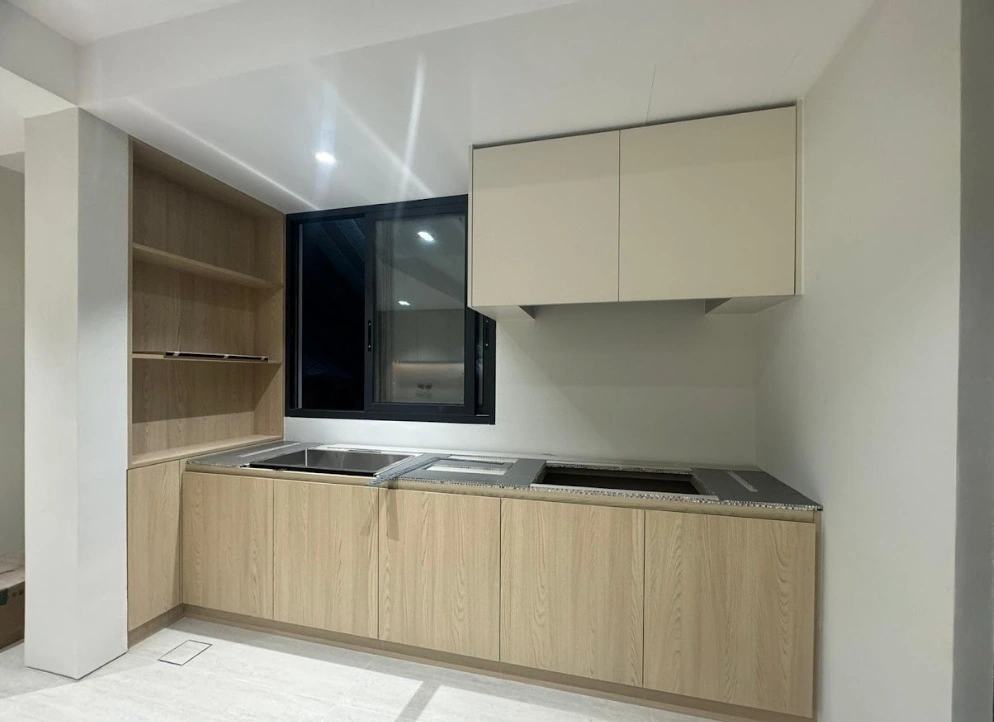
Singapore’s tropical climate is one of the most demanding environments for interior joinery anywhere in the world. Humidity is persistent, kitchens are small and poorly ventilated in many HDB and condo units, and temperatures spike during cooking. Poorly crafted cabinets reveal their weaknesses within months.
One of the most frequently asked questions about aluminium cabinetry is can aluminium kitchen cabinets rust. Aluminium itself does not rust in the way steel does, but aluminium oxide can form on surfaces where the protective coating has failed. Good workmanship, specifically in surface preparation and finish application, is what keeps this from happening.
The question of how long do aluminium cabinets last is directly tied to the standard of workmanship at the point of fabrication. Cabinets built with proper frame thickness, correct finishing processes, and quality hardware typically last 20 years or more in a Singapore kitchen environment. Cabinets built to a lower workmanship standard may begin showing structural or cosmetic problems within five years.
Custom vs. Ready-Made: The Workmanship Difference
The Singapore kitchen cabinet market offers both ready-made modular units and fully custom-built options. According to The Freedonia Group, semi-custom cabinets led with 37.85% of the kitchen cabinets market share in 2025, reflecting a strong preference for kitchens that are built to specific dimensions rather than standardised box sizes.
In Singapore, this distinction matters acutely because HDB and condo kitchens vary considerably in layout, ceiling height, and wet/dry kitchen configuration. A ready-made unit that does not fit flush to the wall leaves gaps that collect grease and moisture. A cabinet run that does not account for pipework or electrical points creates installation headaches that are often resolved with visible workarounds.
Custom-built aluminium kitchen cabinets eliminate these issues when crafted by an experienced fabricator. Every panel, every door, and every carcass is dimensioned to the actual space. Filler panels are not an afterthought; they are integrated into the design from the start.
If you are based in the east or north-east of Singapore, T Se7en Alucraft provides services for kitchen cabinets bedok and kitchen cabinets sengkang residents looking for custom aluminium solutions built to their exact kitchen dimensions.
What to Ask Your Cabinet Maker Before You Sign Off
Before committing to any contractor for your aluminium kitchen cabinets, ask these specific questions. The answers will tell you a great deal about their workmanship standards.
- What aluminium profile thickness do you use for the carcass frame? Anything below 0.8 mm for residential use warrants further scrutiny.
- How are frame joints connected? Look for mechanical fixing, welding, or precision interlocking extrusion systems. Adhesive-only joins are insufficient for carcass construction.
- What surface preparation process do you use before powder coating? A quality answer will mention cleaning, degreasing, and chromate or non-chromate pre-treatment.
- What brand of hinges and drawer runners do you use? Established hardware brands such as Hettich, Blum, or Grass indicate a commitment to hardware quality.
- Do you provide a warranty on both materials and workmanship? Reputable fabricators stand behind their work with a defined warranty period covering structural defects and finish failure.
- Can I see completed projects or visit an installation? A confident craftsman will have a portfolio and will welcome site visits.
How T Se7en Alucraft Approaches Craftsmanship
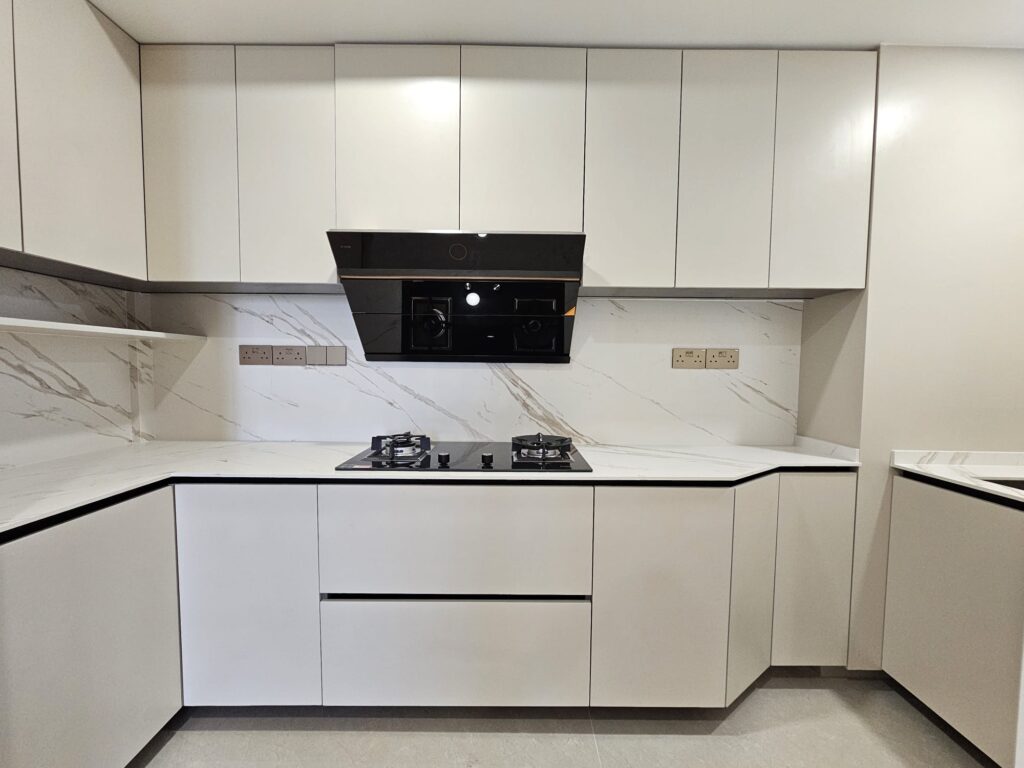
T Se7en Alucraft has been building custom aluminium fixtures for Singapore homes and commercial spaces for over 30 years. That depth of experience means the team has encountered and solved virtually every challenge that Singapore kitchens present: tight HDB layouts, unusually high ceilings, shared walls with wet areas, and kitchens that serve as both the functional and social heart of a home.
The approach at T Se7en Alucraft is built on three principles. First, every project starts with precise site measurement. Cabinets are fabricated to the actual dimensions of the space, not to a catalogue standard. Second, only established-grade hardware is used across all builds, including soft-close hinges and full-extension drawer runners. Third, every installation is reviewed against a quality checklist before handover, covering door alignment, drawer operation, surface consistency, and structural rigidity.
The result is aluminium kitchen cabinet workmanship that is backed by three decades of refinement in a market where the climate, the kitchen layouts, and the expectations of homeowners are all highly specific.
For homeowners looking to discuss a new kitchen project, T Se7en Alucraft offers WhatsApp consultations, video call design sessions, and virtual showroom tours. Reach the team at +65 9615 9273 or sales@tse7en.com to begin a conversation about your kitchen.
Start Your Kitchen Transformation With T Se7en Alucraft
You have invested time researching what separates a well-built aluminium kitchen cabinet from a mediocre one. Now is the time to put that knowledge to work with a team that has been delivering precision craftsmanship in Singapore for over 30 years. T Se7en Alucraft builds every kitchen cabinet to your exact space, your chosen finish, and your budget, with quality hardware and workmanship backed by decades of refinement in Singapore’s demanding climate. Book your appointment today and speak directly with a consultant who will walk you through materials, layouts, and timelines specific to your kitchen.
The Bottom Line on Aluminium Kitchen Cabinet Workmanship
Aluminium kitchen cabinet workmanship is the factor that determines whether your investment performs as expected for ten years or for thirty. The material has clear inherent advantages in Singapore’s climate, but those advantages are only fully realised when the fabrication, finishing, and installation are carried out to a high and consistent standard. From frame thickness and joint integrity to surface preparation and hardware selection, every detail compounds over time into either a kitchen that stays beautiful and functional or one that begins to show its weaknesses within a few years.
If you are ready to commission a kitchen built to a standard you can trust, contact T Se7en Alucraft at +65 9615 9273 or sales@tse7en.com, or visit www.tse7en.com to schedule a WhatsApp consultation, video call design session, or virtual showroom tour and take the first step towards a kitchen that is built to last.
Frequently Asked Questions
Yes, aluminium is an excellent choice for kitchen cabinets, particularly in Singapore’s humid and heat-intensive environment.
Aluminium does not warp, swell, or rot the way timber does when exposed to persistent moisture and steam. It is naturally lightweight, structurally rigid, and compatible with a wide range of surface finishes including powder coating and anodising. Unlike wood-based boards, aluminium will not harbour termites or degrade from prolonged contact with moisture. When fabricated to a good workmanship standard, aluminium kitchen cabinets are one of the most durable and low-maintenance options available to Singapore homeowners.
The best price for an aluminium kitchen cabinet in Singapore is one that reflects genuine quality workmanship, appropriate material grade, and proper hardware, rather than simply the lowest figure quoted.
In practical terms, a professionally fabricated custom aluminium kitchen cabinet set for a typical HDB kitchen in Singapore generally starts from around S$3,000 to S$5,000 for basic configurations, with full custom builds for larger or more complex kitchens ranging from S$8,000 upward depending on cabinet count, finish type, and hardware specification. Quotes that fall significantly below this range often reflect thinner aluminium profiles, lower-grade hardware, or surface finishes applied without proper preparation. Asking for a detailed breakdown of materials, profile thickness, and hardware brands will help you compare quotes accurately rather than on price alone.
The cost of an aluminium kitchen cabinet in Singapore varies based on kitchen size, cabinet configuration, finish type, and the quality of hardware and workmanship involved.
For a standard HDB kitchen, a full set of base and wall cabinets in aluminium with powder-coated finish and soft-close hardware typically falls in the range of S$4,000 to S$10,000. Condominium kitchens with island configurations or ceiling-height cabinetry will naturally sit at the higher end or beyond, depending on the scope. Custom fabrication from an established specialist like T Se7en Alucraft includes site measurement, design consultation, fabrication, and installation within the quoted price. It is worth requesting a full itemised quotation so you can see exactly what you are paying for at each stage of the project.
For kitchen cabinet applications in Singapore, aluminium alloy series 6063 and 6061 are the most commonly used and most suitable grades due to their excellent corrosion resistance, structural strength, and compatibility with anodising and powder coating.
Series 6063 is widely used in architectural and cabinetry extrusions because it produces clean, smooth surface finishes and holds tight dimensional tolerances during fabrication. Series 6061 offers slightly higher tensile strength and is often used in structural members or in commercial kitchen environments where load-bearing requirements are greater. For residential kitchen cabinets, 6063 extruded profiles at 1.0 mm to 1.5 mm wall thickness represent the standard that quality fabricators in Singapore work to. Always confirm the alloy grade and profile thickness with your contractor before fabrication begins.
Aluminium kitchen cabinets are generally priced higher upfront than basic wood-based board cabinets, but they offer a significantly lower total cost of ownership over time given their durability and low maintenance requirements in Singapore’s climate.
Compared to high-pressure laminate or moisture-resistant MDF cabinets at the entry-level price point, aluminium cabinets will typically cost more at the point of purchase. However, wood-based cabinets in Singapore kitchens commonly require repairs, panel replacements, or full replacement within eight to twelve years due to moisture damage, hinge failure, and swelling at joins. Aluminium cabinets, when built to a proper workmanship standard, routinely outlast two cycles of wood-based cabinetry without structural intervention. When you factor in the cost of replacement and disruption, aluminium frequently represents the more economical long-term choice.
Still Unsure?
Speak to a professional now and get personalized consultation and guidance for your next renovation. Work with a team you can trust!
Best Materials for Kitchen Cabinets in Singapore
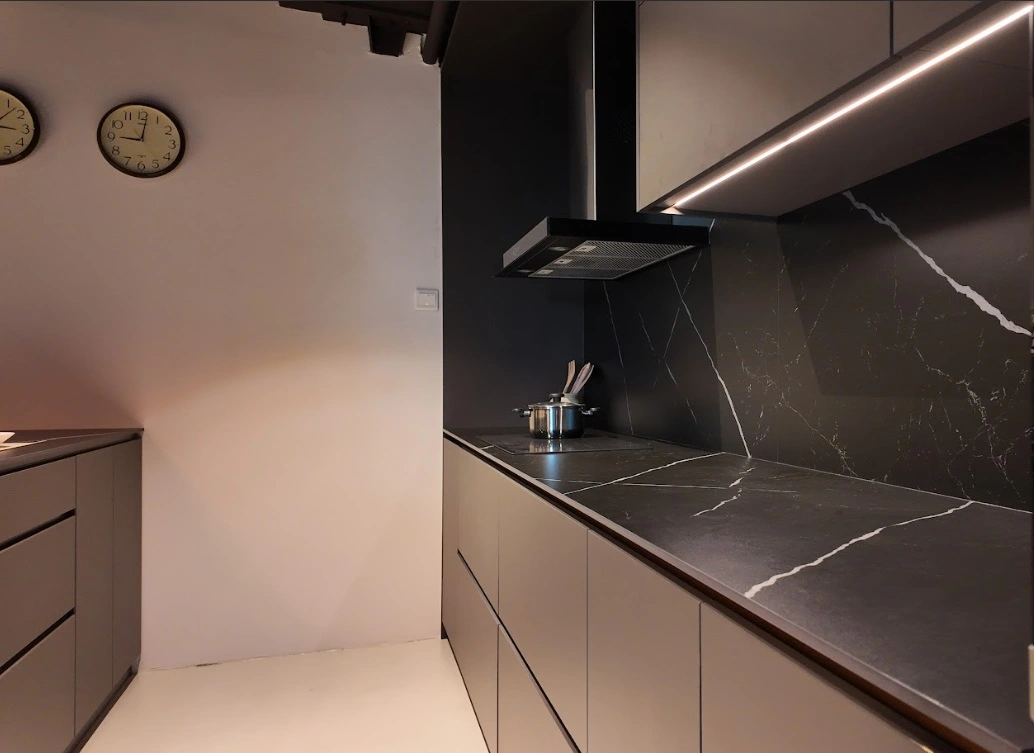
Home Blog Good aluminium kitchen cabinet workmanship comes down to precision joinery, surface finishing, and structural integrity that holds up in Singapore’s humid, high-heat environment....