


Aluminium Profile vs Panel Kitchen Cabinets: Which One Fits Your Singapore Home?
When choosing between aluminium profile and panel kitchen cabinets, profile designs use an extruded aluminium frame with an infill (glass, acrylic, or compact panel), while panel cabinets use a solid sheet of aluminium or composite material as the door face. Both options outperform traditional wood-based cabinetry in Singapore’s humid climate, but they serve different needs, budgets, and aesthetic preferences.
Key Takeaways
- Aluminium profile cabinets offer a sleek, modern frame-and-infill look, while panel cabinets provide a seamless, minimalist door face.
- Both cabinet types resist moisture, termites, and warping far better than wood or MDF in Singapore’s tropical conditions.
- Profile cabinets generally allow more design flexibility through swappable infill materials; panel cabinets tend to be easier to clean.
- The flat, slab-style door (a close cousin to panel cabinets) is the top trending style in 2026, according to the NKBA 2026 Kitchen Trends Report.
- Cost, maintenance, longevity, and personal style all influence which type is the right fit for your home.
- Working with a specialist, such as T Se7en Alucraft, ensures proper material selection, precise fabrication, and reliable installation.
What Sets Aluminium Profile and Panel Cabinets Apart
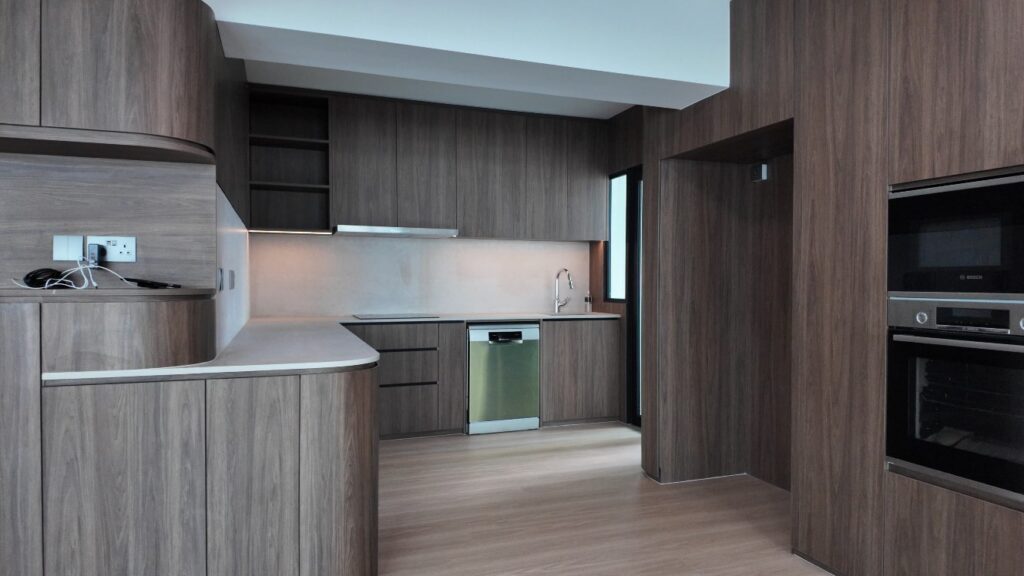
To make a confident decision, you first need to understand what each system actually is and how it is constructed.
Aluminium profile cabinets are built around an extruded aluminium frame, typically rectangular or square-section, that forms the border of each door or drawer front. Inside this frame sits an infill material such as tempered glass, frosted acrylic, compact laminate, or even solid aluminium sheeting. The frame-and-infill construction is what gives profile cabinets their signature look: a visible border around each panel, reminiscent of traditional shaker styles but executed in metal.
Aluminium panel cabinets, sometimes called full-panel or slab aluminium cabinets, use a single sheet of aluminium composite material or extruded aluminium plate as the entire door face, with no visible frame. The result is a flat, seamless surface that suits contemporary and minimalist kitchens. This style aligns closely with the flat slab door trend that 69% of consumers now prefer, according to the NKBA 2026 Kitchen Trends Report.
Choosing the right aluminium grade for kitchen cabinets matters in both systems because Series 6000 aluminium alloys are most common for kitchen applications in Singapore because they balance corrosion resistance, strength, and workability.
How Each Cabinet Type Performs in Singapore's Climate
Singapore’s equatorial climate means kitchens face near-constant humidity, heat from cooking, and occasional moisture splashes. This is precisely where aluminium cabinets of both types leave wood, MDF, and particleboard far behind.
According to the NKBA 2024 Design Trends Report, more than 60% of kitchen renovation callbacks relate to moisture damage, including warped doors, delaminated panels, and mouldy interiors. These failures are overwhelmingly linked to wood-based cabinetry, not metal.
Both aluminium profile and panel cabinets handle moisture well, but there are nuances.
- Profile cabinets: The frame construction creates small joints where the infill meets the aluminium. If the sealant degrades over time, moisture can potentially enter at those junctions. High-quality fabrication and proper sealing eliminate this risk almost entirely.
- Panel cabinets: Because the door face is one continuous surface, there are fewer joints for moisture to exploit. This makes panel cabinets marginally easier to waterproof over the long term.
A common concern among Singapore homeowners is whether aluminium corrodes in a humid kitchen, and you can read more about whether can aluminium kitchen cabinets rust to understand why anodised and powder-coated finishes make corrosion a non-issue in practice.
Another key advantage shared by both types is pest resistance, and the question of whether are aluminium kitchen cabinets termite proof is answered comprehensively on our resource page because aluminium provides no nutrition or structural access for insects unlike timber cabinetry.
Comparing Costs, Longevity, and Value for Singapore Homeowners
Upfront Cost Differences
Aluminium cabinets of both types typically cost more upfront than flat-pack wood or particleboard options. However, when you account for the lifespan difference, the cost-per-year figure often favours aluminium significantly.
In Singapore, custom aluminium kitchen cabinets generally range from S$3,000 to S$10,000 and above depending on kitchen size, design complexity, hardware choices, and the fabricator you use. Panel-style aluminium doors may be slightly more affordable per unit because the construction is simpler, while profile cabinets with glass or acrylic infills carry a higher material and fabrication cost.
Lifespan: A Key Differentiator
One of the strongest arguments for aluminium over wood-based cabinetry is longevity, and information on how long do aluminium cabinets last shows that with proper care, quality aluminium kitchen cabinets can serve a household for 20 to 30 years, significantly outlasting MDF or particleboard alternatives that often require replacement within 10 years in Singapore’s climate.
Long-Term Value
| Factor | Aluminium Profile Cabinet | Aluminium Panel Cabinet | Wood/MDF Cabinet |
|---|---|---|---|
| Moisture resistance | Excellent (with sealed joints) | Excellent | Poor |
| Termite resistance | Full | Full | None |
| Design flexibility | High (swap infills) | Moderate | Moderate |
| Ease of cleaning | Good | Excellent (flat surface) | Good (veneer) |
| Estimated lifespan (SG) | 20-30 years | 20-30 years | 7-12 years |
| Starting cost (SG) | S$3,500+ | S$3,000+ | S$1,500+ |
| Eco-credential | Recyclable | Recyclable | Variable |
The global kitchen cabinets market was valued at USD 91.07 billion in 2025 and is estimated to grow from USD 95.95 billion in 2026 to reach USD 124.42 billion by 2031, at a CAGR of 5.36% (Mordor Intelligence, 2026). Within this growth, the metal cabinetry segment is projected to grow at a 6.37% CAGR through 2031, reflecting rising homeowner confidence in aluminium and steel alternatives over wood.
Aesthetic and Design Flexibility: Which Looks Better?
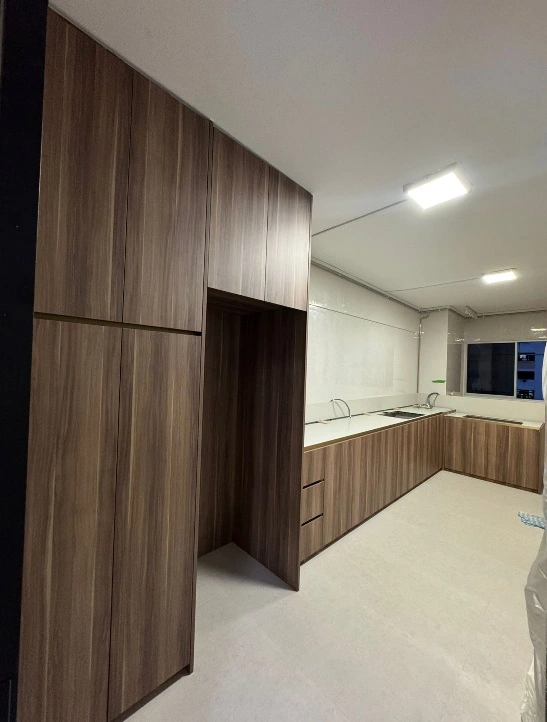
Profile Cabinets for Visual Character
Profile cabinets suit homeowners who want visual texture and depth in their kitchen. The aluminium frame creates a deliberate border around each door, which can feel tailored and purposeful. You can mix infill materials across sections: glass-fronted upper cabinets to display dishware, compact panel lowers for a clean base, and frosted acrylic for bathroom-adjacent zones.
This design flexibility also extends vertically, and whether you are deciding should kitchen cabinets go to the ceiling or prefer a softer stop at cornice level, profile frames can be custom-cut to match any ceiling height precisely, which is a practical advantage in Singapore homes where ceiling heights vary across HDB flat generations and private condominiums.
Panel Cabinets for Minimalist Simplicity
Panel cabinets excel in kitchens where the design philosophy is “less is more.” With no visible frame interrupting the door surface, panel-style aluminium creates a sleek, monolithic appearance. This works particularly well in open-plan Singapore apartments where the kitchen is visible from the living and dining areas.
According to the NKBA 2026 Kitchen Trends Report, flat slab cabinet doors are the most popular choice among consumers at 69%, a preference that lends direct market validation to the panel cabinet aesthetic.
Workmanship, Installation, and What to Look For
The quality of your aluminium cabinets depends enormously on fabrication and installation standards, and understanding aluminium kitchen cabinet workmanship standards helps you ask the right questions when visiting a showroom or reviewing quotations.
Key quality indicators to check before committing to a supplier:
- Frame joint precision: In profile cabinets, the corners of the aluminium extrusion should be mitred and fitted without visible gaps. Poorly fitted corners allow moisture ingress and look unprofessional.
- Infill sealing: Glass or acrylic infills in profile cabinets should be seated in rubber gaskets or sealed with appropriate adhesive to prevent rattling and water entry.
- Powder coating or anodising uniformity: The finish should be even with no runs, bare spots, or bubbling.
- Hardware compatibility: Soft-close hinges and drawer runners should be rated for aluminium substrate, not just wood. Incorrectly specified hardware wears faster.
- Panel flatness: Aluminium panel doors should sit perfectly flat with no oil-canning (a slight waviness visible in certain lighting).
At T Se7en Alucraft, with over 30 years of experience in Singapore’s carpentry and aluminium fabrication industry, every cabinet is custom-made to the exact dimensions of your kitchen. Yuefung Tan and the T Se7en team conduct thorough site measurements and use precision machinery to ensure that frames, panels, and hardware all align to the tolerances the material demands.
Pros and Cons Side by Side
Aluminium Profile Cabinets
Pros:
- Versatile aesthetic with frame-and-infill flexibility
- Easily updated by swapping infill materials without replacing the whole cabinet
- Works well in mixed-use spaces (kitchen, bathroom, study)
- Strong structural integrity from the extruded aluminium frame
Cons:
- More joints than panel cabinets, requiring careful sealing
- Higher fabrication complexity can increase cost
- Glass or acrylic infills add weight and fragility risk compared to solid panels
Aluminium Panel Cabinets
Pros:
- Ultra-clean, minimal aesthetic that suits modern Singapore interiors
- Fewer joints mean simpler waterproofing
- Easiest surface to wipe down after cooking
- Tends to have a slightly lower per-door fabrication cost
Cons:
- Less design variation per door (no infill options)
- Large flat panels can show fingerprints more readily (matte finishes reduce this)
- Oil-canning is a risk if panel gauge is too thin or fabrication quality is low
Making the Right Decision for Your Kitchen
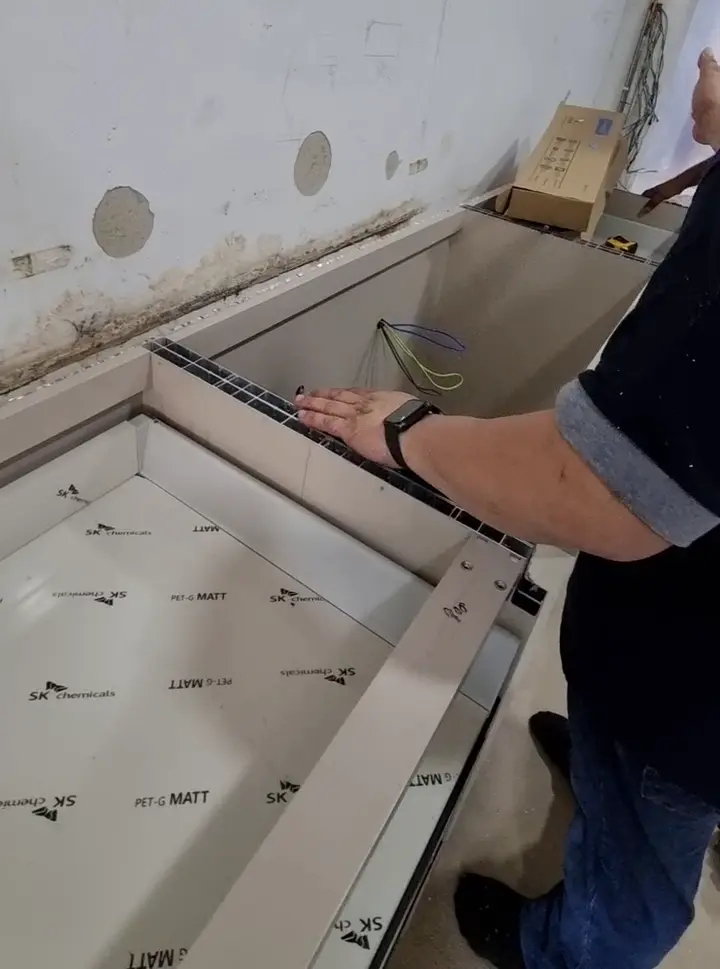
The choice between aluminium profile vs panel kitchen cabinets ultimately comes down to 4 practical questions:
- What aesthetic do you want? If you like visual texture and the option to mix materials, go with profile. If you want seamless simplicity, choose panel.
- How much design flexibility do you need now and later? Profile cabinets let you update infills without replacing the frame. Panel cabinets are more fixed once installed.
- What is your maintenance preference? Panel cabinets are marginally easier to clean. Profile cabinets require periodic checks on infill sealing.
- What is your budget? Both types cost more than wood upfront but deliver better value over their 20-to-30-year lifespan. Profile cabinets with glass infills sit at the higher end of the aluminium price range.
For Singapore homeowners in HDB flats, compact panel doors with aluminium frames are a practical middle ground: they carry the structural advantages of a profile system with a cleaner, near-panel aesthetic. For private condominium owners or those renovating larger kitchens, full-panel aluminium doors in a matte or brushed finish make a strong design statement that holds up beautifully over time.
Wood remains the dominant global material, holding a 71.84% market share in 2025 according to Mordor Intelligence (2026), but that figure reflects a global average weighted heavily by markets without Singapore’s humidity challenges. In the Singapore context, aluminium’s practical advantages make it a compelling choice regardless of global trends.
T Se7en Alucraft provides WhatsApp consultations, video call design sessions, and virtual showroom tours so you can explore both profile and panel options in detail without leaving your home. Reach the team at +65 9615 9273 or sales@tse7en.com to begin the conversation.
Start Your Kitchen Transformation With T Se7en Alucraft
You have done the research, and now the next step is getting a design that works specifically for your kitchen, your layout, and your lifestyle. T Se7en Alucraft has spent over 30 years helping Singapore homeowners build kitchens that stay beautiful and functional through decades of daily use. Whether you are leaning towards a profile frame design or a clean panel finish, the team can walk you through material samples, colour options, and a full site measurement at no obligation. Book your appointment today and speak directly with a specialist who understands what Singapore kitchens actually demand.
The Bottom Line on Aluminium Profile vs Panel Kitchen Cabinets
Both profile and panel aluminium cabinets represent a significant upgrade over wood-based cabinetry for Singapore homes, and the decision between them is far less consequential than the decision to choose aluminium in the first place. Profile cabinets suit kitchens where visual layering, infill variety, and design character are priorities. Panel cabinets suit spaces where seamless simplicity and effortless cleaning matter most. In either case, you are investing in a kitchen that will perform reliably through Singapore’s humidity, resist pests, and look sharp for two decades or more.
The single most important factor after choosing your cabinet type is the quality of the fabricator you work with. Precise measurements, correct alloy selection, proper surface finishing, and skilled installation are what separate a kitchen that ages gracefully from one that develops problems within a few years. T Se7en Alucraft brings over 30 years of hands-on experience to every project, with a team that understands both the technical and aesthetic demands of Singapore kitchens. Contact the team at sales@tse7en.com or call +65 9615 9273 to arrange your consultation and take the first concrete step towards a kitchen built to last.
Frequently Asked Questions
Aluminium is generally the better choice for Singapore kitchens because it is lighter, naturally corrosion-resistant, and easier to fabricate into precise custom sizes.
Steel is stronger in raw tensile terms, but it is significantly heavier and more prone to surface rust in Singapore’s humid environment if the protective coating is scratched or compromised. Aluminium, by contrast, forms a natural oxide layer that actively protects the base metal, and modern powder-coating or anodising treatments make the surface highly resistant to the moisture, grease, and heat that kitchen environments produce daily. Steel cabinets can also be more expensive to customise and harder to modify on-site, whereas aluminium extrusions and panels are cut and fitted with greater precision and flexibility.
Quality aluminium kitchen cabinets installed in Singapore can last 20 to 30 years with basic maintenance, far outlasting wood-based alternatives.
The key factors that determine longevity are the aluminium grade used, the quality of the surface finish, and the standard of workmanship during fabrication and installation. Cabinets made from Series 6000 aluminium alloys with powder-coated or anodised finishes hold up extremely well against humidity, cooking heat, and everyday impact. In contrast, MDF and particleboard cabinets in Singapore’s climate typically show signs of swelling, delamination, or mould within 7 to 12 years, often requiring a full kitchen replacement much sooner than homeowners anticipate.
The best kitchen cabinet type depends on your priorities, but aluminium cabinets consistently outperform wood-based options in Singapore’s tropical climate for durability, hygiene, and long-term value.
For homeowners who want design variety, profile-style aluminium cabinets offer frame-and-infill flexibility that allows glass, acrylic, or compact panel inserts to be mixed across the same kitchen. For those who prioritise a clean, seamless look and effortless maintenance, aluminium panel cabinets deliver a flat, minimalist door face that is easy to wipe down and highly moisture-resistant. If budget is the primary constraint, compact panel doors with aluminium framing offer a practical middle ground that captures most of the durability benefits at a more accessible price point.
The main disadvantages of aluminium kitchen cabinets are higher upfront cost compared to wood alternatives, potential for surface denting on thinner-gauge panels, and a more industrial aesthetic that does not suit every design preference.
Aluminium is softer than steel, so a sharp impact from heavy cookware can leave a dent on thinner panel sections, though thicker gauge aluminium largely eliminates this risk. The cost of custom aluminium cabinetry in Singapore typically starts higher than flat-pack or modular wood options, which can be a barrier for tight renovation budgets. Aesthetically, aluminium has a distinctly contemporary or industrial look that pairs beautifully with modern interiors but may feel out of place in a kitchen aiming for a rustic or heritage style. Additionally, fingerprints are more visible on high-gloss aluminium finishes, though matte and brushed textures address this effectively.
Aluminium is the most practical material for kitchen cabinets in Singapore, given its combination of moisture resistance, termite immunity, longevity, and zero-formaldehyde composition.
Wood remains globally dominant, holding a 71.84% market share in 2025 according to Mordor Intelligence (2026), but that figure reflects markets where humidity is less of a concern. In Singapore, where kitchens face near-constant heat and moisture, wood and MDF are inherently vulnerable. Aluminium delivers structural strength without the risks of warping, swelling, or pest damage. It is also fully recyclable, which aligns with Singapore’s Green Plan sustainability goals. For homeowners who want the warmth of a wood-like appearance, aluminium cabinets can be finished with wood-grain laminates or textured powder coatings that replicate the look without any of the material drawbacks.
Still Unsure?
Speak to a professional now and get personalized consultation and guidance for your next renovation. Work with a team you can trust!
Best Materials for Kitchen Cabinets in Singapore
Home Blog When choosing between aluminium profile and panel kitchen cabinets, profile designs use an extruded aluminium frame with an infill (glass, acrylic, or compact...