

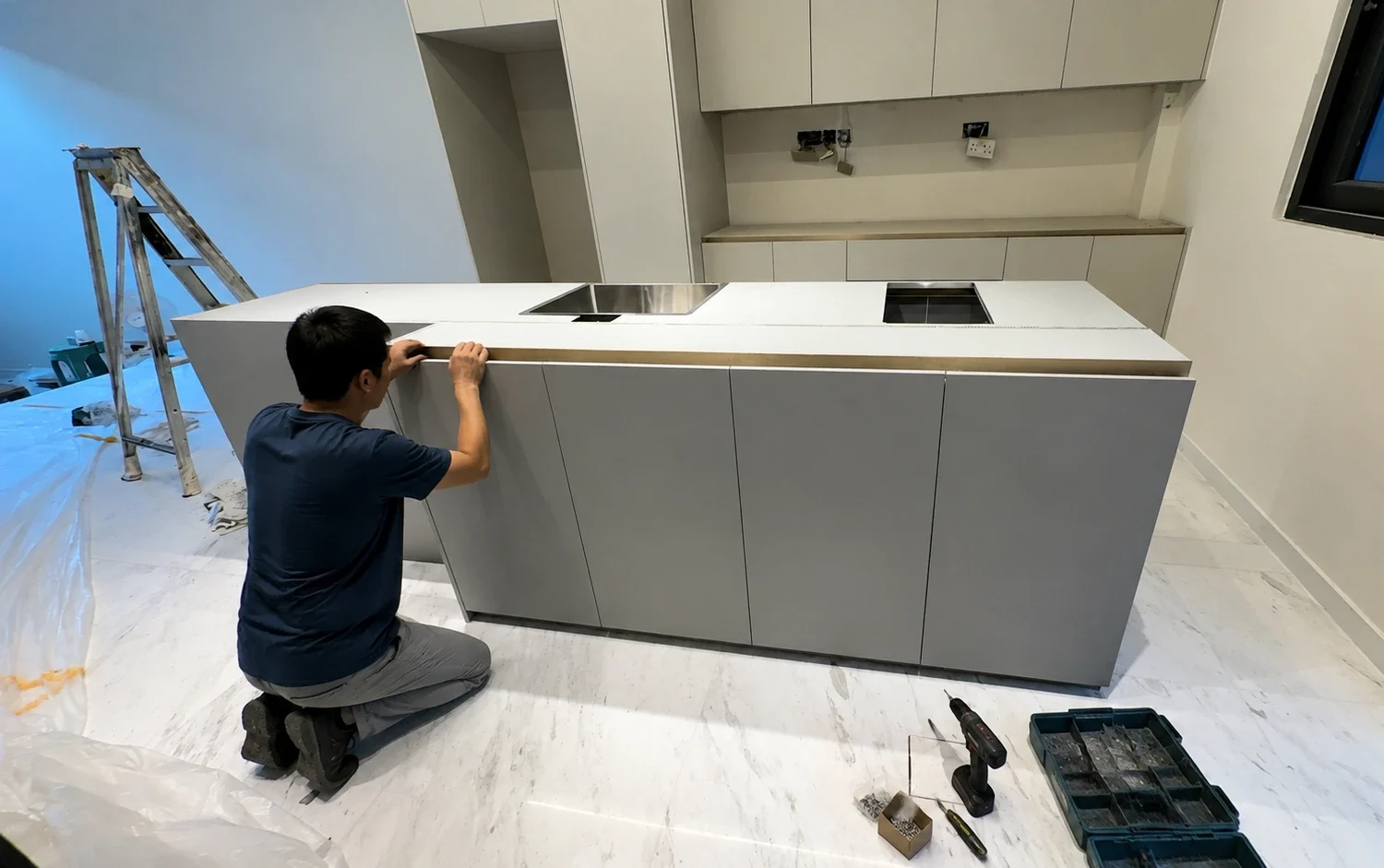

Kitchen cabinet hinge replacement is one of the most effective ways to restore function and appearance to ageing cabinetry without committing to a full renovation. Whether your doors are drooping, squeaking, or no longer closing flush, faulty hinges are almost always the root cause.
Key Takeaways
- Most hinge problems, including sagging, squeaking, and misalignment, can be resolved by replacing the hinge rather than the entire cabinet door.
- There are several hinge types used in Singapore kitchens; identifying yours before purchasing replacements is essential.
- DIY replacement is achievable for most homeowners, but professional help is worth considering when structural damage is present.
- Soft-close hinges now account for roughly 28% of hinge units sold globally (DataIntelo, May 2026), and upgrading to them during replacement adds long-term value.
- Costs in Singapore vary from under S$5 per hinge for basic models to S$30 or more for premium soft-close variants.
- Buying from reputable suppliers ensures compatibility and durability, especially in Singapore’s humid climate.
Why Your Kitchen Cabinet Hinges Fail Sooner in Singapore
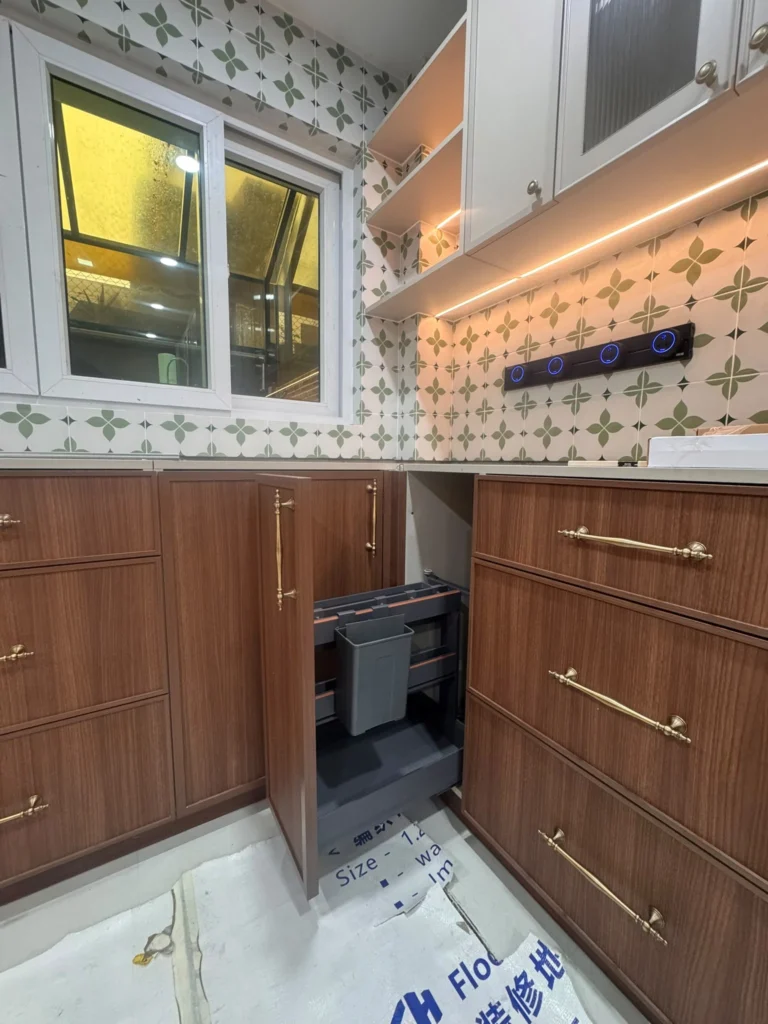
Singapore’s tropical climate is especially unforgiving on kitchen hardware. High ambient humidity, cooking steam, and the constant cycling of air-conditioning all accelerate corrosion and wear. Over time, even well-made hinges lose their tension, crack at the pivot point, or strip the screw holes they sit in.
Common signs that your hinges need attention include:
- Cabinet doors that no longer sit flush when closed
- A visible gap between the door and the cabinet frame on one side
- Squeaking or grinding sounds when opening or closing
- Doors that swing open or drop under their own weight
- Screw holes that have become too wide to grip
If you are already dealing with kitchen cabinet doors sagging, there is a strong chance the hinges are the primary cause. Addressing them early prevents additional stress on the door itself and on the cabinet carcass.
Understanding the Hinge Types Used in Singapore Kitchens
Before you buy any replacement hardware, you need to identify what type of hinge is already installed. Fitting the wrong type will result in a door that sits at the wrong angle or cannot close properly.
Concealed (European) Hinges
These are by far the most common type found in modern HDB and condominium kitchens in Singapore. They mount inside a cup drilled into the rear of the door and attach to the cabinet frame via an arm. They are adjustable in three directions, which makes them popular with cabinet makers and renovators alike. Brands such as Blum and Hettich are widely available in Singapore.
Overlay Hinges
Overlay hinges determine how much of the door overlaps the cabinet frame when closed. Full overlay doors sit in front of the frame entirely; half overlay doors share the frame with an adjacent door. If you are replacing hinges on a paired cabinet, both sides must have matching overlay measurements.
Soft-Close Hinges
Soft-close hinges use a hydraulic mechanism to slow and cushion the door in the final few centimetres of closing. According to DataIntelo (May 2026), soft-close technology has reached approximately 28% market penetration of total hinge units sold in 2026 and is projected to reach 38% by 2030. Premium soft-close versions command a price premium of 25 to 45% above standard hinges, but the reduction in door-slamming noise and reduced wear on cabinet joints makes them a worthwhile upgrade for most Singapore households.
Piano and Butterfly Hinges
These are less common in kitchen cabinetry but occasionally appear in older HDB flats or bespoke joinery. They run along the full length of the door edge and are more visible. Replacement parts for these can be harder to source locally.
If you are considering a broader kitchen upgrade and want to know more about layout possibilities, reading about hdb kitchen island options can give you useful context for planning the space around your new hardware.
Tools You Need Before You Start
Having the right tools on hand will make the job significantly quicker and reduce the risk of damaging the cabinet or door.
- Phillips head and flat-head screwdrivers (or a cordless drill with screwdriver bits)
- A pencil and ruler for marking new hinge positions if needed
- A 35mm Forstner drill bit if you are fitting new cup hinges into a door without existing drill holes
- Masking tape to protect the cabinet surface while working
- Toothpicks and wood glue for filling stripped screw holes before re-drilling
- A spirit level to verify door alignment after fitting
One often-overlooked step: measure the existing hinge cup diameter and the arm length before purchasing. A 35mm cup is standard for most concealed hinges, but some older cabinets use 26mm or 40mm cups.
6 Steps to Kitchen Cabinet Hinge Replacement
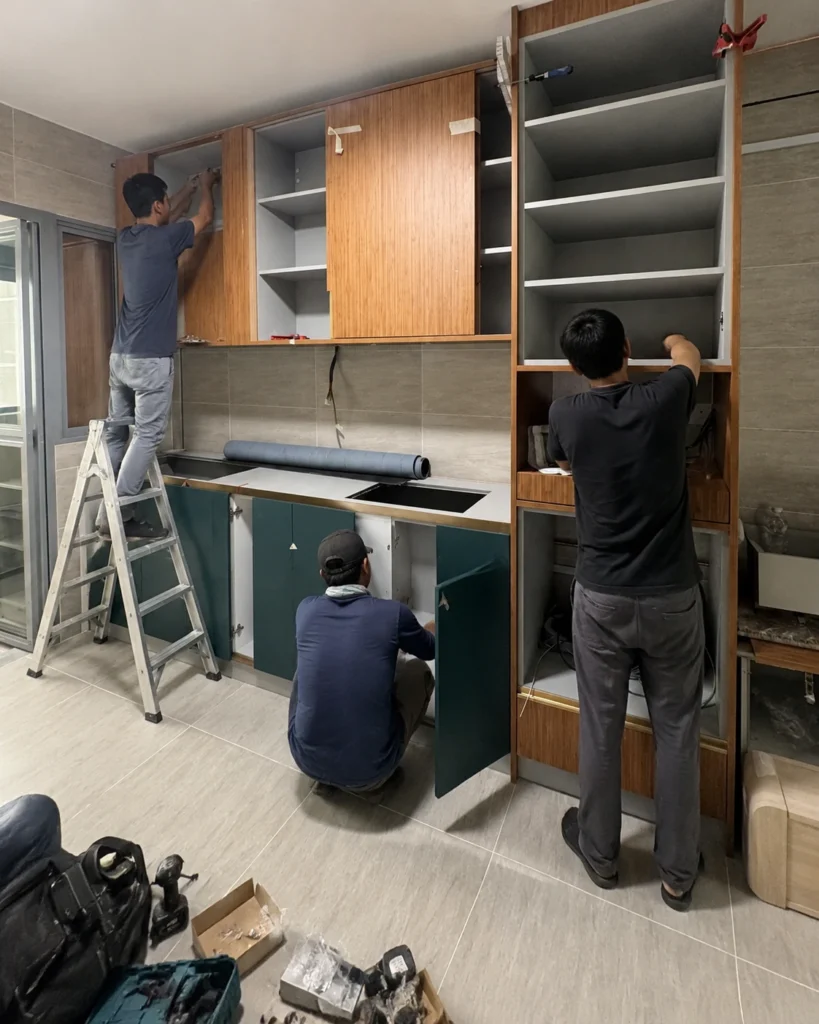
Step 1: Remove the Old Hinge
Open the cabinet door to roughly 90 degrees for easy access. Unscrew the hinge plate from the cabinet frame first, then remove the cup hinge from the door. Keep the old hinge as a size reference.
Step 2: Fill and Repair Stripped Holes (If Required)
If the screws were loose or spinning before removal, the holes are likely stripped. Insert toothpicks coated in wood glue into the hole, allow to dry for at least one hour, then snap them off flush with the surface. You now have a solid base for the new screws to grip.
Step 3: Position the New Hinge
Align the new hinge cup with the existing drill hole. If the hole is the correct diameter, the cup should sit flush with the door surface. If you are fitting a new hinge in a slightly different position, use a pencil to mark the new centre point before drilling.
Step 4: Fit the Hinge to the Door
Press or screw the hinge cup into the door. Most concealed hinges click into place and are held by a single screw at the cup. Tighten this fully before proceeding.
Step 5: Attach the Arm to the Cabinet Frame
Position the hinge arm plate on the cabinet frame, aligning it with the original screw holes where possible. Drive the screws in firmly but do not over-tighten, as this can crack the frame if the material is chipboard or MDF.
Step 6: Adjust and Align
Most European hinges have three adjustment screws: depth (in/out), lateral (side to side), and height (up/down). Adjust these until the door sits flush with adjacent doors and the gap around the frame is even. Check that the door opens and closes without catching.
Common Problems During Hinge Replacement and How to Fix Them
The Door Still Sags After Replacement
If the door continues to sag even with new hinges, check whether the cabinet carcass itself has warped. In Singapore’s climate, moisture can cause wooden or MDF carcasses to bow over time. This is also a point at which kitchen cabinet peeling laminate often becomes visible alongside the hinge issue, as both are symptoms of prolonged moisture exposure.
Screws Will Not Tighten
This usually means the carcass material has softened or the hole has been over-drilled. Use longer screws, or reposition the hinge plate slightly to find virgin material.
The Door Catches on the Frame
Adjust the lateral screw on the hinge arm to shift the door left or right until it swings freely. If the door is warped rather than the hinge being misaligned, a replacement door may be necessary.
DIY vs. Professional Replacement: Weighing the Options
Kitchen cabinet hinge replacement is well within the capability of most Singapore homeowners for standard concealed hinges. If you are comfortable with a screwdriver and have the correct replacement parts, a single door can be rehung in under 30 minutes.
However, professional help is the smarter choice when:
- Multiple doors are involved and alignment needs to be calibrated across the full run
- The cabinet carcass is structurally compromised
- You are upgrading from one hinge type to another that requires new drill holes
- The kitchen is due for a broader renovation
If you are curious about the broader scope of what a kitchen refresh involves, it is worth reading about how long does kitchen renovation take in singapore to set realistic expectations. Hinge replacement alone is quick; but if it reveals deeper issues, timelines extend significantly.
Before committing to a DIY approach, also consider reviewing kitchen renovation mistakes singapore to avoid common errors that cost more to correct than the original problem.
Hinge Quality and Brand Considerations for Singapore Buyers
The hardware market in Singapore has expanded significantly, with both European brands and Asian manufacturers competing for shelf space. According to MarkWide Research (May 2026), the global cabinet hinge market is valued at USD 3.8 billion in 2026 and is projected to reach USD 6.26 billion by 2035, reflecting strong demand for quality hardware upgrades worldwide.
Blum and Hettich remain the benchmark brands for concealed hinges in Singapore, known for their durability and wide range of overlay and soft-close options. For buyers exploring Asian alternatives, it is worth reading is higold accessories really worth the money before purchasing, as quality varies significantly across the mid-range category.
When choosing hinges for a Singapore kitchen, prioritise:
- Stainless steel or nickel-plated finishes to resist corrosion
- Adjustability in all three axes for easy alignment
- A closing angle of at least 110 degrees for standard cabinet doors
- Compatibility with your existing cup diameter (measure before buying)
How Much Does Kitchen Cabinet Hinge Replacement Cost in Singapore?
Costs vary considerably depending on hinge type, brand, and whether you hire a professional to install them.
| Hinge Type | Estimated Cost Per Hinge (S$) | Installation (Per Door, Professional) |
|---|---|---|
| Basic concealed hinge | S$2 to S$8 | S$20 to S$40 |
| Mid-range soft-close hinge | S$10 to S$20 | S$25 to S$50 |
| Premium soft-close (Blum, Hettich) | S$20 to S$35 | S$30 to S$60 |
| Piano or butterfly hinge | S$5 to S$15 | S$25 to S$45 |
Most standard kitchen cabinets use two hinges per door. For a ten-door kitchen, material costs alone could range from S$40 for basic hinges to S$700 for a full premium soft-close upgrade. Professional labour for a full kitchen is typically quoted as a flat job rate rather than per hinge, so request a written quotation before proceeding.
The Home Improvement Research Institute (2026) notes that cabinet hardware, including hinges, is among the hardware types most frequently replaced during home renovations, and that 13% of homeowners cite brand as a factor in their purchasing decision. In Singapore, this reflects a growing preference for quality that performs in humid conditions.
Where to Buy Replacement Hinges in Singapore
For standard concealed hinges, you have several reliable options:
- Hardware shops in Sim Lim Tower or Jalan Besar: Good for browsing physical samples and getting advice on fit and finish.
- Hettich and Blum authorised distributors: Available through various cabinet hardware specialists across the island.
- Online marketplaces (Lazada, Shopee): Convenient for standard sizes, but always verify the cup diameter and overlay specification before ordering.
- Direct from cabinet specialists like T Se7en Alucraft: If you are sourcing hinges alongside a cabinet upgrade or full replacement, working directly with a manufacturer means you get hardware that is guaranteed to match your cabinet system.
When Hinge Replacement Points to Something Bigger
Persistent hinge failure across multiple doors is sometimes a symptom of a deeper problem, whether that is cabinet frame warping, poor original installation, or material deterioration. If you find yourself replacing hinges repeatedly on the same doors, it may be time to consider whether the cabinets themselves have reached the end of their serviceable life.
T Se7en Alucraft, with over 30 years of experience in custom aluminium cabinetry, understands the signs that point beyond a simple hinge fix to a broader cabinet refresh.
Things to Know
- Hinge cup diameter is the single most important measurement to check before buying replacements. The standard for modern concealed hinges is 35mm, but older Singapore kitchens, particularly those built in the 1990s or early 2000s, may use non-standard sizes that require special ordering.
- Not all soft-close hinges are interchangeable. Some brands use proprietary mounting plates, meaning a Blum soft-close hinge may not fit correctly on a Hettich base plate even if the cup diameter matches.
- Stripped screw holes are the most common reason a newly fitted hinge fails within weeks. Always repair the hole with wood glue and toothpicks, or use a slightly longer screw, before fitting the replacement.
- In Singapore’s humid climate, zinc alloy hinges corrode significantly faster than stainless steel or nickel-plated alternatives. Spending a little more on corrosion-resistant hardware upfront will save you repeating this job in two to three years.
- If your cabinet doors are made from aluminium rather than wood or MDF, the hinge fitting process differs. Aluminium doors typically use channel-mounted or frame-integrated hinges, and these require specialist knowledge to replace correctly.
- The overlay measurement of your existing hinge must be matched precisely in the replacement. Full overlay, half overlay, and inset hinges are not interchangeable, and fitting the wrong overlay type will result in a door that either gaps or catches on the adjacent door or frame.
Book a Consultation With T Se7en Alucraft's Cabinet Specialists
If your hinge issues are pointing to deeper cabinet problems, or if you simply want hardware that is guaranteed to perform in Singapore’s climate for years to come, T Se7en Alucraft’s consultants are ready to help you make the right call. With over 30 years of experience in custom aluminium cabinetry, the team understands exactly what Singapore kitchens demand in terms of durability, moisture resistance, and long-term value.
Do not let a small hinge problem become a costly cabinet replacement down the line. Reach out to the team today and get expert advice tailored to your specific kitchen setup and budget.
Book Your Appointment now by contacting T Se7en Alucraft via phone at +65 9615 9273, email at sales@tse7en.com, or by visiting www.tse7en.com to schedule a WhatsApp consultation or virtual showroom tour at a time that suits you.
Frequently Asked Questions
Yes, kitchen cabinet hinges can be replaced, and in most cases it is a straightforward DIY task that does not require removing the cabinet door entirely.
The process involves unscrewing the old hinge from both the door and the cabinet frame, sourcing a compatible replacement, and fitting it into the existing holes. Where the screw holes have stripped or the hinge cup diameter differs from the replacement, minor repairs or adjustments are needed before fitting. Most standard concealed hinges used in Singapore kitchens are widely available and simple to swap out without specialist tools.
Start by removing one of your existing hinges and measuring the cup diameter, the overlay distance, and the arm length before searching for a replacement.
Take the old hinge with you to a hardware shop, or photograph it clearly if you are buying online through platforms such as Lazada or Shopee. The cup diameter (usually 35mm), the overlay type (full, half, or inset), and the brand if visible are the three pieces of information that will narrow down your options quickly. If you cannot identify the original brand, a general European-style concealed hinge from Blum, Hettich, or a comparable manufacturer with matching measurements will typically fit without modification.
In Singapore, the cost of replacing cabinet hinges ranges from approximately S$2 per hinge for basic concealed models to S$35 or more per hinge for premium soft-close options from brands such as Blum or Hettich.
For a typical HDB kitchen with ten cabinet doors, material costs alone can run from S$40 at the budget end to S$700 for a full premium soft-close upgrade across all doors. If you hire a professional to carry out the replacement, expect to pay an additional S$20 to S$60 per door in labour, depending on the complexity of the job and whether any repair work is required on stripped holes or warped frames. Requesting a written quotation before work begins is strongly recommended.
Replacement cabinet hinges are available from hardware shops across Singapore, authorised brand distributors, and online marketplaces including Lazada and Shopee.
For physical browsing and hands-on size matching, hardware shops around Jalan Besar and Sim Lim Tower stock a reasonable range of standard concealed and soft-close hinges. Blum and Hettich products are available through their respective authorised distributors island-wide. For those undertaking a broader kitchen upgrade, purchasing hinges directly through a cabinet specialist such as T Se7en Alucraft ensures that the hardware is fully compatible with your cabinet system and suited to Singapore’s humid conditions.
The cost to replace a single cabinet hinge in Singapore typically falls between S$2 and S$35 for the part itself, with professional installation adding S$20 to S$60 per door depending on the scope of work.
Basic zinc alloy concealed hinges sit at the lower end of that range and are suitable for low-traffic cabinets in dry areas. For kitchen cabinets, which are exposed to steam, heat, and frequent use, a mid-range soft-close hinge in the S$10 to S$20 bracket offers a better balance of cost and durability. If the screw holes need repair or the hinge type is being changed, professional labour costs may increase slightly to account for the additional preparation work involved.
Still Unsure?
Speak to a professional now and get personalized consultation and guidance for your next renovation. Work with a team you can trust!
Best Materials for Kitchen Cabinets in Singapore
Home Blog HIP is HDB’s upgrading programme for older flats. It covers compulsory repairs such as concrete defects and ageing waste pipes at a very...