


Peeling laminate on kitchen cabinets is one of the most common and frustrating problems homeowners in Singapore face, particularly in older HDB flats and resale properties. When laminate lifts, bubbles, or flakes away from cabinet surfaces, it signals a breakdown in adhesion that worsens quickly in Singapore’s humid tropical climate.
Key Takeaways
- Peeling laminate is primarily caused by heat, humidity, and adhesive failure — all of which are particularly acute in Singapore kitchens.
- Minor peeling can be repaired with contact cement or edge banding, but widespread damage usually warrants a full replacement.
- Laminate cabinets have an average lifespan of 10 to 15 years before delamination becomes a persistent issue.
- Aluminium cabinets offer a waterproof, termite-resistant, and zero-formaldehyde alternative that suits Singapore’s climate far better.
- Cabinet refacing is a middle-ground option, though it may not solve underlying structural or moisture issues.
- Knowing when to repair versus replace can save you significant cost and stress over time.
Why Laminate Peels: The Root Causes in Singapore Kitchens
Laminate is a thin decorative layer bonded to a substrate, usually medium-density fibreboard (MDF) or particleboard, using heat-sensitive adhesive. In Singapore’s climate, where humidity regularly exceeds 80% and kitchen temperatures spike during cooking, this adhesive bond is under constant stress.
The main causes of kitchen cabinet peeling laminate include:
- Moisture penetration: Steam from cooking and water splashes near the sink weaken the adhesive over time, causing the laminate to lift from the substrate.
- Heat exposure: Cabinets situated near stovetops or ovens are particularly vulnerable. Sustained heat softens the adhesive, leading to bubbling and eventual separation.
- Age and adhesive degradation: Most standard laminate adhesives have a functional lifespan. Beyond 10 to 15 years, re-adhesion without replacement becomes increasingly unreliable.
- Poor original installation: Inadequate surface preparation, insufficient adhesive coverage, or low-quality laminate film can accelerate failure regardless of climate.
- Cleaning products: Harsh chemical cleaners can break down the laminate surface and the bond beneath it, especially when used repeatedly over time.
In Singapore’s HDB kitchens, where the cooking area is often compact and enclosed, heat and steam have limited space to dissipate. This makes delamination far more likely than in larger, open-plan Western kitchens.
How to Assess the Severity of Your Peeling Laminate
Before reaching for glue or calling a contractor, assess how widespread the damage is. The repair approach differs significantly depending on severity.
| Damage Level | Signs | Recommended Action |
|---|---|---|
| Minor | Small lifted edges at corners or joins | DIY re-gluing with contact cement |
| Moderate | Bubbling across a panel surface | Professional re-bonding or edge banding |
| Severe | Large sections peeled, substrate exposed or swollen | Full door replacement or cabinet refacing |
| Structural | MDF substrate visibly warped or crumbling | Full cabinet replacement |
If you notice your cabinets developing additional physical issues alongside peeling, such as kitchen cabinet doors sagging, this may indicate that the substrate itself has been compromised by moisture, in which case surface repairs alone will not hold.
DIY Repair Methods That Actually Work
For minor to moderate peeling, several repair approaches can extend the life of your cabinets before a full renovation becomes necessary.
Re-gluing Lifted Edges with Contact Cement
Contact cement is the most effective adhesive for laminate repair. Apply it to both the underside of the lifted laminate and the exposed substrate, allow it to become tacky (usually 5 to 10 minutes), then press the laminate firmly back into place. Use a roller or a flat, firm object to work out any air pockets. Clamp the area or tape it securely for at least 24 hours.
For best results:
- Clean both surfaces thoroughly before applying adhesive.
- Use a heat gun on a low setting to soften particularly stiff or curved sections before pressing.
- Work in a well-ventilated area; contact cement fumes are strong.
Edge Banding for Corner and Edge Damage
Where laminate has peeled from the edges of cabinet doors or panels, iron-on edge banding provides a clean, durable fix. Available at hardware shops island-wide, edge banding comes in a range of colours and woodgrain finishes. A household iron activates the heat-sensitive adhesive on the back. Trim the excess with a sharp blade once cooled.
Skim Coating or Painting Over Damaged Areas
For cabinets where the laminate surface is lightly crazing or showing fine cracks, a coat of bonding primer followed by cabinet-specific paint can stabilise and mask the damage. This is a purely cosmetic fix and does not address underlying adhesion issues, but it buys time before a full renovation.
Cabinet Refacing: A Middle-Ground Option

Cabinet refacing involves keeping the existing cabinet boxes in place while replacing the doors, drawer fronts, and applying new laminate or veneer to exposed surfaces. It typically costs significantly less than a full replacement and can dramatically improve appearance.
However, refacing only makes sense when:
- The cabinet boxes are structurally sound and level.
- The substrate has not absorbed moisture to the point of swelling.
- You are satisfied with the existing cabinet layout.
If your kitchen layout itself feels inefficient, refacing is unlikely to solve that problem, and researching hdb kitchen island options may help clarify whether your existing structure is worth preserving or better replaced entirely. The cabinet refacing services market globally was valued at USD 8.2 billion in 2025 and is projected to reach USD 13.7 billion by 2034, growing at a compound annual growth rate of 5.8%, according to DataIntelo (2025). This growth reflects increasing consumer preference for cost-effective renovation alternatives, a trend very much visible in Singapore’s resale HDB market.
Why Aluminium Cabinets Are a Smarter Long-Term Choice
While laminate repair and refacing offer short-term solutions, many Singapore homeowners are opting for aluminium cabinets as a permanent fix. The reasons are straightforward.
Aluminium does not absorb moisture. It will not swell, warp, or delaminate regardless of steam, water splashes, or humidity. It is also termite-resistant, a significant concern in older Singapore properties, and most aluminium cabinet systems are compliant with Singapore’s Green Label certification for low formaldehyde emissions.
T Se7en Alucraft, with over 30 years of experience in the carpentry and aluminium fixtures industry, specialises in custom-made aluminium kitchen cabinets built to withstand Singapore’s climate. Their team can design and fabricate cabinets for HDB flats, condominiums, and landed homes, with options including glass doors with aluminium frames, compact panel doors, and AVS-edged finishes.
According to Houzz (2025), 85% of homeowners prioritise cabinet renovation when upgrading their kitchens, which underscores how central this decision is to any meaningful home improvement project.
When weighing your options, reviewing a detailed kitchen cabinet repair vs replacement comparison can help you make a financially sound decision based on your specific cabinet condition and renovation goals.
Comparing Laminate and Aluminium Cabinet Materials
| Feature | Laminate (MDF/Particleboard) | Aluminium |
|---|---|---|
| Moisture resistance | Low to moderate | Excellent |
| Lifespan | 10 to 15 years | 20 to 30+ years |
| Termite resistance | No | Yes |
| Formaldehyde risk | Possible (substrate off-gassing) | Minimal to none |
| Repair ease | Moderate (short-term) | Low (rarely needed) |
| Cost (upfront) | Lower | Moderate to higher |
| Sustainability | Moderate | High (recyclable) |
When budgeting for your renovation, it is also worth understanding what hardware and accessories cost, as asking is higold accessories really worth the money can help you make informed decisions about hinges, handles, and pull-out systems that will complement whichever cabinet material you choose.
How Long a Kitchen Renovation Takes After Cabinet Failure
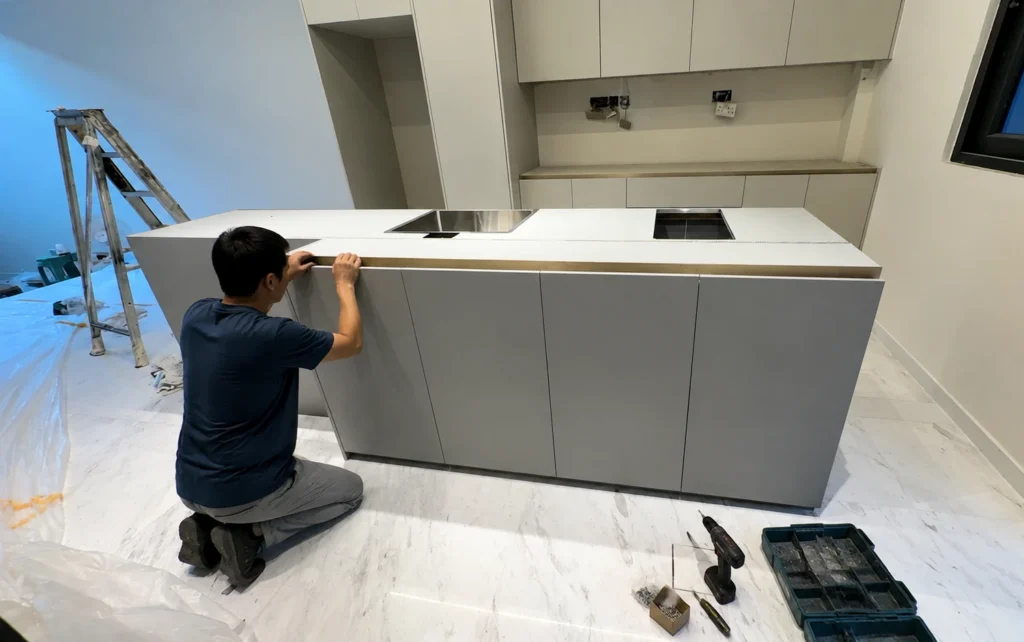
Once peeling laminate has reached the point where replacement is the right call, many homeowners underestimate how long a proper kitchen renovation takes, and understanding how long does kitchen renovation take in singapore will help you plan properly, especially if you are living in the unit during renovation and need a functioning kitchen as quickly as possible. Fabrication lead times for custom aluminium cabinets, hacking work, electrical and plumbing adjustments, and tiling can all extend the timeline considerably.
The global kitchen cabinet market reached USD 74.2 billion in 2024 and is projected to grow at a compound annual growth rate of 6.1% through to 2033, according to Growth Market Reports (2024). This growth reflects strong consumer demand for kitchen upgrades, with Singapore’s renovation sector tracking closely alongside regional trends.
Common Renovation Mistakes That Lead to Peeling Laminate Later
Peeling laminate is sometimes the result of poor decisions made during a renovation, not just wear and tear, and avoiding kitchen renovation mistakes singapore homeowners frequently make can save you from discovering the consequences only a few years into the cabinet’s lifespan. Some of the most common errors include:
- Choosing the cheapest laminate without checking its moisture resistance rating.
- Installing laminate cabinets directly adjacent to a stovetop without adequate heat shielding.
- Skipping proper surface preparation before laminate application.
- Selecting a contractor based purely on cost rather than experience with Singapore’s specific humidity conditions.
- Failing to ask about warranty terms for laminate adhesion.
When to Call a Professional Instead of DIYing
DIY repairs are appropriate for minor peeling at edges or corners. However, you should call a professional when:
- The MDF or particleboard substrate is visibly swollen, soft, or crumbling.
- Peeling affects more than 30% of any single cabinet panel.
- Cabinet doors are misaligned or no longer close properly due to warping.
- You have already attempted re-gluing and the laminate has lifted again.
- You are considering a material change or full cabinet replacement.
T Se7en Alucraft offers consultations via WhatsApp, video call design sessions, and virtual showroom tours, making it easy to get professional advice without having to leave your home. You can reach their team at +65 9615 9273 or email sales@tse7en.com to discuss your kitchen cabinet situation and explore aluminium alternatives suited to your space.
Things to Know
- Laminate cabinets in Singapore typically last between 10 and 15 years before delamination becomes a recurring problem, but kitchens near high-heat cooking zones often show peeling as early as five to seven years in.
- Not all contact cement products are equal. Look for a solvent-based contact cement rated for high-humidity environments when purchasing from local hardware shops; standard craft adhesives will not hold in Singapore’s conditions.
- The substrate material matters as much as the laminate itself. MDF swells irreversibly once it has absorbed significant moisture, meaning re-gluing laminate onto a swollen board is a temporary fix at best.
- Edge peeling and surface bubbling are different problems with different causes. Edge peeling usually results from water ingress at joins, while surface bubbling typically points to heat exposure or a poor original bond.
- Cabinet refacing is only cost-effective when the existing cabinet boxes are level, dry, and structurally sound. If the carcass is compromised, refacing simply conceals a deeper problem.
- Laminate that peels once is very likely to peel again in the same spot. If re-gluing fails a second time, that section of the cabinet has passed the point where surface repair is a reliable solution.
Stop Living with Peeling Cabinets: Book Your Renovation Consultation Today
Singapore’s humidity and heat are relentless, and laminate cabinets simply were not designed to withstand them indefinitely. If your kitchen is showing persistent peeling, bubbling, or warping, every month you wait allows moisture to do more damage to the substrate beneath, making the eventual repair or replacement more expensive and disruptive. T Se7en Alucraft’s team of custom aluminium cabinet specialists has spent over 30 years solving exactly this problem for Singapore homeowners, and they are ready to help you find a solution that will not peel, warp, or degrade in five years’ time.
Book Your Appointment with T Se7en Alucraft today and speak directly with a consultant about your kitchen cabinet condition, your space requirements, and your budget. Reach out via WhatsApp at +65 9615 9273 or email sales@tse7en.com to schedule a virtual or in-person consultation at a time that suits you.
Frequently Asked Questions
Yes, peeling laminate cabinets can be fixed, but the success of the repair depends heavily on how far the damage has progressed.
For minor lifting at edges or corners, contact cement applied to both the underside of the laminate and the exposed substrate can restore a firm bond when clamped for 24 hours. For surface bubbling, a heat gun used carefully can soften the existing adhesive and allow the laminate to be pressed flat again. However, if the substrate beneath the laminate has absorbed moisture and begun to swell or crumble, no adhesive repair will hold reliably. In those cases, replacing the affected doors or the entire cabinet is the more practical and cost-effective path forward.
Yes, you can remove laminate from cabinet doors and panels, but the process requires patience and the right tools to avoid damaging the substrate beneath.
A heat gun or a household iron set to a medium temperature softens the adhesive and allows the laminate to be lifted with a plastic scraper or a putty knife. Work slowly from one edge, applying heat gradually as you go. The challenge is that heat can also cause MDF to release formaldehyde vapours and may scorch the surface, so proper ventilation is essential. Once the laminate is removed, the substrate surface will need thorough sanding before any new laminate, paint, or alternative finish is applied.
The right fix for kitchen cabinet peeling laminate depends on the location, size, and cause of the damage.
For edge lifting, iron-on edge banding or contact cement are the most effective solutions. For bubbling across a flat panel, re-bonding with contact cement or a heat gun and roller can restore adhesion if the substrate is still sound. For cosmetic surface crazing without significant lifting, a bonding primer and cabinet-specific paint can stabilise and improve appearance. If multiple doors are affected or the damage keeps returning after repair attempts, the more honest answer is that the cabinets have reached the end of their functional lifespan and replacement is the better investment.
Peeling laminate can be repaired without full replacement using contact cement for re-bonding, edge banding for damaged edges, or a combination of heat and pressure for bubbled panels.
The key steps are: clean the affected area thoroughly to remove grease and dust; apply contact cement to both surfaces and allow it to become tacky before pressing them together; use a flat roller or firm cloth to work out any air pockets; and clamp or tape the area firmly for at least 24 hours. For very small lifts at corners, a strong two-part epoxy can also work. The repair is most likely to hold long-term when the substrate is completely dry and undamaged. If moisture has already reached the MDF, even a well-executed repair will likely fail again within months.
Yes, it is possible to apply new laminate over existing laminate, provided the original surface is firmly bonded, smooth, and free from bubbling or peeling sections.
The existing laminate must be scuff-sanded thoroughly to create a mechanical key for the new adhesive to grip. Any lifted or bubbled areas must be re-bonded and fully flattened before the new layer goes on, as any irregularities beneath will telegraph through and cause the new laminate to bubble in the same spots. Adding a second layer also increases the door thickness slightly, which may affect hinge clearance and how the doors close. This approach works best as a temporary or budget-conscious measure; for a long-term result, particularly in a humid Singapore kitchen, starting fresh with a moisture-resistant material such as aluminium is a more reliable choice.
Still Unsure?
Speak to a professional now and get personalized consultation and guidance for your next renovation. Work with a team you can trust!
Best Materials for Kitchen Cabinets in Singapore
Home Blog HIP is HDB’s upgrading programme for older flats. It covers compulsory repairs such as concrete defects and ageing waste pipes at a very...
One Response