

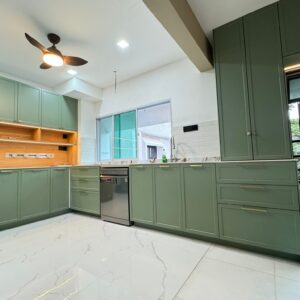

Water damaged kitchen cabinets are cabinets that have been weakened, warped, or discoloured by prolonged or sudden exposure to moisture. In Singapore’s humid climate, where humidity regularly exceeds 80%, kitchen cabinets made from wood-based materials are especially vulnerable to swelling, delamination, and mould growth.
Key Takeaways
- Water damage to kitchen cabinets is rarely cosmetic alone; structural weakening often follows if moisture is not addressed quickly.
- Wood-based cabinets (MDF, particleboard, plywood) absorb moisture far more readily than aluminium alternatives in Singapore’s humid conditions.
- Early signs such as swelling, peeling laminate, and soft base panels should be treated as urgent, not cosmetic.
- Minor surface damage can sometimes be repaired with fillers, re-lamination, or sealants, but structural damage typically requires panel or full cabinet replacement.
- Aluminium cabinets offer a long-term, waterproof solution particularly suited to Singapore’s climate.
- Getting a professional assessment before committing to repairs can save you significant money in the long run.
Why Singapore Kitchens Are Particularly Prone to Cabinet Water Damage
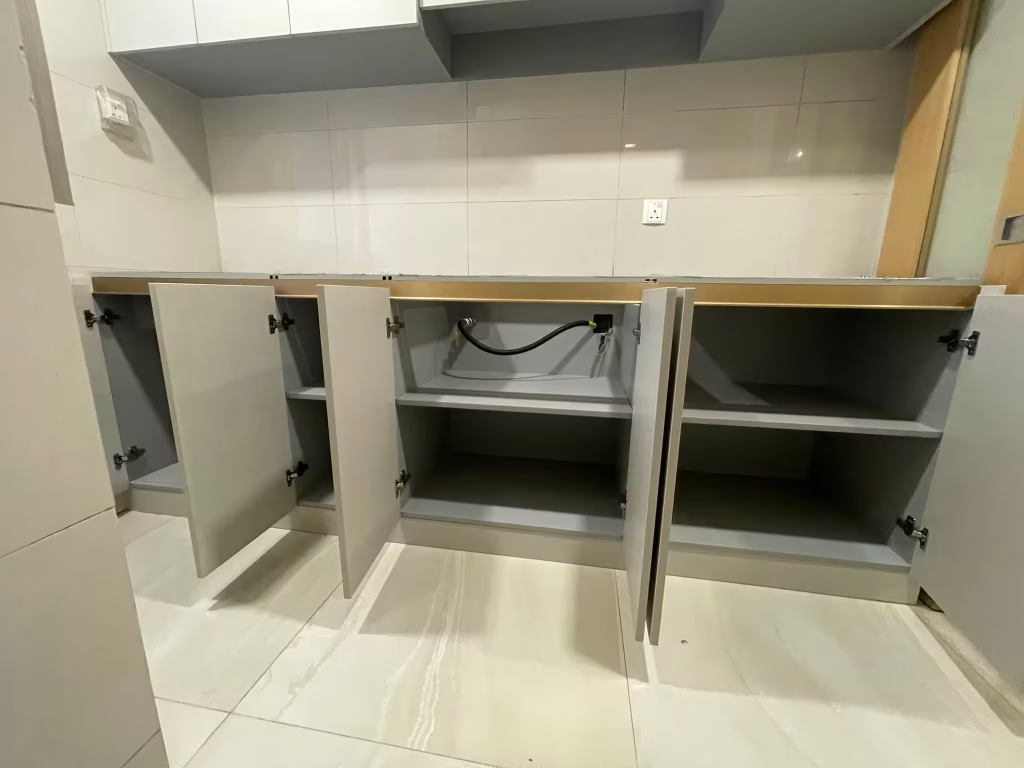
Singapore’s tropical climate creates a near-perfect environment for moisture-related damage. Average annual humidity sits well above 80%, and kitchens compound this with steam from cooking, condensation from refrigerators, and occasional plumbing leaks beneath the sink. For homeowners in HDB flats and condominiums alike, these conditions accelerate the deterioration of wood-based cabinet materials far faster than in temperate climates.
The most common causes of water damaged kitchen cabinets in Singapore homes include:
- Sink leaks: A slow drip from a pipe joint beneath the sink can go unnoticed for weeks, saturating the cabinet base from the inside out.
- Condensation: Cold pipes running through warm cabinet interiors create persistent moisture on internal surfaces.
- Flooding from adjacent areas: Washing machine overflows or bathroom water ingress can seep into adjacent kitchen cabinetry.
- Cooking steam: Persistent exposure to steam, particularly from wok cooking, softens laminate adhesive and causes peeling around cabinet edges.
- Improper sealing during installation: Gaps between the cabinet kickboard and the floor allow water from mopping or spills to pool beneath the base panels.
Understanding which of these sources is affecting your cabinets is the first step before any repair or replacement decision is made. Simply fixing the visible damage without addressing the source guarantees the problem will return.
How to Assess the Extent of Cabinet Water Damage
Not all water damage is equal. Before you decide whether to repair or replace, you need an honest assessment of what you are dealing with.
Signs of Surface-Level Damage
Surface damage is largely cosmetic and may include:
- Slight discolouration or water staining on the exterior finish
- Minor bubbling or lifting of the laminate skin
- Light swelling along cabinet edges or around the door frame
- Rust marks from cabinet hinges bleeding onto the panel surface
If the damage is limited to the surface layer and the underlying panel remains firm to the touch, targeted repairs are a realistic option.
Signs of Structural or Deep Damage
Structural damage is more serious and includes:
- Soft, spongy, or crumbling base panels when pressed
- Visible mould colonies inside the cabinet (green, black, or white growth)
- Cabinet doors that no longer close flush because the carcass has warped
- A persistent musty odour even after cleaning
- Separation of the panel joints at cabinet corners
If any of these signs are present, repairs will only be temporary. Replacement of the affected panels or the entire cabinet unit is the more cost-effective long-term decision.
Repair Options for Water Damaged Cabinets
When damage is caught early, several repair approaches can restore the appearance and function of affected cabinets without a full replacement.
Re-lamination and Surface Refinishing
If the cabinet substrate is still structurally sound but the laminate has lifted or bubbled, re-lamination is a practical fix. A carpenter will remove the damaged laminate, allow the substrate to dry fully, and bond fresh laminate sheet using contact adhesive. This is particularly relevant when you notice kitchen cabinet peeling laminate spreading across multiple panels.
Filler and Sealant Repairs
Small areas of swelling or soft spots that have not fully compromised the panel can sometimes be treated with wood hardener applied to stabilise the fibres, followed by a suitable filler to restore the surface profile. This is a short-term measure and works best on solid wood rather than MDF or particleboard, which tend to crumble once saturated.
Hinge and Hardware Replacement
Water exposure frequently corrodes cabinet hinges, causing doors to sag or misalign. If the carcass is sound but the door is drooping, addressing kitchen cabinet hinge replacement early prevents additional stress on the door panel and surrounding frame.
Base Panel Replacement
The cabinet base is the component most often destroyed by prolonged water exposure, particularly from under-sink leaks. Replacing only the base panel is a cost-effective middle ground when the walls and doors of the cabinet remain intact. A carpenter will cut a replacement panel to size, treat the exposed edges with edge banding or sealant, and refit the interior fittings. Costs for this type of targeted repair in Singapore typically range from S$80 to S$300 per cabinet depending on the size and material used.
Repair Costs vs. Replacement Costs: A Quick Comparison
| Scope of Work | Estimated Cost (SGD) | Best Suited For |
|---|---|---|
| Laminate re-skin (per cabinet) | S$80 to S$180 | Surface-level peeling or discolouration |
| Base panel replacement | S$80 to S$300 | Localised floor-level water damage |
| Hinge and hardware replacement | S$30 to S$100 per door | Sagging or misaligned doors post-water damage |
| Full cabinet unit replacement (per unit) | S$400 to S$900 | Structural or mould-compromised cabinets |
| Full kitchen cabinet set replacement | S$3,000 to S$12,000+ | Widespread water damage across multiple cabinets |
These figures are indicative for Singapore in 2026 and will vary based on material choice, contractor, and cabinet size. Always obtain at least two or three quotes from licensed contractors before committing.
When Replacement Is the Right Call
There is a point at which continued repair spending is simply not economical. If a cabinet has suffered repeated water damage, if mould has penetrated into the carcass structure, or if the warping is severe enough that kitchen cabinet doors sagging cannot be corrected by adjustment alone, replacement is the cleaner solution.
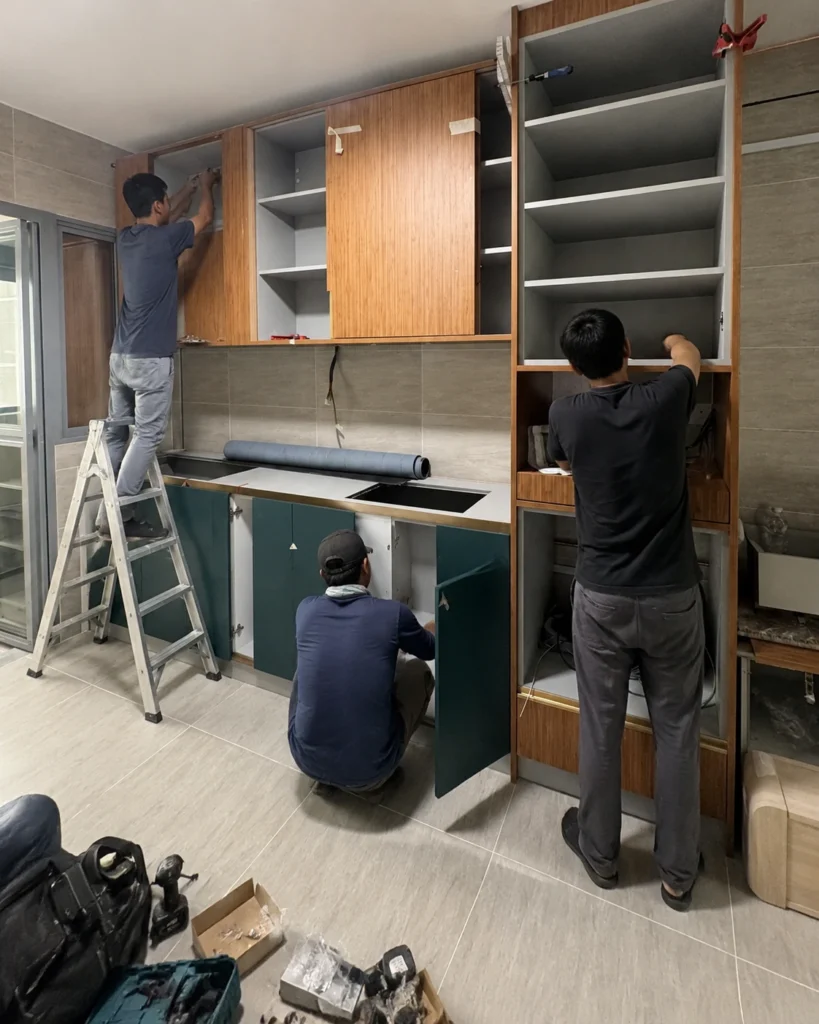
For Singapore homeowners, replacement is also an opportunity to upgrade to a material that will not face the same vulnerabilities. Aluminium kitchen cabinets, the speciality of T Se7en Alucraft, are fully waterproof, will not swell or delaminate in humidity, and do not support mould growth. With over 30 years of experience in aluminium carpentry, T Se7en Alucraft has fitted waterproof kitchen cabinetry in HDB flats, condominiums, and commercial kitchens across Singapore.
If you are based in the east of Singapore, kitchen cabinets Tampines residents have commissioned from T Se7en Alucraft show how aluminium cabinetry delivers a sleek finish without the moisture vulnerabilities of wood-based alternatives.
Material Comparison: Wood-Based vs. Aluminium Cabinets in Singapore's Climate
| Feature | MDF/Particleboard | Plywood | Aluminium |
|---|---|---|---|
| Water resistance | Low | Moderate | High (fully waterproof) |
| Mould risk | High | Moderate | None |
| Swelling in humidity | Yes | Possible | No |
| Lifespan in Singapore climate | 5 to 12 years | 8 to 15 years | 20 to 30+ years |
| Repair ease | Moderate | Moderate | Low maintenance needed |
| Cost range (full kitchen) | S$3,000 to S$8,000 | S$5,000 to S$10,000 | S$8,000 to S$15,000 |
Prevention Strategies That Actually Work in Singapore Kitchens
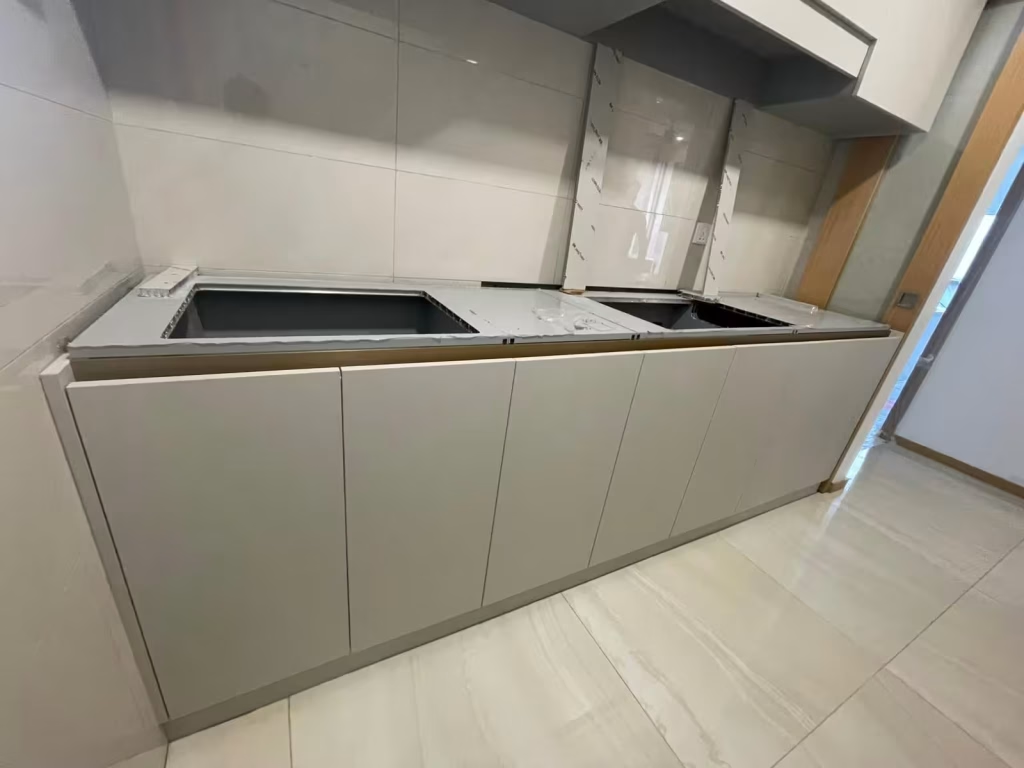
Preventing water damage is considerably cheaper than repairing it. The following measures are particularly effective in Singapore’s climate:
- Inspect under-sink plumbing every six months. Most cabinet base damage begins with a slow, undetected pipe joint drip. A quick visual check with a torch takes under five minutes.
- Use a waterproof cabinet liner. Lining the base of under-sink cabinets with a silicone or PVC mat traps minor spills before they reach the panel.
- Ensure adequate kitchen ventilation. An exhaust fan or range hood that vents externally (not recirculating) reduces the volume of steam and condensation settling on cabinet surfaces.
- Seal the kickboard gap. The gap between the kickboard and the floor is a common entry point for water from floor mopping. Silicone sealant applied along this joint costs next to nothing and provides meaningful protection.
- Check your refrigerator drip tray regularly. Refrigerators positioned adjacent to cabinetry can overflow their drip trays onto the cabinet base without any visible sign until the damage is done.
For homeowners thinking about a full kitchen redesign, incorporating an hdb kitchen island with aluminium construction gives you additional workspace that is inherently moisture-resistant and easy to wipe clean.
Accessories and Fittings: Do They Matter for Moisture Resistance?
The quality of internal fittings, drawer runners, hinges, and organisers also plays a role in how well a cabinet manages moisture long-term. Poor quality steel fittings rust quickly when exposed to kitchen humidity, and that rust transfers to the cabinet interior, staining panels and weakening fixing points. Before investing in premium internal accessories, it is worth reading a detailed breakdown such as is Higold accessories really worth the money to understand whether the quality premium is justified for Singapore conditions.
Stainless steel or aluminium fittings are preferred in Singapore’s humid environment. Soft-close hinges in particular should carry an IP rating for moisture resistance if they are installed in kitchens with heavy wok cooking or near the sink zone.
Working With a Professional: What to Expect
If you have assessed the damage and decided that professional intervention is needed, the process typically follows these 5 steps:
- Initial assessment: A contractor visits the site, inspects the affected cabinets, checks for active water sources, and provides a written quote.
- Source remediation: Before any cabinet work begins, the source of moisture must be fixed. No cabinet repair will last if the leak continues.
- Drying period: Affected areas should be allowed to dry thoroughly, which can take two to five days depending on the extent of saturation. Dehumidifiers accelerate this.
- Repair or replacement: Once the area is dry, the agreed scope of work proceeds, whether that is panel replacement, re-lamination, or full cabinet removal and installation.
- Final inspection: Check that all doors align, hinges operate smoothly, and the interior is fully sealed against future moisture ingress.
T Se7en Alucraft offers consultations via phone at +65 9615 9273, by email at sales@tse7en.com, or through WhatsApp and video call sessions for those who prefer to begin their assessment remotely before committing to a site visit.
Things to Know
- Particleboard, the most common substrate in budget Singapore kitchen cabinets, has virtually no resistance to water. Once saturated, it will not return to its original structural integrity even after drying, making replacement the only reliable fix.
- Mould can begin forming on damp cabinet surfaces within 24 to 48 hours in Singapore’s humidity. If you detect a musty smell after a leak, treat it as an urgent issue rather than a cosmetic one.
- Your HDB or condominium management may require you to report plumbing leaks that originate from shared pipes or affect neighbouring units. Check with your town council or building management before beginning any cabinet removal work.
- Insurance coverage for water damage in Singapore home policies varies significantly. Some policies cover sudden and accidental leaks but exclude gradual seepage. Review your policy terms or speak to your insurer before spending on repairs.
- Cabinet doors that begin to sag or warp are often the first visible indicator of moisture damage to the cabinet carcass, even before the base panel shows obvious signs of deterioration.
- DIY repairs using silicone, wood hardener, or filler are viable for minor surface issues, but they do not address structural compromise. If the underlying substrate crumbles when pressed, professional replacement is necessary.
Book Your Kitchen Cabinet Assessment With T Se7en Alucraft
If your cabinets are showing signs of water damage, the longer you wait, the more costly the outcome. T Se7en Alucraft’s consultants bring over 30 years of aluminium carpentry expertise to every project in Singapore, and they can help you determine whether repair or a full waterproof upgrade is the smarter investment for your home. Book your appointment today and get a clear, honest assessment of your kitchen cabinets before minor damage becomes a major bill. Contact T Se7en Alucraft via phone at +65 9615 9273, email at sales@tse7en.com, or ask about a WhatsApp or video call consultation to get started from the comfort of your home.
The Bottom Line on Water Damaged Kitchen Cabinets
Water damaged kitchen cabinets are a common and costly problem for Singapore homeowners, but they are rarely inevitable. Whether you are dealing with a fresh leak or long-standing warping, the key is to act quickly, address the source of moisture first, and then make a clear-eyed decision between repair and replacement based on the structural condition of the affected panels. Cosmetic fixes have their place, but they will not protect a compromised substrate from continued deterioration in Singapore’s relentless humidity.
If you are ready to move beyond patching and invest in cabinetry that will genuinely withstand the demands of a Singapore kitchen, reach out to T Se7en Alucraft at +65 9615 9273 or sales@tse7en.com. With over 30 years of experience crafting custom aluminium fixtures, the team can guide you from assessment through to installation, ensuring your kitchen is built to last. Visit www.tse7en.com to explore your options or book a WhatsApp consultation today.
Frequently Asked Questions
Yes, water damaged cabinets can be repaired, but only when the structural substrate remains intact.
Surface-level issues such as peeling laminate, minor swelling along edges, and rust staining from hinges are all treatable through re-lamination, filler compounds, or hardware replacement. However, if the cabinet base or carcass panel has become soft, crumbling, or heavily mould-infested, repair is a temporary measure at best. In those cases, replacing the affected panels or the entire cabinet unit is the more cost-effective and durable solution, particularly when upgrading to a waterproof aluminium alternative.
Water damaged cabinets typically show swelling, discolouration, laminate peeling, soft panels, and visible mould or musty odour.
In the early stages, you may notice slight bubbling or lifting along the laminate edges, particularly at the base or near the sink area. As damage progresses, the cabinet panels become visibly warped, doors no longer close flush with the frame, and dark staining appears on the interior surfaces. In advanced cases, you may press the base panel with your finger and find it spongy or crumbling, which indicates the substrate has fully broken down from prolonged moisture exposure.
Act immediately by removing standing water, drying the area thoroughly, and identifying the source of the leak before it causes further structural damage.
Begin by removing everything stored inside the affected cabinet and using dry towels or a wet-dry vacuum to extract as much water as possible. Place a fan or dehumidifier directed into the cabinet interior and leave the cabinet doors open to encourage air circulation. Once the area is dry, inspect the base panel carefully for softness or discolouration. If the source of water was a plumbing leak, have a licensed plumber address it before you repair or replace any cabinet components, as fitting new panels over an active leak simply delays the same problem.
Replacing a damaged cabinet base panel involves removing the old panel, cutting a replacement to size, sealing the edges, and refitting any internal fittings.
First, empty the cabinet completely and remove the old base panel, which is usually held in place by adhesive, staples, or a dado channel in the cabinet walls. Allow the interior to dry fully before proceeding. Cut the replacement panel, ideally from moisture-resistant MDF, plywood with sealed edges, or an aluminium composite sheet, to match the original dimensions. Apply edge banding or silicone sealant to all exposed edges to prevent future moisture ingress, then secure the new panel in place and refit any drawer runners or shelf supports. For a lasting result in Singapore’s humid climate, consider using an aluminium panel as the replacement substrate rather than wood-based board.
Silica gel packets and rechargeable desiccant boxes are among the most effective moisture absorbers for use inside kitchen cabinets in Singapore.
Silica gel is inexpensive, widely available at hardware stores such as Fairprice Xtra or Courts, and can be placed discreetly inside cabinet compartments to draw ambient moisture away from surfaces. For under-sink cabinets where humidity levels are higher, a rechargeable calcium chloride desiccant unit offers greater absorption capacity and can be dried out and reused. These products reduce the risk of mould and laminate lifting but are not a substitute for fixing the root cause of moisture entry. If condensation from plumbing is the ongoing source, pipe insulation sleeves applied to cold water pipes inside the cabinet will address the problem more directly.
Still Unsure?
Speak to a professional now and get personalized consultation and guidance for your next renovation. Work with a team you can trust!
Best Materials for Kitchen Cabinets in Singapore
Home Blog HIP is HDB’s upgrading programme for older flats. It covers compulsory repairs such as concrete defects and ageing waste pipes at a very...
2 responses