Many kitchen cabinets are marketed as “waterproof,” but the term is often used loosely. Homeowners typically learn the truth only after noticing swollen panels, peeling surfaces, or unpleasant odours months after installation. In most cases, the issue isn’t a sudden water leak; it’s long-term exposure to moisture and humidity.
At T Se7en Alucraft, experience working with kitchen cabinets in humid environments has shown that determining whether a cabinet is truly waterproof requires looking beyond surface finishes. This guide explains practical, real-world methods for verifying water resistance before and after installation, without relying on marketing claims.
Kitchen cabinets are not designed to be submerged in water. Instead, they are exposed to daily conditions such as:
Steam from cooking
Splashes around sinks
Condensation from appliances
Long-term indoor humidity
A cabinet can be considered waterproof only if it can withstand these conditions without absorbing moisture or losing structural stability.
True waterproof performance depends on:
A moisture-resistant core
Properly sealed edges and joints
Materials that do not swell, warp, or degrade over time
Many cabinets labelled “waterproof” are only water-resistant. Understanding this difference is essential when evaluating cabinet quality.
Based on real-world installation and renovation cases, cabinet failures rarely occur overnight. It develops gradually as moisture enters weak points in the cabinet structure.
Common causes include:
Unsealed panel edges
Condensation trapped inside enclosed cabinets
Minor plumbing leaks that go unnoticed
Poor airflow around sink and corner units
Once moisture penetrates the cabinet core, swelling and mould growth often follow. This is why visual appearance alone is not enough to determine whether cabinets are truly waterproof.
The internal core is the most important factor when testing waterproof kitchen cabinets.
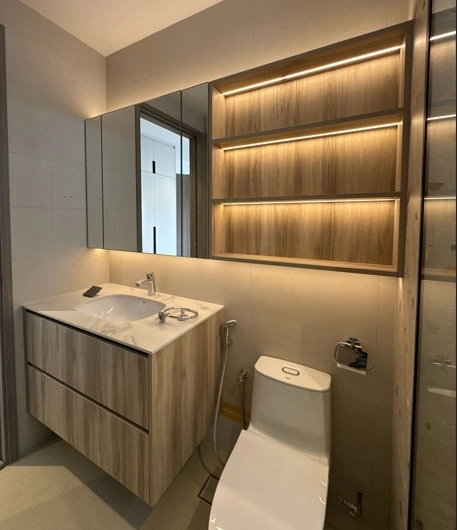
Modern vanity cabinet with a wood finish, proper waterproofing depends on the core material, not just the surface appearance.
Dense, non-absorbent internal structure
No visible wood fibers at exposed edges
Panels that remain stable in humid conditions
Raw particle board or MDF visible at cut edges
Soft or crumbly texture inside the panel
Early signs of swelling even with light exposure
In practice, cabinets that rely only on surface coatings often fail because moisture enters through the core, not the surface.
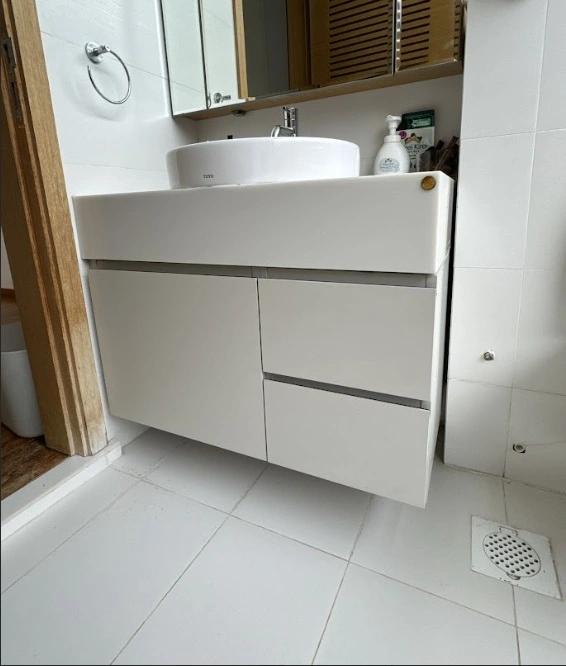
Moisture often enters through seams and cutouts; cabinets installed near drains or splash zones require tightly sealed joints to prevent water damage.
Most moisture damage starts at the weakest points of a cabinet, not the flat surfaces.
Pay close attention to:
Edge banding quality
Sealing around seams and joints
Hinge cutouts and screw holes
Well-sealed cabinets show tight seams, consistent finishes, and no exposed raw material. Poor edge treatment is one of the clearest signs that cabinets are not built for long-term water resistance.
For a deeper explanation of moisture-focused construction, this guide on how waterproof cabinets are built explains how structure and sealing work together to prevent moisture damage.

Modern under-sink cabinet installation in a moisture-prone area proper sealing is essential to prevent water damage.
Achieve your desired look without overspending by considering these options:
If you’re wondering are my kitchen cabinets truly waterproof, early warning signs often provide the answer.
Common indicators include:
Peeling or bubbling surfaces
Discoloration near sink areas
Slight cabinet door misalignment
Musty or damp odors inside cabinets
These issues usually appear first in under-sink cabinets, dishwasher-adjacent units, and enclosed corner cabinets with limited airflow.
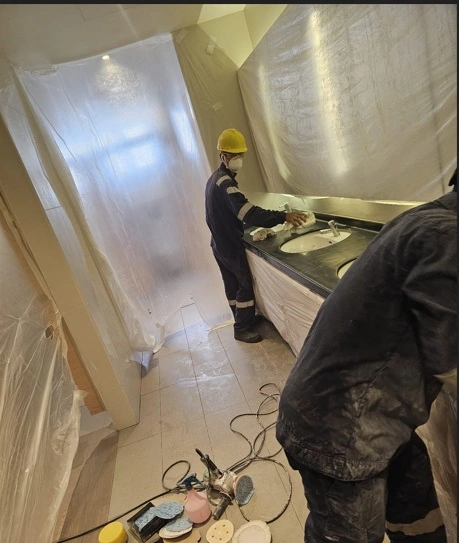
Professional cabinet installation and surface prep — proper joint construction and sealing are essential to long-term waterproof performance.
Cabinet joints play a critical role in water resistance.
Poor joint construction allows moisture to enter through:
Loose fasteners
Gaps between panels
Unsealed hardware mounting points
From an installation perspective, cabinets perform better over time when joints are designed to remain stable despite temperature and humidity changes. This is covered in more detail in the kitchen cabinet installation process.
Humidity is one of the biggest stress factors for kitchen cabinets. Steam from cooking can quickly raise moisture levels, especially in enclosed kitchens.
A moisture-resistant cabinet should:
Maintain its shape during temperature changes
Avoid trapping condensation internally
Allow airflow where needed
Design and material choice matter just as much as surface finishes when assessing water resistance in cabinets.
If you want to test waterproof kitchen cabinets before installation, simple checks can reveal potential issues.
Safe methods include:
Placing a damp cloth on the cabinet surface for several hours
Inspecting edges and seams afterwards
Checking for swelling or softening
Avoid soaking cabinets. Real-world moisture exposure is gradual, not extreme. Focus testing on edges and joints, as these are the most vulnerable areas.
A cabinet may resist water briefly but still fail over time.
Long-term durability depends on:
Core material stability
Consistent sealing quality
Resistance to expansion and contraction
Proper care also plays a role. This aluminium cabinet maintenance guide explains how to maintain moisture-resistant cabinets to extend their lifespan.
“A waterproof surface means the whole cabinet is waterproof.”
Surface coatings alone do not stop moisture from entering through edges and joints.
“Thicker cabinets are always more water-resistant.”
Thickness is irrelevant if the core material absorbs moisture.
“Mould only appears when there is a leak.”
High humidity alone can cause mould if moisture is trapped inside cabinets.
These misconceptions often lead homeowners to overlook the real causes of cabinet failure.
Even cabinets designed to resist moisture benefit from good habits:
Wipe spills promptly
Maintain proper kitchen ventilation
Inspect under-sink areas regularly
Address plumbing issues early
For homeowners planning upgrades or replacements, understanding how cabinet construction affects performance is essential. This overview of custom cabinet solutions explains how material and build choices influence long-term durability.
Knowing how to check if a kitchen cabinet is really waterproof comes down to examining materials, construction details, and real-world behavior over time.
A cabinet can be considered truly waterproof if:
Its core does not absorb moisture
Its edges and joints are properly sealed
Its structure remains stable in humid environments
It shows no early signs of swelling or mold
Rather than relying on labels or claims, focusing on these practical checks provides a more reliable way to assess water resistance and avoid costly replacements later.
This approach reflects the same principles used by T Se7en Alucraft when designing cabinets intended to perform reliably in moisture-prone kitchens.
You can tell if kitchen cabinets are waterproof by examining the core material, edge sealing, and how the panels are joined. Cabinets made with moisture-resistant cores and fully sealed edges prevent water from penetrating the interior. Tight joints with no visible gaps are another indicator of proper waterproof construction. Cabinets that are not waterproof often show early signs such as edge swelling, bubbling surfaces, or peeling finishes, especially near sinks or dishwashers. These visual cues usually indicate that water has already entered the cabinet structure and compromised the material.
Waterproof kitchen cabinets are commonly manufactured using aluminum, high-pressure laminate panels, marine-grade plywood, or PVC boards. These materials are designed to resist moisture absorption and do not swell or deform when exposed to humidity or splashes. Aluminum and PVC are fully non-porous, while marine plywood and HPL rely on waterproof adhesives and sealed finishes to block moisture. When combined with proper edge banding and joint sealing, these materials perform well in kitchens with frequent steam, condensation, and water exposure.
The main difference between waterproof and water-resistant cabinets is how much moisture they can tolerate over time. Waterproof cabinets are built to handle prolonged exposure to humidity, splashes, and condensation without structural damage. Water-resistant cabinets can repel small amounts of moisture but may gradually swell, warp, or deteriorate if exposed to leaks or constant humidity. In kitchens, water-resistant cabinets are more vulnerable near sinks and appliances, while waterproof cabinets maintain their shape and finish even in high-moisture zones.
Signs of water damage in kitchen cabinets usually appear around areas exposed to moisture, such as under sinks or near dishwashers. Common indicators include swollen panels, bubbling or lifting laminate, peeling edge bands, discoloration, and a persistent musty odor. These issues occur when water penetrates through unsealed joints or damaged finishes and reaches the core material. Over time, moisture buildup weakens the cabinet structure and can lead to mold growth if ventilation is poor.
You can test kitchen cabinets for waterproofing before installation by applying controlled moisture to vulnerable areas like edges and seams. Placing a damp cloth on these areas for several hours can reveal how well the cabinet resists water. If the surface swells, softens, or changes color, the cabinet is not fully waterproof. Inspecting the core material, edge sealing quality, and finish consistency before purchase also helps confirm whether the cabinet is suitable for moisture-heavy kitchen environments.
Location: 39 Woodlands Cl, #05-21, Singapore 737856
Phone: +65 9615 9273
Email: marketing@tse7en.com
Website: https://www.tse7en.com
Follow Us on Social Media:
Speak to a professional now and get personalized consultation and guidance for your next renovation. Work with a team you can trust!
Home Blog An aluminium kitchen cabinet carcass is the structural skeleton of your kitchen cabinet, built entirely from aluminium rather than wood, plywood, or MDF....



One Response