In Singapore’s humid kitchens, under-sink cabinet mold is usually caused by trapped humidity, plumbing condensation, small leaks, and moisture-absorbing cabinet boards such as MDF or particle board. The most reliable prevention strategy is to combine cabinet ventilation, sealed pipe openings, leak protection, and non-porous aluminium sink-base cabinets that do not absorb water or swell.
For cabinets with recurring mold, soft edges, swollen panels, or musty smells, replacement with a moisture-resistant aluminium cabinet system is often more effective than repeated cleaning.
A sink base cabinet is the cabinet installed directly beneath the kitchen sink. It houses plumbing pipes, water supply lines, drainage connections, and sometimes water filters or cleaning supplies.
Because this cabinet surrounds wet plumbing components, it is one of the highest-risk areas for moisture buildup, trapped humidity, and mold growth in Singapore kitchens.
Under-sink cabinets often grow mold because moisture becomes trapped inside a dark, enclosed space. In Singapore’s humid climate, the risk is higher because kitchens in HDB flats, BTO units, and condominiums often have limited airflow.
| Cause | Why It Creates Mold Risk | Prevention Method |
|---|---|---|
| Plumbing condensation | Cold pipes can create surface moisture inside the cabinet. | Add pipe insulation and improve ventilation. |
| Small leaks or micro-drips | Even minor leaks can keep cabinet surfaces damp. | Check pipe joints, drain connections, and sink edges regularly. |
| Poor cabinet ventilation | Closed cabinets trap humidity and slow drying. | Add ventilation holes, louver vents, or airflow gaps. |
| Moisture-absorbing boards | MDF and particle board can absorb moisture through edges and joints. | Use non-porous aluminium cabinets in wet zones. |
Mold spores naturally exist in indoor air, but they grow when surfaces stay damp for long periods. In enclosed sink cabinets, mold risk increases when humidity remains high and moisture cannot dry out quickly.
Cleaning may help if the mold is minor and the cabinet structure is still firm. However, replacement is usually the better option when the cabinet material has already absorbed moisture.
Replace the under-sink cabinet if you notice:
In many Singapore renovation projects, recurring under-sink mold is not only a cleaning problem. It is often a material problem caused by moisture-absorbing boards in a high-humidity wet zone.
If your sink base cabinet has swollen edges, soft panels, or recurring mold stains, you may need a full cabinet replacement for kitchen upgrades instead of repeated cleaning.
Preventing mold requires a combination of ventilation, sealing, moisture control, and the right cabinet materials. Below are effective strategies used in modern kitchen renovation projects.
Ventilation is one of the most important steps in under-sink cabinet mold prevention. Without airflow, humidity stays trapped and condensation remains on cabinet surfaces.
Recommended ventilation solutions include:
Ventilation is especially important in compact HDB and condo kitchens, where airflow may be limited.
Water often enters cabinets through pipe openings, sink edges, seams, and joints. Even small gaps can allow moisture to spread into the cabinet carcass.
Seal these areas:
| Area to Seal | Why It Matters |
|---|---|
| Pipe entry holes | Prevents humidity and water from entering exposed board edges. |
| Drain connections | Reduces leak-related moisture buildup. |
| Cabinet joints and corners | Stops moisture from spreading through seams. |
| Sink edge contact areas | Prevents water from dripping into the cabinet below. |
| Backsplash joints | Blocks water seepage behind the cabinet. |
Use waterproof silicone sealant around high-risk areas to reduce moisture intrusion.
Cabinet material is a major factor in under-sink mold prevention. Some materials absorb moisture, while others resist water completely.
For wet zones such as sink bases, plumbing cut-outs, and cabinet bases, waterproof aluminium kitchen cabinets are usually a stronger long-term option than MDF or particle board.
If you are comparing board-based cabinets with aluminium, see our full guide on aluminium vs MDF cabinets in Singapore humidity.
| Cabinet Material | Moisture Resistance | Mold Risk | Typical Lifespan | Best Use Case |
|---|---|---|---|---|
| MDF | Low | High | 5–10 years | Dry kitchen zones away from sinks |
| Particle Board | Low | High | 5–8 years | Budget cabinets in low-moisture areas |
| Aluminium | Very High | Very Low | 30+ years | Sink base cabinets and humid kitchens |

MDF cabinets are affordable but moisture-sensitive, especially near sinks.
Common problems include:
Particle board has a similar risk profile to MDF and may deteriorate faster when repeatedly exposed to damp conditions.
Common problems include:
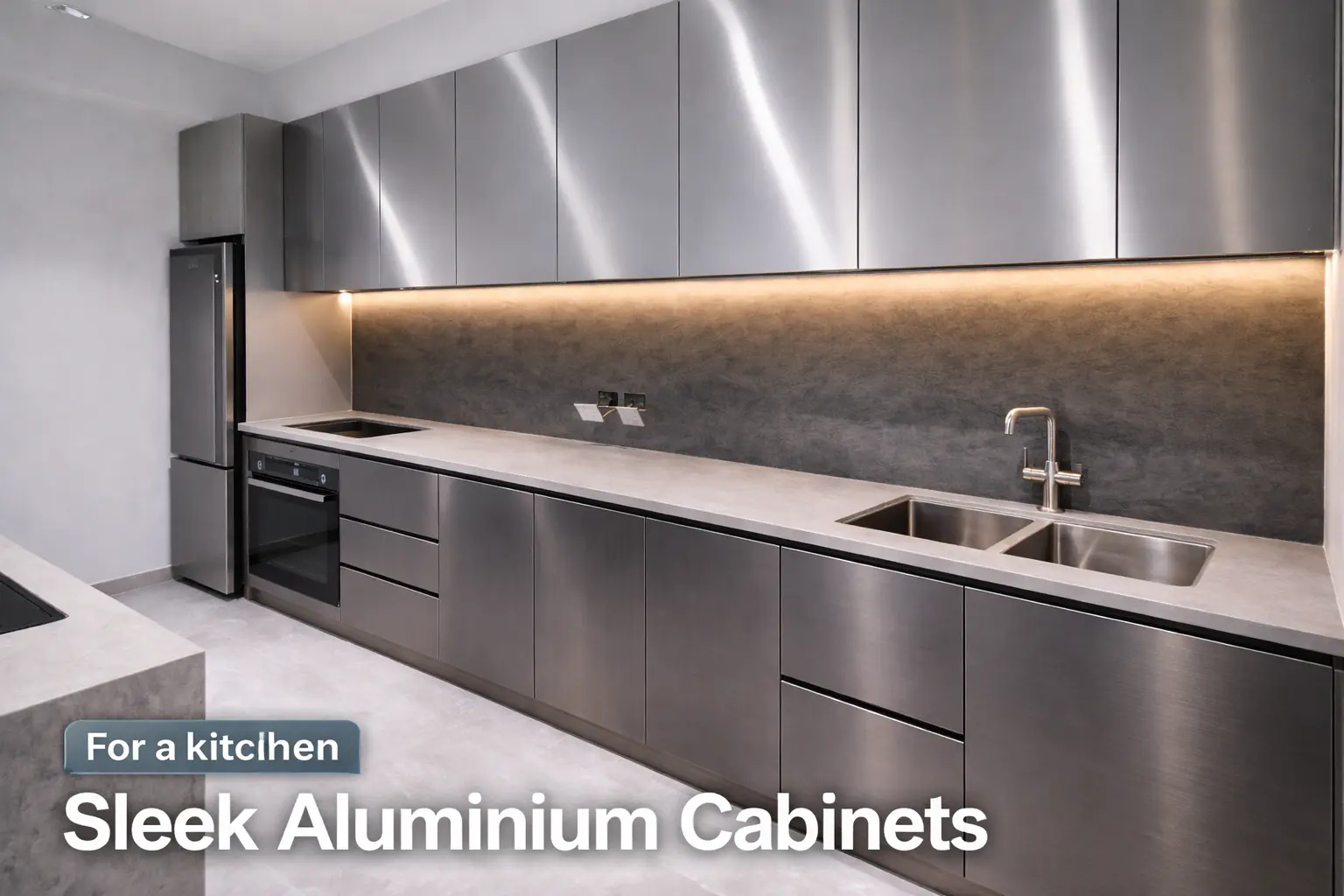
Aluminium is non-porous, which means it does not absorb water through edges or surfaces like MDF or particle board.
Benefits of aluminium sink-base cabinets include:
Even a small leak can trigger mold if water stays trapped inside the cabinet. Leak protection helps contain spills and makes water issues easier to detect early.
Recommended solutions include:
A protective tray is especially useful because it keeps small leaks visible instead of allowing water to soak into the cabinet base.
Besides ventilation and waterproof materials, homeowners can reduce trapped humidity with simple moisture-control methods.
| Method | How It Helps |
|---|---|
| Pipe insulation | Reduces condensation on cold plumbing lines. |
| Silica gel or moisture absorbers | Helps absorb excess humidity inside enclosed spaces. |
| Small cabinet dehumidifier | Useful for enclosed sink cabinets with poor airflow. |
| Opening cabinet doors occasionally | Allows trapped moisture to escape after washing or cleaning. |
| Leak checks | Prevents hidden water buildup from becoming a mold problem. |
These steps are most effective when combined with proper cabinet ventilation and moisture-resistant materials.
Yes. Aluminium cabinets generally perform better than MDF or particle board in humid Singapore kitchens, especially in the sink base cabinet area.
Because aluminium is non-porous, it does not absorb water, swell, soften, or break down at the edges when exposed to repeated moisture. This makes it a stronger long-term option for wet zones such as sink cabinets, plumbing cut-outs, and cabinet bases.
For homeowners planning a kitchen renovation, aluminium cabinets are especially suitable for:
Use this checklist to reduce the risk of mold under your kitchen sink:
| Prevention Step | Done? |
|---|---|
| Check for leaks around pipes and drain joints | ☐ |
| Seal pipe holes and cabinet seams with waterproof silicone | ☐ |
| Add cabinet ventilation holes or louver vents | ☐ |
| Use a waterproof liner or aluminium drip tray | ☐ |
| Insulate pipes that create condensation | ☐ |
| Replace swollen MDF or particle board cabinets | ☐ |
| Choose aluminium for wet-zone sink cabinets | ☐ |
| Open cabinet doors occasionally to improve drying | ☐ |
If you are planning a larger kitchen upgrade, our kitchen renovation service in Singapore can help you choose moisture-resistant materials, improve ventilation, and replace damaged sink-base cabinets.
Under-sink cabinet mold prevention in Singapore requires more than occasional cleaning. The most reliable approach is to control humidity, improve cabinet ventilation, seal moisture entry points, protect against leaks, and choose materials that do not absorb water.
If your sink cabinet is already swollen, soft at the edges, or showing recurring mold stains, replacing it with a non-porous aluminium cabinet system is often the most practical long-term solution for Singapore homes.
Planning a kitchen renovation or replacing a mold-damaged sink cabinet? Speak with a cabinet maker in Singapore or explore our kitchen renovation service in Singapore for moisture-resistant aluminium cabinet solutions designed for humid homes.
Mold can begin growing within 24–48 hours when moisture and poor ventilation are present. Under-sink cabinets are vulnerable because condensation and small leaks can create constant humidity.
Often, yes. Many HDB kitchens have compact layouts with limited airflow, which can trap humidity inside cabinets especially when MDF or particle board materials are used.
Yes. Ventilation holes, louvers, or airflow gaps allow air circulation and prevent humidity from becoming trapped inside cabinets, lowering mold risk significantly.
Aluminium cabinets are among the most mold-resistant options because they are non-porous and moisture-resistant. MDF and particle board are more vulnerable to water damage.
You can reduce humidity by installing pipe insulation, using silica gel moisture absorbers, adding a small cabinet dehumidifier, and improving cabinet ventilation.
Aluminium is usually the best cabinet material for under-sink mold prevention in Singapore because it is non-porous, moisture-resistant, and does not swell like MDF or particle board. It performs especially well in humid kitchens, sink-base cabinets, and areas exposed to plumbing condensation or small leaks.
Repair may work if the mold is minor and the cabinet structure is still firm. Replacement is usually better when the cabinet has swollen edges, soft panels, recurring mold stains, or a musty smell. In Singapore’s humid climate, replacing moisture-absorbing boards with aluminium cabinets is often the more durable long-term solution.
Yes. Ventilation holes help prevent humidity from becoming trapped inside the cabinet. Under-sink cabinets should have airflow gaps, louver vents, rear ventilation cut-outs, or perforated base panels so moisture can dry faster after washing, leaks, or condensation.
Speak to a professional now and get personalized consultation and guidance for your next renovation. Work with a team you can trust!
Home Blog When choosing between aluminium profile and panel kitchen cabinets, profile designs use an extruded aluminium frame with an infill (glass, acrylic, or compact...