

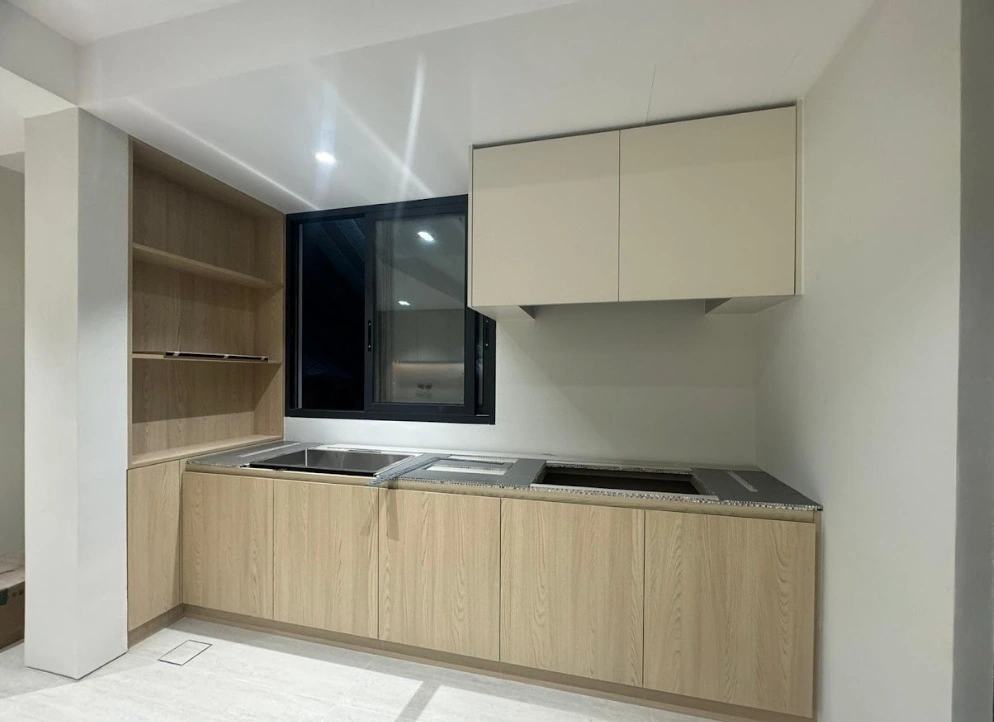

Aluminium Cabinet for Built-In Oven: Specs, Sizing, and What Singapore Homeowners Need to Know in 2026
An aluminium cabinet for built-in oven installation is a purpose-built enclosure designed to house a built-in oven safely within your kitchen layout, providing structural support, heat tolerance, and a seamless aesthetic finish. Unlike standard timber or MDF cabinetry, aluminium offers inherent advantages in Singapore’s humid, high-heat kitchen environments that make it the material of choice for homeowners who want a long-lasting, low-maintenance solution.
Key Takeaways
- An aluminium cabinet for built-in oven use must account for heat dissipation, ventilation clearances, and structural load, not just aesthetics.
- Standard built-in oven cabinet heights in Singapore typically fall between 580mm and 600mm for single ovens, with the surrounding carcass built to match.
- Aluminium cabinets resist moisture, termites, and warping, making them significantly more durable than timber alternatives in Singapore’s climate.
- Custom sizing is essential: oven brands differ in cavity dimensions, and a poorly fitted cabinet can void your appliance warranty.
- Costs for aluminium oven cabinets in Singapore vary based on grade, finish, and complexity, but the long-term value generally outweighs the higher upfront price compared to wood.
- T Se7en Alucraft brings over 30 years of carpentry and aluminium expertise to every custom kitchen project in Singapore.
Why Aluminium Outperforms Timber for Built-In Oven Cabinets
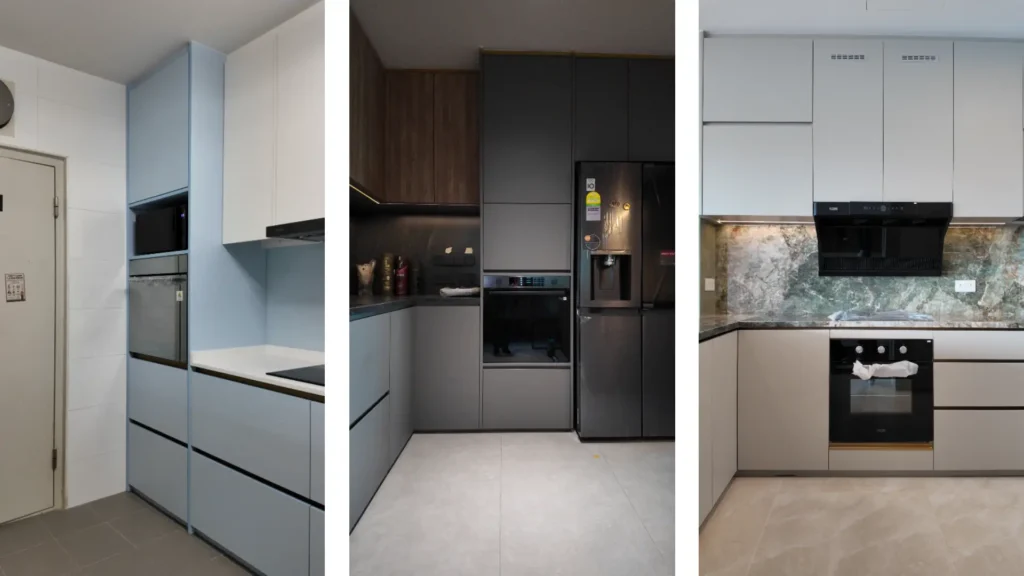
When a built-in oven sits inside a cabinet carcass, it generates sustained radiant heat during every cooking cycle. Timber, particleboard, and MDF all expand and contract with heat and humidity, and over time, this stress causes warping, delamination, and structural failure around the oven cavity. In Singapore’s climate, where ambient humidity regularly sits above 80%, this problem compounds quickly.
Aluminium does not warp, swell, or crack under these conditions. The material maintains its dimensional stability regardless of temperature fluctuations, making it the structurally sound choice for housing an appliance that regularly reaches temperatures above 200°C in the surrounding air pocket.
There is also the matter of moisture resistance. According to the National Kitchen & Bath Association (NKBA 2024 Design Trends Report), more than 60% of kitchen renovation callbacks relate to moisture damage. In a Singapore kitchen where steam, condensation, and the occasional water splash are daily realities, aluminium’s non-porous surface prevents the kind of swelling and mould growth that ruins timber cabinets within a few years. If you want to understand more about the science behind this, it helps to know whether can aluminium kitchen cabinets rust before committing to any aluminium solution.
Beyond moisture, aluminium cabinets are are aluminium kitchen cabinets termite proof, which removes one of the most common and costly causes of cabinet failure in Singapore’s landed properties and older HDB flats alike.
The global built-in ovens market is estimated to reach S$23.7 billion by 2034, expanding from approximately S$14.9 billion in 2026 at a compound annual growth rate of 5.2% (DataIntelo, 2026). As built-in ovens become a staple in Singapore’s upgraded kitchens, the cabinetry supporting them needs to be equally future-proofed.
Product Range: What an Aluminium Oven Cabinet System Includes
A complete aluminium cabinet system for a built-in oven is not simply a box with a hole cut in it. It comprises several components that work together to create a safe, functional, and visually cohesive kitchen unit.
The Main Oven Tower or Column Cabinet
The oven tower is the primary housing unit. It is typically a floor-to-ceiling or waist-to-ceiling column that contains the oven at an ergonomic mid-height position, with storage drawers below and cupboard space above. The aluminium carcass must be built to precise internal dimensions to match the oven’s stated cavity size, with additional clearances at the sides, top, and rear for ventilation.
When building upward in your kitchen, it is worth thinking carefully about should kitchen cabinets go to the ceiling since a full-height column maximises storage whilst framing the oven beautifully.
Door Configurations for Aluminium Oven Cabinets
At T Se7en Alucraft, oven column cabinets are paired with a range of door styles to suit different kitchen aesthetics:
- Compact Plus doors with aluminium frame: Moisture-resistant compact panels set within a robust aluminium frame, ideal for modern minimalist kitchens.
- Glass doors with aluminium frame: Tempered glass insets within aluminium profiles, often used for the upper storage section above the oven to display crockery or appliances.
- Compact panel doors with AVS edging: A clean-edged finish that resists chipping and heat, suitable for families who use their ovens daily.
Understanding the broader structural difference between these is easier when you compare aluminium profile vs panel kitchen cabinets, which breaks down how each system performs over time.
Additional Cabinets in a Coordinated Kitchen Set
A built-in oven cabinet rarely stands alone. Most Singapore homeowners integrate it within a full kitchen renovation that includes base cabinets, wall cabinets, a sink unit, vanity-style storage, and sometimes a dedicated wardrobe for the dry kitchen area. T Se7en Alucraft designs and builds all of these as a coordinated system, ensuring consistent material grade, finish, and dimensions across the entire kitchen.
Heat Management and Ventilation: The Technical Details That Matter
One of the most overlooked aspects of building a cabinet around a built-in oven is thermal management. Ovens are not fully sealed systems. Heat escapes from the sides, rear, and top of the appliance during and after cooking cycles, and without proper ventilation within the cabinet carcass, this heat builds up and degrades both the cabinet material and the oven’s internal electronics.
For aluminium cabinets, the good news is that the material itself conducts heat rather than trapping it, which helps dissipate thermal build-up more effectively than MDF or timber. However, you still need to follow the oven manufacturer’s stated clearance requirements:
| Oven Position | Minimum Recommended Clearance |
|---|---|
| Side (each side) | 5mm to 10mm |
| Rear | 40mm to 50mm |
| Top of oven cavity | 10mm to 15mm |
| Base (for under-counter installation) | Per manufacturer spec |
These clearances must be factored into the internal dimensions of the aluminium cabinet carcass at the design stage, not as an afterthought during installation. A well-built cabinet that ignores thermal clearances can void the oven warranty and create a fire risk.
The quality of construction at this detail level is what separates a specialist like T Se7en Alucraft from general contractors. Understanding aluminium kitchen cabinet workmanship standards helps you ask the right questions before signing any renovation agreement.
Sizing Guide: How to Specify the Right Cabinet Dimensions
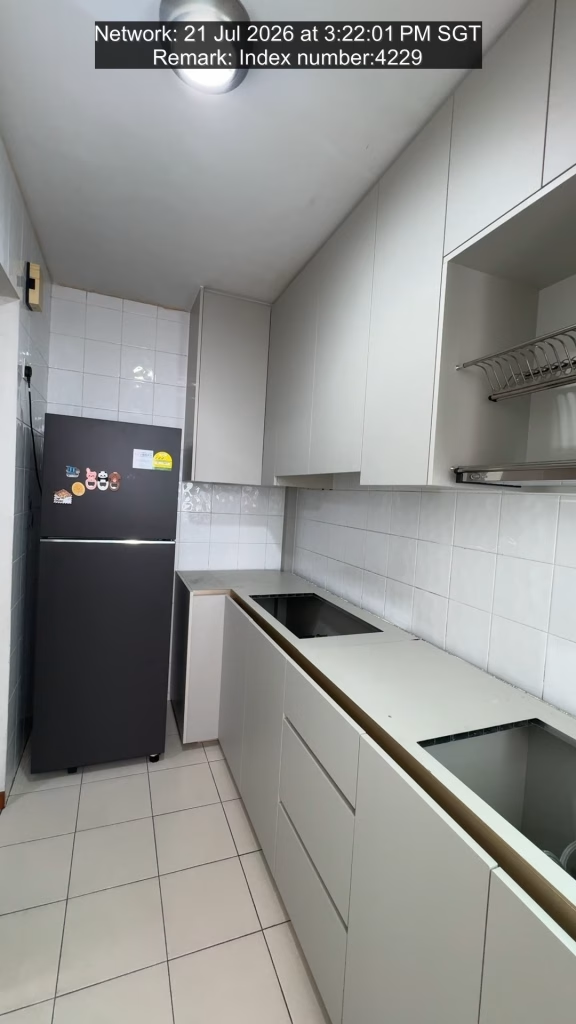
Getting the sizing right is critical. Built-in ovens sold in Singapore typically conform to European standard widths of 45cm or 60cm, but the cabinet opening must account for the exact model’s cut-out dimensions, not the overall appliance size.
Standard sizing reference for Singapore kitchens:
- Single oven cabinet height: 580mm to 600mm internal opening
- Standard oven width: 595mm internal cut-out for a 60cm oven
- Column tower total height: 2,100mm to 2,400mm depending on ceiling height
- Base drawer below oven: typically 300mm to 500mm in height
- Upper cabinet above oven: remaining height minus door clearance
Wall-mounted ovens commanded approximately 61.2% of global installation type revenue in 2026, while under-counter models accounted for 38.8% (DataIntelo, 2026). In Singapore’s HDB and condo kitchens, wall-mounted or mid-height column installations are preferred because they place the oven at eye level, reducing the need to bend down, and freeing up the base cabinet space for other storage.
The material grade used in the cabinet carcass also affects structural load capacity. This is particularly relevant for column towers that house both a full-sized oven and a steam oven or microwave above it. Knowing the right aluminium grade for kitchen cabinets ensures your column can handle the combined appliance weight without deflection over time.
Why T Se7en Alucraft Is Singapore's Trusted Choice for Oven Cabinets
T Se7en Alucraft brings over 30 years of combined carpentry and aluminium expertise to every kitchen project in Singapore. That depth of experience means the team does not treat a built-in oven cabinet as a generic storage unit. Instead, every oven column is designed around the specific appliance model, kitchen layout, and homeowner’s cooking habits.
Key differentiators:
- Zero-formaldehyde materials: All aluminium panels and carcass components are free from formaldehyde, making them safer for Singapore households, particularly those with young children or elderly residents.
- Waterproof construction: Every component, including internal shelves, hinges, and panel surfaces, is rated for Singapore’s humid environment.
- Custom dimensions: No two kitchens are the same. T Se7en Alucraft builds to exact specifications rather than adapting stock units to fit.
- End-to-end service: From the initial design consultation through to installation and after-sales support, the same team manages your project.
- Eco-friendly approach: Aluminium is one of the most recyclable construction materials available, aligning with Singapore’s broader Green Plan sustainability goals.
The global kitchen cabinet market reached USD 74.2 billion in 2024 and is projected to grow at a CAGR of 6.1% through to 2033 (Growth Market Reports, 2025). As more Singapore homeowners upgrade their kitchens with built-in appliances, demand for specialist cabinetry that can accommodate ovens, steam ovens, and combination units will only increase.
Home Renovation Considerations for Singapore Kitchens in 2026
Singapore kitchens present a specific set of renovation constraints that mainland or Western renovation advice does not always address. HDB kitchens are often narrow, with limited natural ventilation and strict guidelines on structural alterations. Landed properties in areas like Bukit Timah or Serangoon may have more space, but older builds often have non-standard measurements that require fully custom solutions.
For HDB homeowners, the key considerations when adding an aluminium built-in oven cabinet include:
- Checking HDB renovation guidelines for any structural work or wet area changes that accompany a kitchen overhaul.
- Coordinating with the oven supplier to confirm cut-out dimensions before the cabinet carcass is fabricated.
- Planning for electrical points at the correct height for the oven’s power supply, ideally behind the appliance at the correct position to avoid trailing cables within the cabinet.
- Considering resale value: A well-designed, durable aluminium kitchen with a built-in oven is a strong selling point for HDB resale buyers in 2026’s competitive property market.
For those budgeting a full kitchen renovation, costs in Singapore for a complete aluminium kitchen set (excluding appliances) typically range from S$8,000 to S$25,000 or more depending on cabinet count, door finish, and complexity of the oven column configuration. Standalone aluminium oven cabinets, designed as a single column unit, generally start from around S$1,500 to S$3,500 depending on specifications, grade of aluminium, and the fabricator’s level of workmanship.
Planning Your Built-In Oven Cabinet: A Step-by-Step Approach
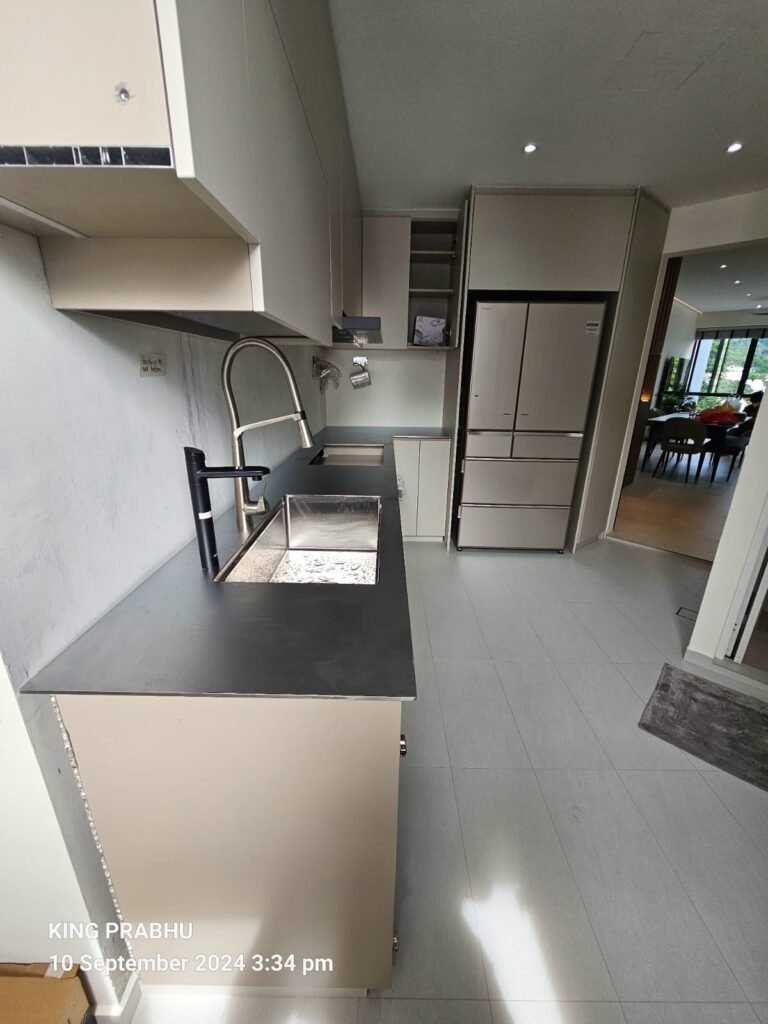
Following a 7 clear process before any fabrication begins saves time, money, and the frustration of a mismatched finish or ill-fitting oven cavity.
- Select your oven first. Confirm the model, and obtain the installation sheet with cut-out dimensions and ventilation requirements from the manufacturer.
- Measure your kitchen space. Note ceiling height, floor-to-soffit distance, and the width available for the column unit.
- Choose your aluminium grade and door finish. Consider the kitchen’s overall colour palette, the level of daily use, and your budget.
- Brief your fabricator. Share the oven installation sheet, kitchen measurements, and your design preferences. T Se7en Alucraft offers WhatsApp consultations and video call design sessions for this stage.
- Review the shop drawings. Before fabrication begins, review detailed drawings showing internal dimensions, clearances, and door positions.
- Schedule installation to follow electrical works. Ensure the electrician has installed the oven’s dedicated power point before the cabinet is fitted.
- Test the oven installation before sign-off. Confirm ventilation clearances are met and the oven door opens fully without obstruction.
This structured approach is what T Se7en Alucraft follows for every oven cabinet project, ensuring the finished result is both functional and built to last in Singapore’s conditions.
Book Your Custom Aluminium Oven Cabinet Consultation with T Se7en Alucraft
Your kitchen deserves cabinetry that is built around your oven, not the other way around. At T Se7en Alucraft, every aluminium cabinet for built-in oven installation is designed to your exact appliance specifications, kitchen dimensions, and lifestyle needs, backed by over 30 years of expertise in Singapore’s renovation industry. Whether you are renovating an HDB flat in Tampines or upgrading a landed kitchen in Holland Village, our team is ready to bring your vision to life with precision workmanship and materials that genuinely last. Book your appointment today by reaching out via WhatsApp at +65 9615 9273 or emailing sales@tse7en.com to schedule your complimentary design consultation and take the first step towards a kitchen that works as beautifully as it looks.
The Final Word on Aluminium Cabinet for Built-In Oven Selection in Singapore
Choosing the right cabinetry for your built-in oven is one of the most consequential decisions in any kitchen renovation. An aluminium cabinet for built-in oven use, when designed with proper thermal clearances, the correct material grade, and precise custom dimensions, gives you a kitchen that performs safely and looks exceptional for decades without the warping, termite damage, or moisture failures that plague timber alternatives in Singapore’s conditions.
The next step is straightforward: gather your oven’s installation sheet, measure your available kitchen space, and contact T Se7en Alucraft at +65 9615 9273 or sales@tse7en.com to arrange your complimentary consultation. The team will walk you through material options, door finishes, and a detailed quotation so you can move forward with complete confidence.
Frequently Asked Questions
Aluminium kitchen cabinets cost more upfront than timber or MDF alternatives, and their appearance can feel industrial if not paired with the right door finish.
The material is also prone to surface denting if struck with heavy objects, unlike solid timber which can often be sanded and refinished. Additionally, poorly graded aluminium may show oxidation marks over time in coastal or high-humidity environments, which is why selecting the correct alloy from a reputable fabricator matters significantly. That said, these drawbacks are largely manageable through quality workmanship and proper material selection, making aluminium a net positive choice for most Singapore homeowners over a five-to-ten year horizon.
Aluminium kitchen cabinets in Singapore typically range from S$8,000 to S$25,000 or more for a full kitchen set, depending on cabinet count, door finish, and configuration complexity.
Standalone units such as a single base cabinet or an oven column can start from around S$1,500 to S$3,500. Factors that influence the final price include the grade of aluminium used in the carcass, the type of door system chosen (compact panel, glass, or profile frame), handle style, internal fittings such as pull-out shelves or soft-close hinges, and the overall size of the kitchen. Getting a detailed quotation from a specialist fabricator like T Se7en Alucraft ensures you are comparing like-for-like specifications rather than vague package prices.
Aluminium cabinets carry a higher initial cost than timber or particleboard options, but their total cost of ownership over ten or more years is often lower when you account for durability, reduced maintenance, and the absence of termite or moisture damage.
In Singapore’s climate, timber cabinets frequently require refinishing, panel replacement, or full replacement within five to eight years due to warping and moisture ingress. Aluminium cabinets, when properly fabricated, can last upwards of twenty years with minimal upkeep beyond routine cleaning. For homeowners planning to stay in their property long-term or intending to maximise resale value, the higher upfront investment in aluminium typically delivers better returns than budget alternatives.
The standard cabinet opening for a 60cm built-in oven in Singapore is approximately 595mm wide by 580mm to 600mm tall, though you must always verify the cut-out dimensions on your specific oven model’s installation sheet.
The surrounding column cabinet is typically built to a total height of 2,100mm to 2,400mm, depending on your kitchen’s ceiling clearance, with drawer storage below the oven and cupboard space above. Side clearances of 5mm to 10mm and a rear clearance of 40mm to 50mm must be incorporated into the internal carcass dimensions to satisfy ventilation requirements and protect your oven warranty. Fabricating the cabinet before confirming these figures with your oven supplier is one of the most common and costly mistakes Singapore homeowners make during kitchen renovations.
T Se7en Alucraft is a specialist in custom-made aluminium cabinets in Singapore, offering fully bespoke kitchen, wardrobe, bathroom vanity, and office furniture solutions built to your exact specifications.
With over 30 years of combined carpentry and aluminium experience, the team at T Se7en Alucraft handles everything from initial design consultation and shop drawing review through to fabrication, installation, and after-sales support. You can reach the team by calling or WhatsApp-ing +65 9615 9273, emailing sales@tse7en.com, or visiting www.tse7en.com to schedule a virtual showroom tour or video call design session at a time that suits you.
Still Unsure?
Speak to a professional now and get personalized consultation and guidance for your next renovation. Work with a team you can trust!
Best Materials for Kitchen Cabinets in Singapore
Home Blog An aluminium cabinet for built-in oven installation is a purpose-built enclosure designed to house a built-in oven safely within your kitchen layout, providing...