✅ Aluminium wardrobes are best for humid environments
Aluminium is non-porous, termite-resistant, and requires minimal maintenance, making it suitable for homeowners who prioritise durability and long-term performance.
✅ PVC wardrobes are the budget-friendly option
PVC provides good moisture resistance and termite protection at a lower cost, making it suitable for rental properties, secondary rooms, and budget renovations.
✅ Solid wood wardrobes offer premium aesthetics
Solid wood provides natural grain patterns, warmth, and craftsmanship that suit luxury interiors, but it requires more maintenance in Singapore’s humid climate.
✅ Laminate wardrobes provide the best balance of cost and design
Laminate offers extensive finishes, practical maintenance, and flexible styling options. However, performance depends heavily on the quality of the underlying core material such as plywood, MDF, or particle board.
✅ The internal construction matters as much as the surface material
For engineered wardrobes, factors such as marine plywood, MDF quality, edge sealing, formaldehyde ratings (E0/E1), and installation workmanship influence durability and indoor air quality.
✅ Singapore homeowners should prioritise climate suitability over appearance alone
A wardrobe that looks attractive but performs poorly in humidity may require more maintenance or earlier replacement. Material selection should consider bedroom ventilation, usage habits, and long-term ownership goals.
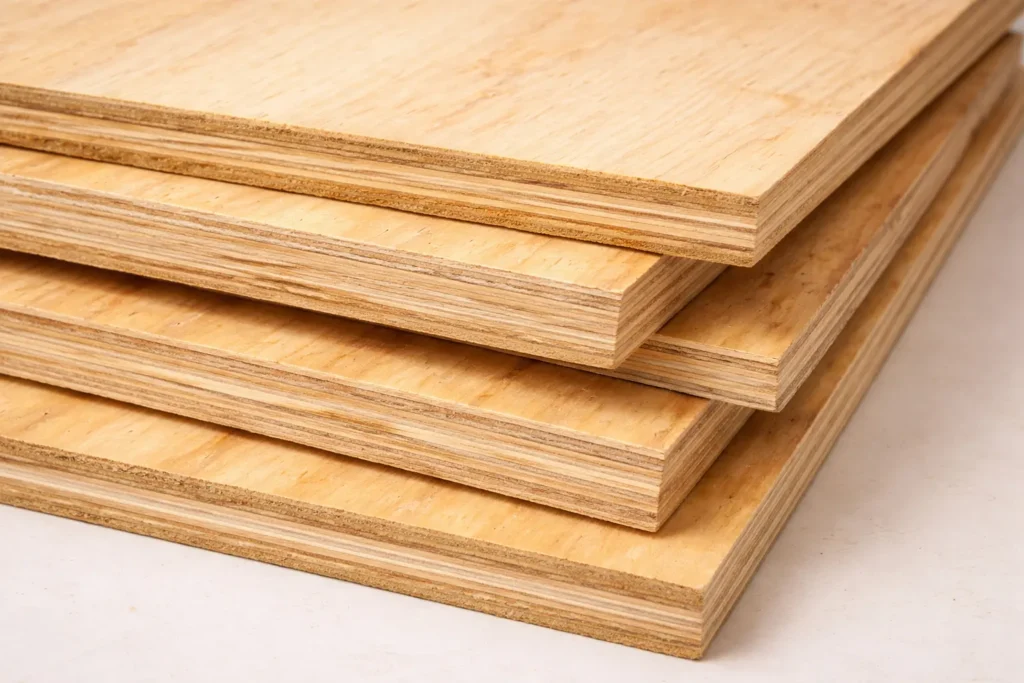
Before choosing a wardrobe, homeowners should understand that “material” refers not only to the visible surface but also the internal structure.
For example:
The internal construction affects durability, moisture resistance, and lifespan.
| Material | Moisture Resistance | Termite Resistance | Maintenance | Estimated Price Range (SGD) | Best For |
|---|---|---|---|---|---|
| Aluminium | 5/5 Excellent (does not absorb water) | 5/5 Resistant | Very Low | $180–$350+ per foot run | Humid homes, long-term homeowners |
| PVC | 4.5/5 High resistance | 5/5 Resistant | Low | $80–$150 per foot run | Budget renovations, rental homes |
| Solid Wood | 2.5–3/5 Depends on treatment | 2/5 Requires protection | Medium-High | $350–$600+ per foot run | Premium interiors |
| Laminate (HPL + plywood/MDF core) | 3.5/5 Depends on substrate | 3/5 Depends on core treatment | Low-Medium | $120–$250 per foot run | HDB BTO and condo homes |
Prices are estimated renovation market ranges. Actual costs vary depending on hardware, design complexity, installation method, and material specifications.
Singapore’s climate creates different furniture challenges compared with cooler countries.
Average relative humidity in Singapore is frequently above 80%, which means wardrobes must cope with:
For homeowners renovating HDB BTO flats, condominiums, or landed properties, wardrobe selection should consider:
Materials that absorb moisture may experience:
Engineered wood products may contain adhesives that release formaldehyde.
Homeowners can consider:
A lower initial price does not always mean lower ownership cost.
A wardrobe that requires frequent repairs or replacement may cost more over time.
Homeowners should also consider environmental factors such as ventilation and post-renovation mould control. Learn more about how to prevent wardrobe mould in humid climates.
Aluminium wardrobes are one of the most durable wardrobe options for Singapore homes because aluminium is non-porous, termite-resistant, and highly resistant to humidity. Unlike wood-based materials, aluminium does not absorb moisture, swell, or warp. It is ideal for homeowners prioritising low maintenance, long-term durability, and reliable performance in Singapore’s warm and humid climate.

Aluminium wardrobes use aluminium frames, panels, or structural components instead of traditional timber-based boards.
The aluminium surface is commonly finished through:
These finishing methods improve appearance and surface protection.
Aluminium wardrobes offer several advantages for Singapore homes, especially in areas where humidity, termites, and maintenance are concerns. Their non-porous structure provides excellent moisture resistance, while their termite-resistant properties and low upkeep requirements make them suitable for long-term use. Aluminium is particularly suitable for homeowners who prioritise durability, reliability, and practical wardrobe performance.

Aluminium is a non-porous material, meaning it does not absorb water.
It does not:
This makes aluminium one of the most suitable wardrobe materials for Singapore’s humid environment, especially in bedrooms with limited airflow or higher moisture exposure.
Aluminium wardrobes provide a natural advantage over timber-based wardrobes because aluminium does not contain organic material that termites consume.
This makes aluminium suitable for:
Aluminium wardrobes require relatively little maintenance compared with many wood-based alternatives.
Typical care includes:
They generally do not require:
Although aluminium performs well in durability and moisture resistance, homeowners should consider:
For homeowners considering this option, explore more about aluminium wardrobes in Singapore, including designs, applications, and installation considerations.
@tse7en full house BTO renovation for aluminium kitchen cabinet, aluminium wardrobe, aluminium shoe cabinet with rotating shoe rack, HDB renovation upgrade should check this out #tse7en #aluminiumcabinet #aluminiumwardrobe #rotatingshoerack ♬ original sound - T Se7en Alucraft | Singapore
PVC wardrobes are an affordable and moisture-resistant storage option commonly chosen for budget renovations, rental properties, and homeowners seeking practical functionality. PVC does not absorb water easily and is resistant to termites, making it suitable for humid environments. However, compared with aluminium or solid wood, PVC generally offers lower structural strength and a less premium appearance.
PVC wardrobes use polyvinyl chloride panels or boards to create lightweight storage systems.
PVC is commonly selected when homeowners prioritise:
PVC wardrobes provide a practical and affordable storage solution for Singapore homes by combining moisture resistance, termite resistance, and lightweight construction. Their synthetic composition helps prevent common humidity-related issues such as swelling and water damage, making them suitable for bedrooms, rental properties, and budget renovations. However, their overall strength and premium appeal may be lower than aluminium or solid wood options.
PVC does not absorb moisture easily, making it suitable for humid environments such as Singapore bedrooms.
Unlike untreated wood materials, PVC is less likely to experience:
PVC wardrobes are usually among the more economical wardrobe choices.
They are commonly considered for:
Because PVC is a synthetic material, termites do not consume it.
This provides an advantage over natural timber wardrobes in termite-prone areas.
PVC wardrobes may have limitations in:
Compared with aluminium or solid wood, PVC may feel less substantial and may not provide the same long-term durability for high-use wardrobes.
Solid wood wardrobes are premium storage solutions valued for their natural beauty, craftsmanship, and long lifespan. Made from natural timber such as oak, teak, walnut, or rubberwood, they provide unique grain patterns and a warm interior appearance. However, solid wood requires more maintenance in Singapore’s humid climate because moisture can cause expansion, contraction, and material movement.
Solid wood wardrobes are constructed using natural timber rather than engineered boards.
Common timber choices include:
Each wood type provides different:
Solid wood wardrobes are valued for their premium appearance, natural character, and long-term furniture appeal. Unlike engineered materials, solid wood features unique grain patterns, warm textures, and authentic craftsmanship that create a luxurious interior atmosphere. They are commonly chosen for high-end homes, customised interiors, and design styles such as Scandinavian, traditional, and contemporary residential spaces.
Solid wood provides:
This makes it popular for:
High-quality solid wood furniture can last for decades when properly maintained.
It can sometimes be:
This gives solid wood an advantage as a long-term furniture investment.
Singapore’s humidity can affect natural timber performance.
Potential concerns include:
Solid wood generally requires better environmental control compared with aluminium.
For homeowners exploring premium wardrobe concepts, consider how luxury walk-in wardrobe designs in Singapore combine storage planning with interior aesthetics.
Laminate wardrobes are one of the most popular choices for Singapore HDB and condo homes because they provide a balance between affordability, durability, and design flexibility. Laminate is a decorative surface applied over a structural core such as marine plywood, MDF, or particle board. Performance depends heavily on the core material, edge finishing, and installation quality.
Laminate wardrobes consist of a decorative surface layer bonded onto a structural core.
Common core materials include:
The decorative surface may use:
The core material determines much of the wardrobe’s:
Laminate wardrobes are a popular choice for Singapore HDB BTO and condo homes because they offer a strong balance between design flexibility, affordability, and everyday practicality. Unlike solid wood or aluminium, laminate provides a wide range of colours, textures, and finishes while maintaining easy maintenance. Its overall performance depends on the quality of the underlying core material, edge finishing, and installation workmanship.
Laminate offers extensive appearance choices, including:
This makes laminate popular for:
The flexibility of laminate finishes allows homeowners to match wardrobes with different interior themes without the higher cost of premium materials.
Laminate provides a practical middle ground between different wardrobe materials.
It offers:
This balance makes laminate one of the most commonly selected wardrobe options for homeowners who want both aesthetics and practicality.
Quality laminate surfaces are designed for everyday use and are resistant to:
Regular maintenance usually involves:
However, durability depends on the quality of the laminate surface and the structural core underneath.
The durability of laminate wardrobes depends not only on the decorative laminate surface but also on the internal construction materials and workmanship. Factors such as MDF, marine plywood, particle board selection, edge sealing quality, and moisture protection determine long-term performance. Choosing the right substrate and installation method is especially important for Singapore’s humid environment.
The main considerations include:
For example, marine plywood generally performs better in moisture-prone environments compared with standard particle board because of its improved resistance to humidity.
Wardrobe functionality also depends on design decisions. Features such as sliding wardrobe doors in Singapore can improve accessibility, maximise bedroom space, and create a more efficient storage layout.
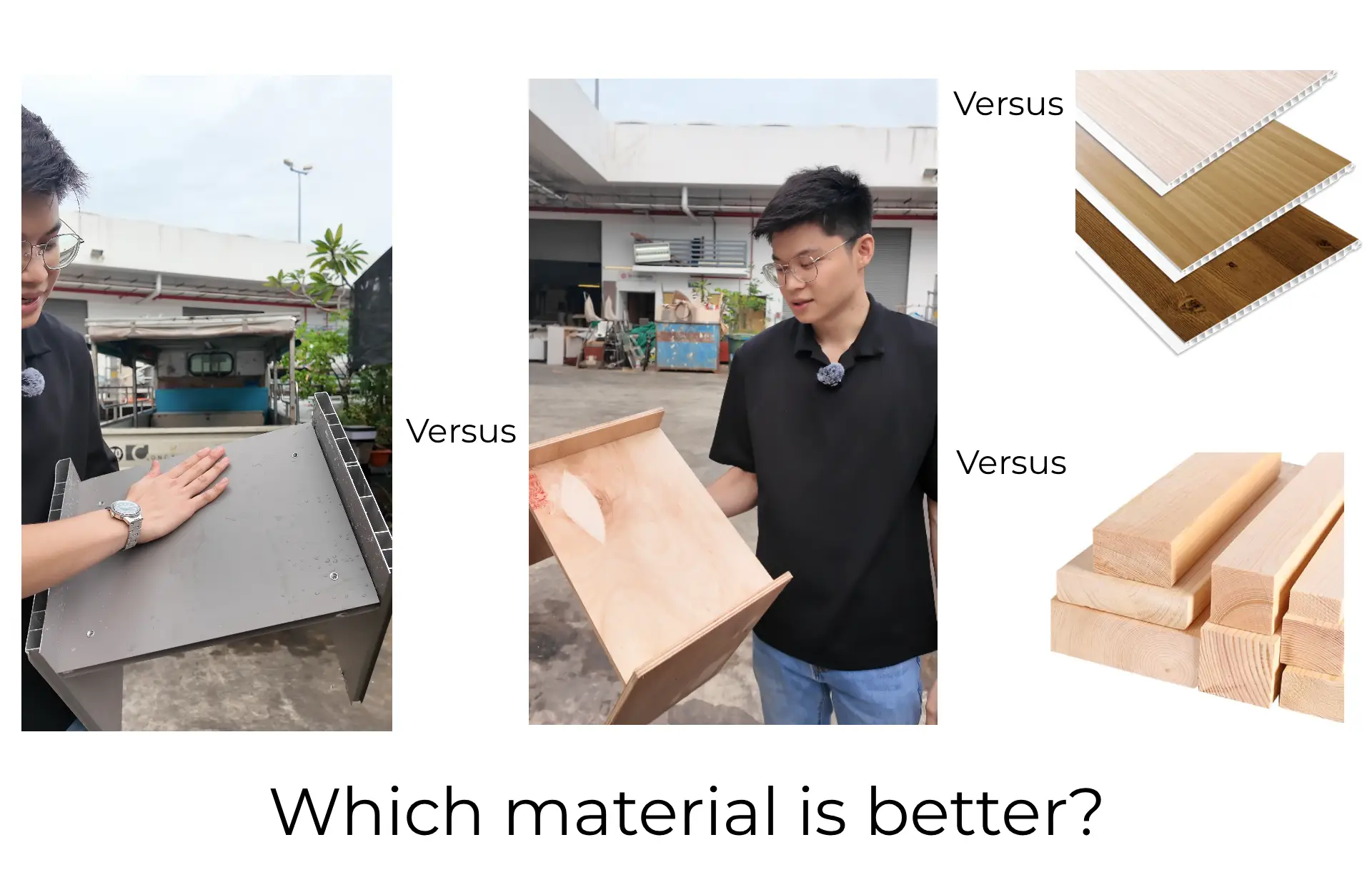
The best wardrobe material in Singapore depends on your priorities, budget, and home environment. Aluminium wardrobes are the most durable and humidity-resistant choice, PVC wardrobes are the most affordable option, solid wood wardrobes offer premium natural aesthetics, and laminate wardrobes provide the best balance between design flexibility and cost. For most HDB BTO and condo homeowners, laminate or aluminium are practical long-term choices.
The best wardrobe material for Singapore’s humid climate is aluminium because it is non-porous, moisture-resistant, termite-resistant, and does not swell, rot, or warp. Aluminium wardrobes are suitable for HDB flats, condominiums, and landed properties where humidity and long-term durability are important. PVC and laminate wardrobes with moisture-resistant cores such as marine plywood are also practical alternatives when budget and design flexibility are priorities.
Aluminium is generally better than PVC for wardrobes when durability, lifespan, and moisture resistance are the main priorities. Aluminium provides stronger structural performance, requires less maintenance, and performs better in Singapore’s humid environment. PVC wardrobes are more affordable and provide good water and termite resistance, making them suitable for budget renovations, rental homes, or homeowners looking for practical storage solutions.
Laminate is usually more practical than solid wood for Singapore wardrobes because it offers better affordability, easier maintenance, and more design choices. Solid wood wardrobes provide premium natural aesthetics, unique grain patterns, and craftsmanship but require more maintenance in humid conditions. Laminate performance depends on the internal core material, such as marine plywood, MDF, or particle board, and the quality of edge finishing.
The most durable wardrobe material in Singapore is aluminium, as it resists moisture, termites, corrosion, and daily wear better than many alternatives. Solid wood can also provide a long lifespan when properly maintained, while laminate wardrobes can achieve good durability when built with quality substrates such as plywood. The most suitable choice depends on humidity exposure, maintenance expectations, budget, and interior design preferences.
PVC wardrobes are generally the most affordable wardrobe option in Singapore, followed by laminate wardrobes, aluminium wardrobes, and solid wood wardrobes. PVC provides good moisture resistance and termite protection at a lower cost, making it suitable for budget renovations and rental properties. However, homeowners seeking better long-term durability and design flexibility may find laminate or aluminium wardrobes offer greater value over time.
For HDB BTO flats in Singapore, laminate and aluminium wardrobes are among the most practical choices because they balance durability, design flexibility, and maintenance requirements. Laminate wardrobes with plywood or moisture-resistant cores suit homeowners who want more finishes and colours, while aluminium wardrobes are ideal for those prioritising humidity resistance and long-term durability in smaller bedroom spaces.
The right wardrobe material depends on your priorities. Choose aluminium for maximum durability and humidity resistance, PVC for affordability, solid wood for premium natural aesthetics, and laminate for the best balance of cost, appearance, and practicality. Singapore homeowners should consider bedroom ventilation, expected lifespan, maintenance requirements, and budget before selecting a wardrobe material.
Speak to a professional now and get personalized consultation and guidance for your next renovation. Work with a team you can trust!
Home Blog The best wardrobe material in Singapore depends on your priorities: aluminium wardrobes provide the highest moisture resistance and lowest maintenance, PVC wardrobes offer...
Last Updated on July 21, 2026 by JOSEPH OLID