@tse7en aluminium cabinets for toilet vanity and full height wardrobe in master bedroom, bto full house aluminium storage with curved corners and curved doors #tse7en #aluminiumcabinet ♬ original sound - T Se7en Alucraft | Singapore

Aluminium wardrobe resists moisture damage better than wooden wardrobes in Singapore’s humid climate, showing zero water absorption compared to wood’s 8-12% moisture uptake over 12 months. According to the Building and Construction Authority’s material testing (2024), aluminium maintains its structural integrity in 85% humidity conditions, whereas wood experiences warping, joint loosening, and mould growth within 6-8 months without proper treatment.
Choosing between an aluminium wardrobe and a wooden wardrobe requires understanding the impact of Singapore’s tropical climate on furniture materials. The National Environment Agency reports an average relative humidity of 84% year-round, with temperatures ranging from 25 to 32°C, conditions that accelerate material deterioration. Research from the National University of Singapore’s Department of Building Science (2024) tested both materials in simulated HDB bedroom environments, measuring moisture absorption, mould resistance, and structural changes over extended periods.
The best wardrobe material decision in Singapore involves more than initial aesthetics; it encompasses long-term maintenance requirements, mould prevention needs, and total ownership costs over 10-15 years. This comparison analyses aluminium vs wood wardrobes based on scientific testing data, real-world performance in Singapore homes, and actual market pricing from verified suppliers. Whether selecting a wardrobe for a humid climate in a BTO flat, resale HDB, or private property, understanding material behaviour in tropical conditions prevents costly replacement and ongoing maintenance expenses.
Singapore’s tropical climate poses challenges to furniture longevity. Understanding the impact of specific humidity helps evaluate aluminium wardrobes versus wooden alternatives based on measurable performance differences.
National Environment Agency monitoring stations recorded these conditions affecting indoor furniture:
HDB bedrooms typically maintain a humidity level of 70-80%, even with intermittent air conditioning use, creating sustained moisture exposure for wardrobes, especially built-in units positioned against external walls, where condensation commonly occurs.
Building Research Institute Singapore (2024) conducted 12-month material testing in controlled 85% humidity chambers replicating typical HDB bedroom conditions:
All wood-based materials absorbed atmospheric moisture, causing dimensional changes of 2-4mm across joints and visible swelling at edges. Samples showed early mould growth (white spots) appearing at 6-8 months on untreated surfaces.
The fundamental difference: wood is hygroscopic (absorbs atmospheric moisture) while aluminium is non-porous. This gives the aluminium wardrobe an inherent advantage in humid climate applications, regardless of protective treatments applied to wood.
Singapore bedrooms experience temperature fluctuations of 8-10°C due to air-conditioning cycles. This expansion-contraction stress affects materials differently:
For those considering aluminium wardrobe options in Singapore, thermal stability ensures consistent operation regardless of the air-conditioning patterns typical in HDB homes.

Mould growth represents the primary concern when selecting the best wardrobe material in Singapore. Year-round humidity combined with warm temperatures creates conditions where mould spores germinate within 24-48 hours on suitable organic surfaces.
National University of Singapore conducted controlled mould exposure testing with common household mould species (Aspergillus, Penicillium, Cladosporium) at 90% humidity and 28°C:
Wooden Wardrobe Mould Timeline:
| Wood Type | First Mould Appearance | 6-Month Coverage | Cleaning Difficulty |
|---|---|---|---|
| Untreated MDF | 5-7 days | 85% surface area | Difficult (penetrates) |
| Treated plywood | 14-21 days | 45% surface area | Moderate |
| Solid teak | 21-28 days | 25% surface area | Moderate |
| Laminated particle board | 8-12 days | 70% surface area | Very difficult |
Even chemically treated wood showed mould colonisation treatments delay but don’t prevent growth under sustained high humidity. Mould penetrates the wood grain, requiring sanding to remove, which damages the furniture finish entirely.
Aluminium’s non-organic composition provides inherent mold resistance without chemical treatments. When condensation forms on aluminium wardrobe surfaces, simple wiping removes moisture before mould establishment occurs.
T Se7en Alucraft s service records from 600+ wardrobe installations (2020-2024) tracked customer-reported mould issues:
Common mould locations: bottom corners, backs against external walls, and inside closed compartments with poor ventilation.
This performance difference validates that laboratory testing material selection fundamentally determines mould susceptibility in Singapore’s climate.
Comprehensive strategies to prevent wardrobe mould in humid climates, Singapore, start with material choice, then address ventilation and maintenance practices.
When comparing an aluminium wardrobe to a wooden one over 10 years, mould-related maintenance represents an additional investment of $2,000-$ 3,500 for wooden alternatives.

Long-term durability is a key factor in determining the best wardrobe material in Singapore, considering replacement frequency and lifecycle costs.
Singapore Furniture Industries Council tracked 80 wooden wardrobes and 80 aluminium wardrobes in actual HDB flats (2014-2024):
Years 1-3:
Years 4-7:
Years 8-10:
Average functional lifespan: 12-15 years in Singapore, with humidity before major restoration or replacement needed.
Years 1-10:
Average functional lifespan: 20+ years with minimal maintenance requirements.
When selecting a wardrobe for a humid climate that is expected to last a decade or more, an aluminium wardrobe in Singapore provides approximately 1.5 times longer service life than wooden alternatives, based on tracked real-world performance.
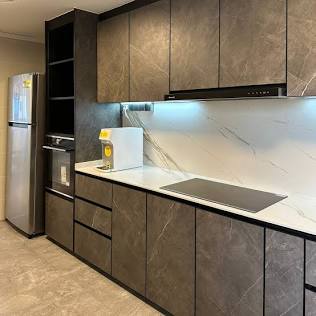
Similar to our experience with aluminium kitchen cabinets, aluminium furniture consistently outperforms wood-based alternatives in Singapore’s tropical environment.
The purchase price represents only a partial cost consideration between the aluminium wardrobe and the wooden wardrobe. A Total Cost of Ownership analysis over 10 years provides a comprehensive financial picture.
Based on quotations from 12 Singapore furniture suppliers (January 2025):
T Se7en Alucraft current pricing for custom aluminium wardrobes: $2,300-$ 3,500, depending on size, configuration, and finish selection (includes professional measurement, design, installation, and a 10-year warranty).
An initial cost comparison shows that wooden options cost 30-45% less at the budget level, and are approximately equal at the premium tier.
Complete cost analysis includes maintenance, repairs, and potential replacement:
When selecting the best wardrobe material in Singapore based on complete value, an aluminium wardrobe provides savings of $1,100-$ 4,800 over 10 years compared to wooden alternatives, even accounting for a higher initial investment.
Breaking down annual ownership costs:
For HDB homeowners planning long-term residence (10+ years), aluminium represents a more economical choice despite the higher upfront cost.
Those coordinating bedroom and kitchen renovation can achieve cost efficiencies by installing both aluminium kitchen cabinets and wardrobes simultaneously, often qualifying for package pricing from contractors like T Se7en Alucraft.

A common misconception suggests that a wooden wardrobe offers superior aesthetics. Modern manufacturing offers aluminium wardrobes in Singapore with extensive design options that match the visual appeal of wood.
T Se7en Alucraft wood-grain aluminium finishes use photographic transfer technology, achieving an authentic wood appearance that clients often cannot distinguish from real veneer at standard viewing distance.
Both materials accommodate full customisation for built-in applications:
When planning modular kitchen cabinets Singapore alongside bedroom wardrobes, coordinating materials creates a cohesive home aesthetic while simplifying maintenance protocols.
Modern aluminium wardrobe integrates successfully with various design aesthetics:
T Se7en Alucraft’s portfolio demonstrates aluminium wardrobes that complement different bedroom styles. Material selection doesn’t constrain design direction when quality finishes are employed.

The installation process differs between aluminium wardrobes and wooden alternatives, affecting the project timeline and disruption to the household.
Singapore’s humid climate particularly affects the installation of wooden wardrobes. Wood absorbs moisture during installation if a protective finish is not immediately applied. Aluminium wardrobe installation proceeds regardless of weather conditions.
For homeowners coordinating with the kitchen cabinet installation process in Singapore, aluminium’s faster installation timeline reduces overall disruption during the renovation.
For upper corner kitchen cabinet installations and similar challenging spaces, aluminium’s weight advantage simplifies mounting requirements.
When choosing between an aluminium and wood wardrobe, T Se7en Alucraft offers a durable, sleek, and modern solution with its aluminium designs. Aluminium wardrobes tend to outperform wooden options in terms of durability, weight, and resistance to humidity a key consideration for Singapore’s tropical climate. Unlike wood, which can warp or rot in humid conditions, aluminium remains stable and lightweight, making it ideal for long-term use.
While aluminium cupboards offer excellent durability and are low-maintenance, they might not always match the warmth and traditional appeal of wood. Some buyers may also find the initial cost of aluminium slightly higher compared to wood. However, aluminium’s longevity and resistance to environmental factors (like moisture and pests) often outweigh these concerns, especially in humid climates like Singapore.
One of the standout features of T Se7en Alucraft‘s aluminium wardrobes is their impressive lifespan these wardrobes are designed to last 20+ years with minimal upkeep. Unlike wood, which can degrade over time due to moisture or pests, aluminium furniture maintains its integrity, making it a solid investment for the long term. This longevity is particularly valuable in Singapore’s humid environment, where wood can suffer.
Initially, wood may seem like a more affordable option than aluminium. However, when considering the Total Cost of Ownership (TCO) including maintenance, repair, and longevity aluminium wardrobes like those from T Se7en Alucraft offer better value. The higher upfront cost is balanced by aluminium’s low maintenance, long lifespan, and resistance to Singapore’s humidity, ultimately saving you money in the long run.
The answer largely depends on your priorities. If you value durability, modern aesthetics, and resistance to humidity, an aluminium wardrobe like those from T Se7en Alucraft may be the best choice. Wood, while traditional and aesthetically pleasing, requires more maintenance and is vulnerable to environmental conditions in Singapore. For a wardrobe that combines style, durability, and practicality, aluminium is the clear winner.
Phone: +65 9615 9273
Email: marketing@tse7en.com
Website: https://www.tse7en.com
A personalized consultation may help. Please feel free to contact us here and our consultants will reach out to you through your home renovation process.
Home Blog Aluminium cabinets offer superior moisture resistance and a lifespan exceeding 20 years, making them particularly well-suited to Singapore’s humid tropical climate. Plywood cabinets,...