When homeowners consider kitchen renovations in Singapore’s compact homes, the L shaped kitchen cabinet layout emerges as one of the most practical yet challenging configurations to execute properly. This corner-utilising design maximises limited space whilst creating efficient work triangles, but success depends entirely on understanding the specific rules, limitations, and design principles that govern effective L shaped kitchen cabinets implementation.
At T Se7en Alucraft, we’ve fabricated hundreds of L shaped kitchen cabinet installations across Singapore’s diverse housing types, learning that whilst this layout offers tremendous space optimisation potential, it also presents unique design challenges that require careful planning and professional execution to achieve optimal results.
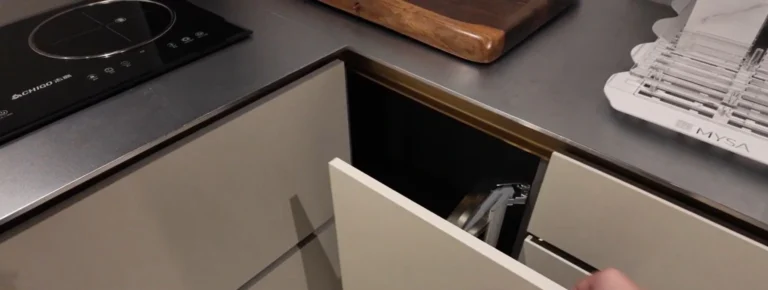
The fundamental rule for L shape kitchen cabinet design requires maintaining a minimum 4-foot clearance between opposing cabinet faces whilst ensuring the corner junction provides accessible storage without creating dead space. Professional L shaped kitchen cabinet layout must balance workflow efficiency with storage optimisation.
The primary rule governs the work triangle – the path between sink, cooktop, and refrigerator should form an efficient triangle with legs measuring 4-8 feet each. L shaped kitchen cabinets naturally facilitate this triangle by positioning major appliances along two perpendicular walls, creating logical workflow patterns that enhance cooking efficiency.
Corner accessibility represents a critical design rule often overlooked by amateur planners. The junction where two cabinet runs meet creates challenging storage areas that require specialised hardware solutions. Professional L shaped kitchen cabinet design incorporates lazy susans, magic corners, or pull-out drawer systems that make corner storage fully functional rather than merely decorative.
Sight line considerations affect both functionality and aesthetics. L shaped kitchen cabinet layouts must maintain visual continuity across both cabinet runs whilst accommodating height variations for appliances and functional requirements. This rule becomes particularly important in open-plan Singapore homes where kitchens integrate with living areas.
Our expertise in custom aluminium kitchen cabinet design process ensures every L shaped kitchen cabinet installation follows these fundamental rules whilst addressing site-specific challenges.
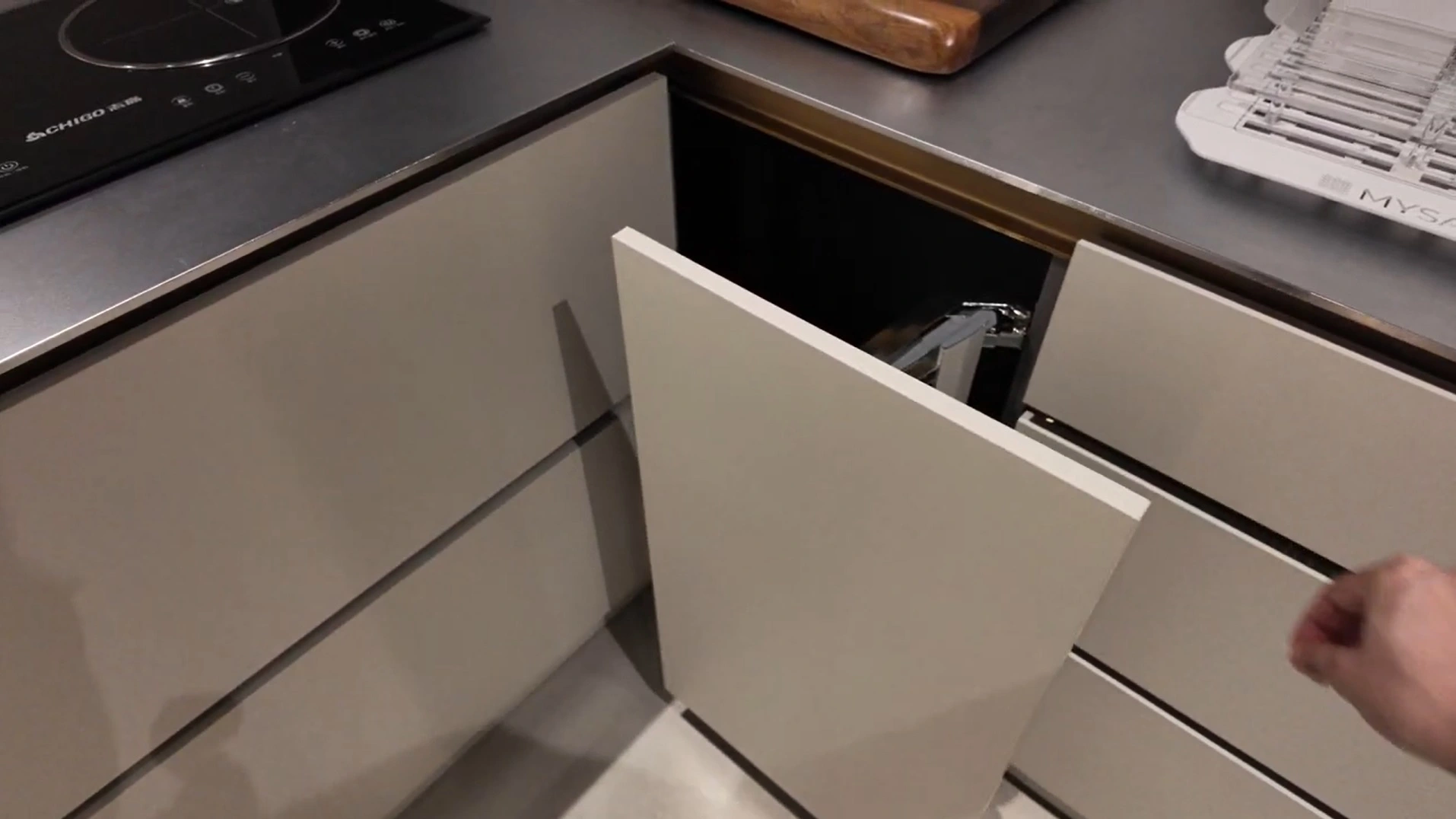
L shaped kitchen cabinet layout planning begins with accurate space assessment and traffic flow analysis. Singapore homes present unique challenges including limited floor area, integration with service yards, and accommodation of multiple cooking styles within compact spaces.
The longer leg of the L shaped kitchen cabinets typically accommodates the primary work area including sink and primary preparation space. This placement maximises counter space for food preparation whilst positioning the sink for optimal natural lighting and ventilation access.
The shorter leg houses appliances and secondary storage, creating logical zones that separate cooking activities from preparation areas. Modern kitchen cabinet design L shape configurations often incorporate the cooktop or range along the shorter wall, maintaining safe clearances whilst preserving workflow efficiency.
Upper cabinet distribution must balance storage capacity with accessibility requirements. L shaped kitchen cabinets allow strategic placement of frequently used items within easy reach whilst relegating occasional-use storage to less accessible corner areas.
Lower cabinet planning addresses the challenge of corner storage through innovative solutions. Our modular kitchen cabinets Singapore approach incorporates specialised corner units that transform traditionally difficult spaces into highly functional storage areas.
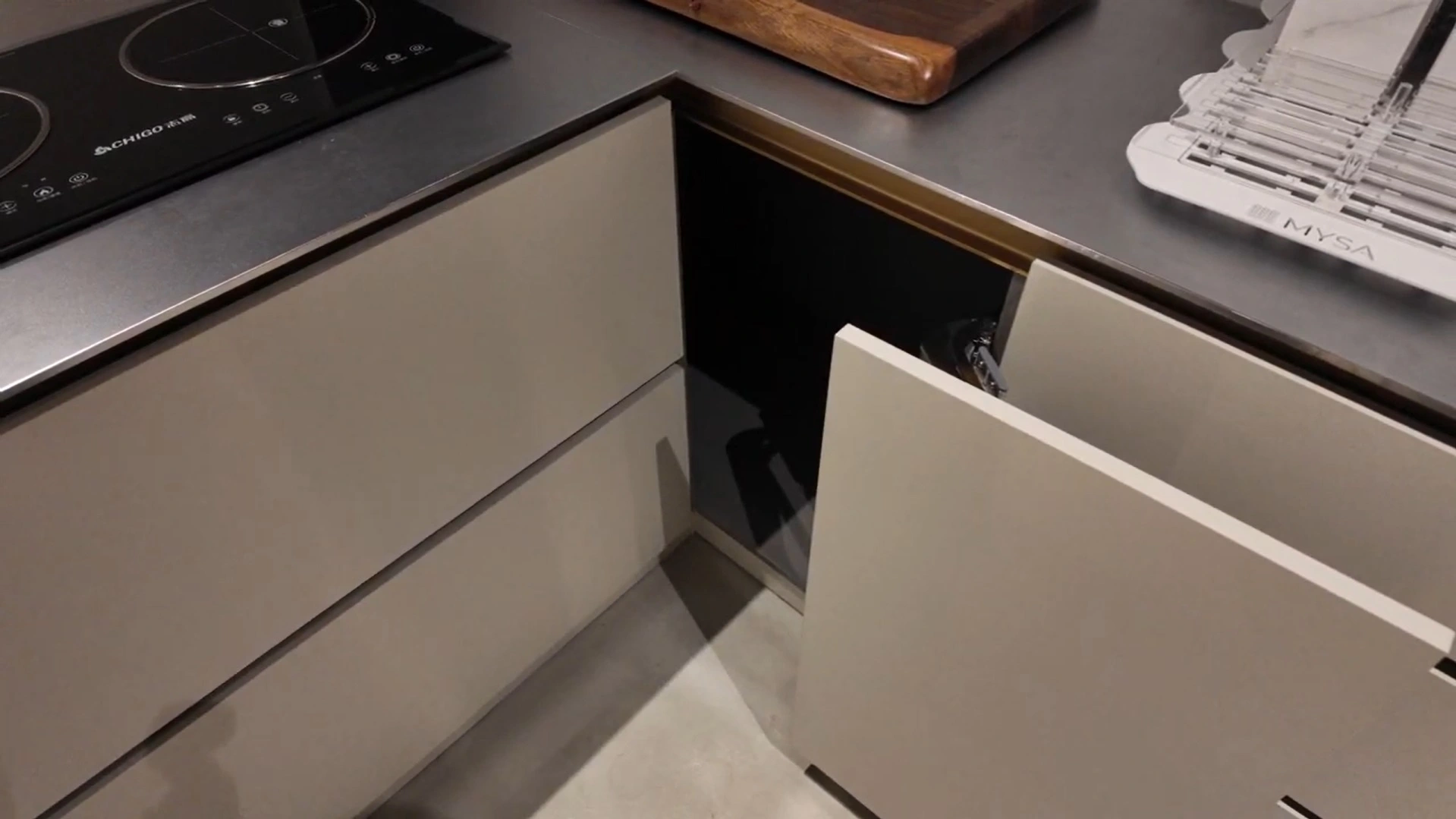
L shape kitchen cabinet installations typically require minimum dimensions of 8×8 feet for functional implementation, though optimal performance occurs in spaces measuring 10×12 feet or larger. Singapore’s HDB flats and condominiums often provide spaces that accommodate L shaped kitchen cabinet layouts within these parameters.
The minimum cabinet run length for L shaped kitchen cabinets measures 6 feet per leg, providing adequate storage and counter space for essential kitchen functions. Shorter runs compromise storage capacity whilst longer runs may create excessive walking distances that reduce efficiency.
Corner clearance requirements dictate that L shaped kitchen cabinet installations maintain minimum 36-inch walkways around the work triangle. This clearance ensures safe movement during cooking activities whilst accommodating multiple users during meal preparation periods.
Compact L shaped small kitchen design requires creative space utilisation techniques including vertical storage maximisation, multi-functional fixtures, and careful appliance integration. Our experience with Singapore’s housing constraints informs space-efficient solutions that maintain functionality within limited areas.
Larger spaces allow expanded L shaped kitchen cabinet configurations that incorporate islands, peninsulas, or additional storage areas. These expanded layouts provide opportunities for enhanced storage, extended counter space, and improved social interaction areas.
For space-constrained installations, our small kitchen cabinet Singapore expertise helps optimise L shaped layouts within challenging dimensional limitations.
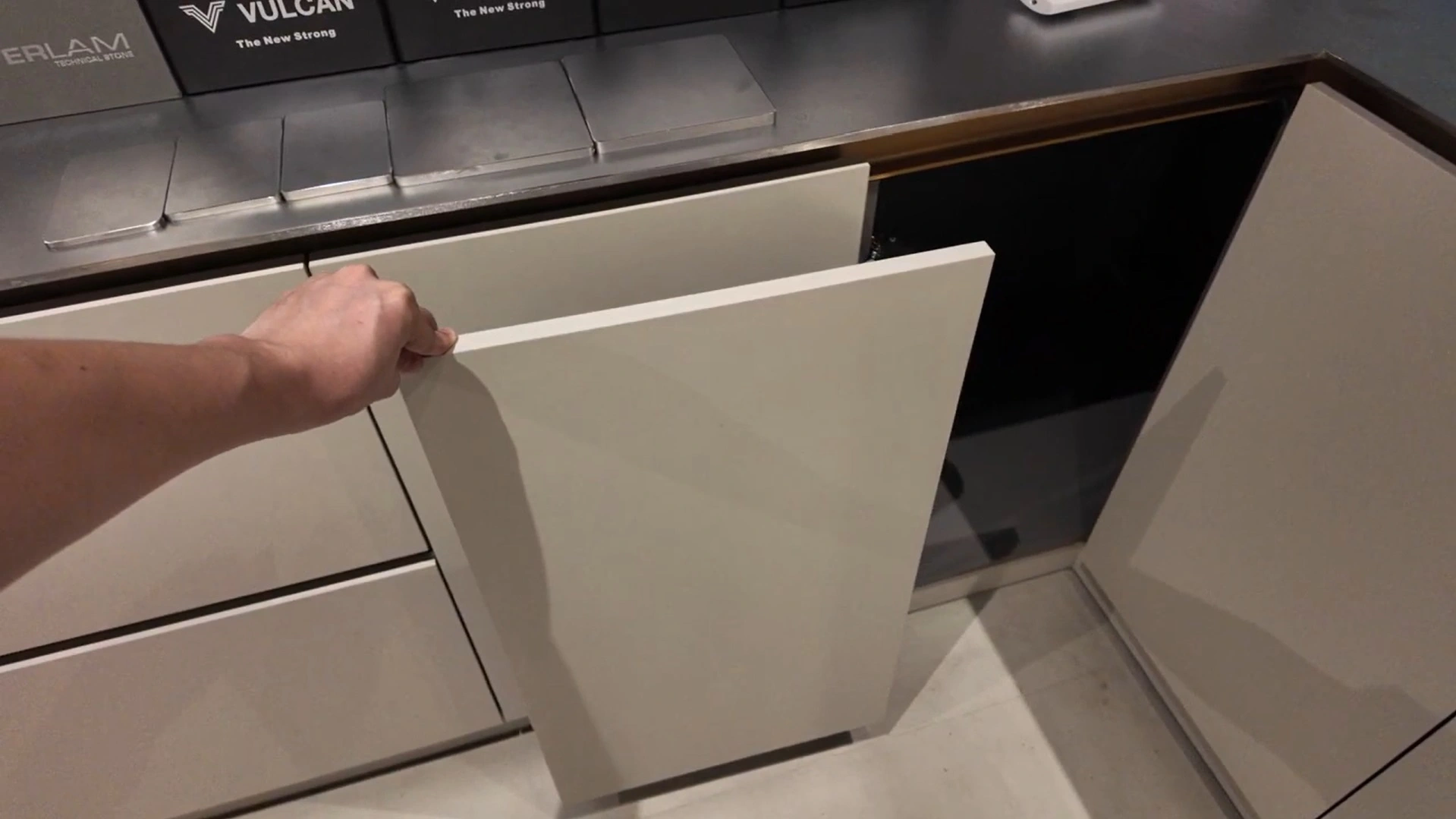
L shaped kitchen cabinet layouts present several inherent disadvantages including corner storage challenges, potential workflow disruptions, and space utilisation inefficiencies that require careful planning to mitigate effectively.
Corner storage accessibility represents the most significant disadvantage of L shaped kitchen cabinets. Traditional corner cabinet designs create deep, difficult-to-reach spaces that often become catch-all storage areas where items disappear and become forgotten.
Traffic flow disruption occurs when the L shaped kitchen cabinet layout creates pinch points or forces users to navigate around extended counter projections. Poor planning results in workflows that require excessive movement between work zones, reducing kitchen efficiency.
Counter space interruption happens at corner junctions where L shaped kitchen cabinets meet. This interruption breaks continuous work surfaces, creating challenges for large food preparation tasks or appliance placement that require extended counter areas.
Visual weight distribution can create aesthetic challenges when L shaped kitchen cabinet installations appear unbalanced. The perpendicular cabinet runs may create visual tension if not properly proportioned or detailed with consistent design elements.
Professional planning addresses these disadvantages through strategic design solutions. Corner storage systems, traffic flow optimisation, and visual continuity techniques transform potential problems into functional advantages when properly implemented.
Our systematic approach to kitchen renovation addresses these challenges during the planning phase rather than attempting corrections after installation completion.
L shaped kitchen cabinets excel in corner utilisation and work triangle efficiency, whilst parallel kitchen layouts maximise storage capacity and counter space within narrow configurations. The superior choice depends entirely on room dimensions, traffic patterns, and functional requirements.
L shaped kitchen cabinets create natural work triangles that enhance cooking efficiency through logical workflow patterns. The corner configuration provides excellent space utilisation in square or rectangular rooms whilst maintaining open floor areas for circulation and social interaction.
Storage diversity represents another L shape advantage through varied cabinet depths, heights, and accessibility options. The perpendicular walls accommodate different storage types whilst maintaining visual interest through varied sight lines and functional zones.
Parallel kitchen configurations maximise storage and counter space within narrow areas, making them ideal for galley-style rooms or service yards. This layout provides symmetric storage distribution and can accommodate multiple users working simultaneously without interference.
Workflow efficiency in parallel layouts depends on proper zone planning and adequate clearances between opposing cabinets. When properly designed, parallel configurations create highly efficient cooking environments with everything within easy reach.
Room proportions significantly influence layout effectiveness. L shaped kitchen cabinets work best in square or wider rectangular spaces, whilst parallel layouts suit narrow rooms with limited width but adequate length.
Traffic integration affects layout viability in open-plan homes. L shaped kitchen cabinet layouts better accommodate social interaction and visual integration with adjacent living areas, making them preferable for entertaining-focused homes.
For comprehensive layout comparison, our kitchen cabinet contractor Singapore expertise helps determine optimal configurations based on specific space and lifestyle requirements.
Modern L shaped kitchen cabinets ideas for Singapore focus on space maximisation, tropical climate adaptation, and integration with diverse cooking styles common in multicultural households.
| Design Element | Traditional Approach | Modern Singapore Solution | Local Benefit |
|---|---|---|---|
| Cabinet Doors | Raised panel, wood stain | Handle-less, matte finish | Easier cleaning, modern aesthetic |
| Corner Solutions | Fixed shelves | Rotating systems | 300% better accessibility |
| Colour Schemes | All-white or wood tone | Two-tone with accent colours | Reflects Singapore’s vibrant culture |
| Storage Features | Standard shelving | Custom organizers | Accommodates Asian cooking tools |
Clean-Line Aesthetics: Clean-line aesthetics characterise modern kitchen cabinet design L shape configurations that emphasise horizontal continuity and minimal visual interruption. Handle-less cabinet doors create seamless appearances whilst soft-close mechanisms ensure quiet operation in compact living environments.
Real Project Example – Bishan Condominium: A young professional couple requested a modern kitchen cabinet design L shape that reflected Singapore’s multicultural heritage. We created a stunning two-tone design with deep forest green lower cabinets (inspired by Singapore’s Garden City vision) and crisp white uppers. Gold-finished handles added warmth whilst LED strip lighting highlighted the contemporary lines.
Corner Optimisation Solutions: Modern corner optimisation transforms traditionally problematic areas into highly functional storage zones:
Vertical Storage Maximisation: Singapore’s compact spaces demand creative vertical solutions:
Case Study – Toa Payoh HDB Renovation: A multigenerational family needed L shaped kitchen cabinets ideas that accommodated both grandmother’s traditional cooking methods and the daughter’s modern lifestyle. Our solution included a dedicated wok storage area with heat-resistant dividers, alongside contemporary pull-out spice organisers and a coffee station for the working family members.
L shape kitchen cabinet with glass doors creates visual lightness whilst displaying attractive dishware or storage contents. In Singapore’s typically compact spaces, glass doors help kitchens feel more spacious and connected to adjacent living areas.
Technical Considerations for Singapore: Glass door installations must account for Singapore’s humidity levels. We recommend:
Successful Integration Example – Marine Parade Apartment: A design-conscious family wanted L shape kitchen cabinet with glass doors to showcase their collection of vintage Peranakan ceramics. We installed frosted glass uppers along one wall with interior LED spotlights, creating a stunning display that became the kitchen’s focal point whilst maintaining storage functionality for everyday items behind solid doors.
Our expertise in waterproof aluminium kitchen cabinets ensures glass door installations maintain Singapore’s demanding humidity resistance requirements whilst providing lasting beauty and functionality.
Professional L shaped kitchen cabinet planning begins with thorough knowledge assessment of spatial constraints, user requirements, and integration challenges specific to Singapore housing conditions.
Room dimension verification ensures L shaped kitchen cabinet layouts accommodate minimum clearance requirements whilst maximising functional area utilisation. We measure existing conditions, identify structural limitations, and assess utility routing that affects cabinet placement.
Lifestyle assessment determines cooking patterns, storage requirements, and social interaction needs that influence layout optimisation. Understanding how families use their kitchens informs L shaped kitchen cabinets configuration decisions that enhance rather than compromise daily routines.
Existing utility locations affect L shaped kitchen cabinet placement and require early identification to avoid costly modifications. Electrical supply, water supply, and drainage routing influence sink placement, appliance positioning, and cabinet depth specifications.
Structural considerations include load-bearing elements, ceiling height variations, and floor level changes that affect cabinet installation and require accommodation during design development.
For comprehensive renovation projects, our kitchen renovation timeline ensures proper coordination between assessment, planning, and installation phases.
Options evaluation addresses different L shaped kitchen cabinet configurations, storage solutions, and aesthetic choices that optimise functionality whilst addressing site-specific constraints and user preferences.
Standard L shaped kitchen cabinet layouts position the sink along one wall with cooking facilities along the perpendicular wall. This configuration works well for most Singapore homes but may require modification based on utility locations and traffic patterns.
Extended L configurations incorporate peninsulas or additional storage areas that expand functionality whilst maintaining the basic L shape workflow advantages. These options suit larger spaces where additional storage and counter area enhance kitchen performance.
Corner storage solutions require careful evaluation between rotating mechanisms, pull-out systems, and fixed shelving options. Each approach offers different accessibility levels, storage capacity, and maintenance requirements that affect long-term satisfaction.
Vertical storage options include full-height cabinets, open shelving integration, and appliance garages that maximise storage whilst maintaining clean sight lines. These choices particularly benefit Singapore homes where space efficiency directly affects livability.
Requirements planning translates design intentions into detailed specifications that address structural requirements, regulatory compliance, and long-term performance expectations for L shaped kitchen cabinet installations.
L shaped kitchen cabinet installations must accommodate minimum clearance requirements whilst maximising storage and counter space. Professional planning ensures compliance with Singapore building standards whilst optimising functional performance.
Corner junction details require precise planning to ensure proper cabinet alignment, structural support, and hardware integration. These critical areas affect both functionality and appearance quality throughout the installation’s service life.
L shaped kitchen cabinet hinges require specialised selection based on door sizes, weight requirements, and accessibility needs. Corner applications may require special hinge configurations that accommodate space constraints whilst maintaining smooth operation.
Pull-out mechanisms, drawer slides, and internal storage systems must integrate seamlessly with cabinet construction whilst providing reliable long-term operation. Professional specification ensures compatibility between different hardware systems and cabinet materials.
Execution phase implements planned L shaped kitchen cabinet solutions through systematic fabrication and installation procedures that ensure quality consistency and optimal performance.
L shaped kitchen cabinet fabrication demands precise measurement and cutting to ensure proper corner alignment and consistent reveals throughout the installation. Our controlled fabrication environment maintains quality standards whilst accommodating custom specifications.
Corner joint construction requires specialised techniques that maintain structural integrity whilst providing seamless appearance transitions. Professional fabrication ensures these critical connections perform reliably throughout the cabinet’s service life.
L shaped kitchen cabinet installation follows systematic sequences that ensure proper alignment whilst providing access for plumbing, electrical, and hardware installation. Professional installers coordinate these requirements to prevent costly modifications or performance compromises.
Quality control throughout installation verifies dimensional accuracy, operational functionality, and aesthetic consistency. Each installation phase receives inspection and testing to ensure performance meets design specifications and client expectations.
Integration phase ensures L shaped kitchen cabinet installations function as designed whilst providing clients with knowledge and resources necessary for optimal long-term performance and satisfaction.
Door operation testing verifies smooth function across all cabinet doors, with particular attention to corner applications where space constraints may affect performance. Professional adjustment ensures consistent operation and proper sealing.
Storage system testing confirms that pull-out mechanisms, rotating corners, and specialty hardware function smoothly throughout their full range of motion. These systems require proper adjustment for optimal performance and user satisfaction.
Professional installation includes comprehensive client education regarding proper operation, maintenance requirements, and care procedures that ensure long-term performance. Understanding these requirements helps maximise installation value and satisfaction.
Performance monitoring through follow-up contact identifies any adjustment needs whilst providing feedback for continuous improvement of our L shaped kitchen cabinet solutions and installation procedures.
Our comprehensive aluminium kitchen cabinet maintenance guide provides detailed care instructions that support long-term cabinet performance and appearance.
The fundamental rule for designing an L shaped kitchen cabinet is to maintain a work triangle between the sink, cooktop, and refrigerator, ideally within 4-8 feet. It’s crucial to allow a minimum of 36 inches of clearance around the workspace for smooth movement and functionality. Additionally, corner junctions must incorporate accessible storage solutions (e.g., lazy susans, magic corners) to prevent dead space.
At T Se7en Alucraft, we prioritize a balance between workflow efficiency and storage optimization. The corner where cabinet runs meet is a critical challenge and often requires specialized hardware to maximize accessibility and functionality. Proper planning ensures traffic flow accommodates multiple users without disrupting the workflow.
L shaped kitchen cabinets are ideal for HDB flats, especially in 4-5 room units with kitchen dimensions like 8×10 feet. This layout maximizes corner space utilization, which is often underused in smaller kitchens. Planning is crucial to adhere to HDB building regulations and utility constraints.
Key considerations for HDB kitchens include:
Service yard integration
Bomb shelter proximity
Structural limitations that affect cabinet placement
We generally place the longer leg along the main wall, using the perpendicular wall for appliance integration and extra storage.
HDB Success Factors:
Coordinating utilities (gas and water lines)
Adhering to ventilation requirements for HDB specifications
Maximizing space optimization in compact kitchens
Ensuring approval compliance with HDB guidelines
T Se7en Alucraft has extensive experience, completing over 200 L-shaped installations in HDB flats, focusing on aesthetic appeal, functionality, and regulatory compliance.
Yes, L-shaped kitchen designs can be easily customized to fit different budgets. By selecting cost-effective materials, phased installations, and practical corner solutions, you can achieve a functional kitchen that meets your financial needs.
Budget-friendly customization options include:
Standard aluminum with laminate finishes for durability at an affordable price
Simplified corner solutions, like basic lazy susans, instead of premium systems
Mixed door styles, using glass doors only where necessary for visual impact
Phased upgrades, starting with essential systems and upgrading later
We offer budget options ranging from $4,000 for basic L-shaped layouts to $15,000+ for premium configurations with advanced storage systems. The key is to prioritize what matters most in your daily cooking routine and plan for future upgrades.
T Se7en Alucraft ensures transparent pricing and practical alternatives that meet your needs while maintaining high quality and safety standards.
L-shaped kitchens require effective storage solutions for the corner areas, which are often challenging to utilize. The best options include:
Magic Corner Systems – Bring items 90% forward with a simple pull
LeMans Corner Units – Swing-out for easy access
Carousel Corners – Full rotation for heavy appliances
Drawer Corner Systems – Pull-out access from both directions
In compact Singapore kitchens, magic corner systems offer excellent value by doubling the usable storage in corner cabinets. These solutions are ideal for storing pots, pans, and small appliances.
Space Maximization Results:
Traditional corner cabinets store only about 40% of their capacity effectively.
With modern corner systems, this increases to 85-90%, adding up to 2-3 additional cabinets worth of storage in the same space.
Yes, L-shaped kitchen cabinets are an excellent choice for small Singapore apartments, often offering more functional storage and workspace than parallel layouts. This configuration works especially well in compact spaces (e.g., 7×8 feet or larger).
Benefits of L-shaped kitchens in small spaces include:
Maximizing corner storage that would otherwise be wasted
Maintaining circulation space for an open floorplan
Creating a sense of openness and making the space feel larger
Efficient appliance placement using compact designs
Key Success Factors for Small Kitchens:
Proportional planning to ensure adequate clearances while maximizing functionality
6-foot minimum leg length for small L-shaped kitchens
Space-efficient appliances and vertical storage solutions
Real-World Example – 3-Room HDB Success:
In a 7.5×8 feet kitchen in Sengkang, a compact L-shaped layout provided a functional work triangle with 14 linear feet of storage while maintaining 42 inches of circulation space. The result was more storage than their previous parallel layout.
T Se7en Alucraft specializes in small space optimization, ensuring your L-shaped kitchen fits seamlessly into your apartment without sacrificing functionality or style.
Phone: +65 9615 9273
Email: marketing@tse7en.com
Website: https://www.tse7en.com
A personalized consultation may help. Please feel free to contact us here and our consultants will reach out to you through your home renovation process.
Home Blog Aluminium kitchen cabinets price in Singapore (2026): quick reality check Cabinet quotes vary because pricing depends on layout length, tall/full-height units, finish system,...