Your kitchen renovation checklist Singapore journey starts with two decisions: how much you are willing to spend, and how much disruption you can tolerate. Get these two anchors right, and every other choice, materials, layout, contractor, timeline, becomes significantly easier to navigate.
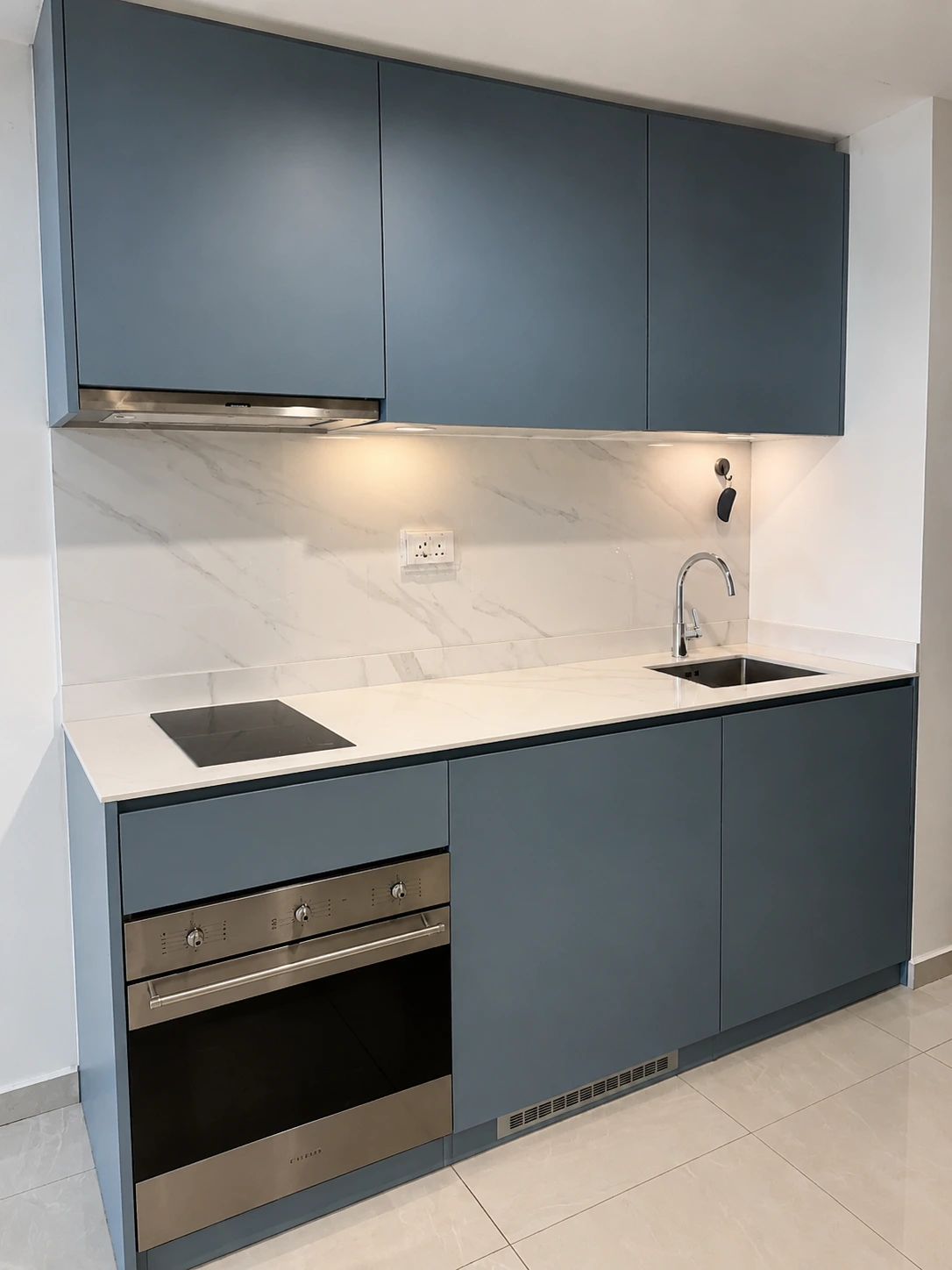
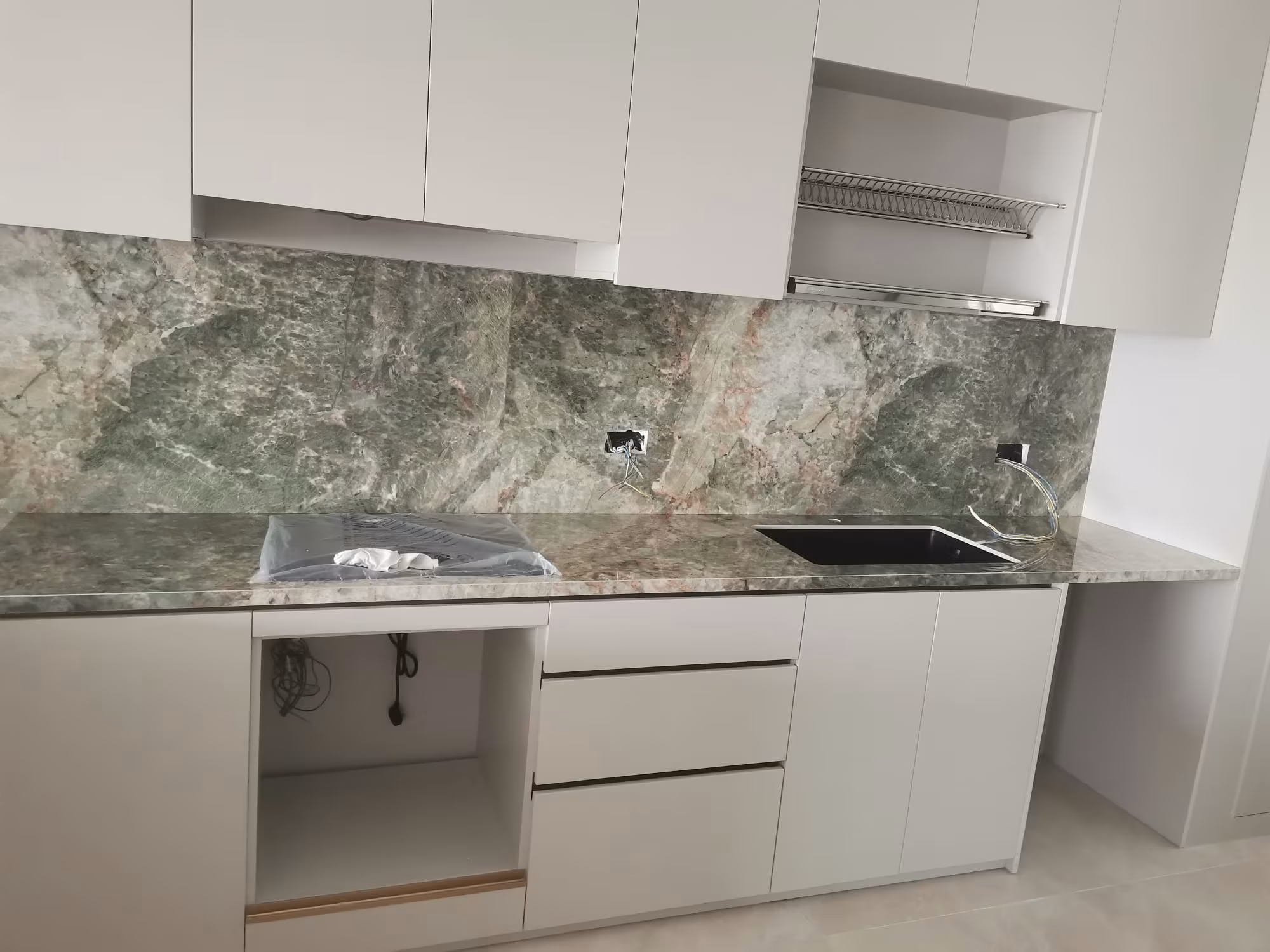
The first step on any serious kitchen renovation checklist Singapore homeowner should follow is establishing a clear budget range. According to data from Renovation Contractor Singapore (2025), basic kitchen updates range from S$5,000 to S$10,000, while moderate renovations typically fall within S$15,000 to S$20,000. Larger, full-scale transformations with premium materials can push well beyond S$30,000.
Understanding where your money actually goes is just as important as knowing the total. Labour is a significant component, with carpentry and masonry accounting for over 60% of renovation expenses in Singapore, according to KIVO Design Studio (2025). Custom carpentry typically makes up 40 to 50% of the total renovation budget on its own. This means your cabinet selection is, by far, the single most consequential financial decision you will make.
Here is a practical cost breakdown to help you plan:
Renovation Component | Approximate Cost Range (S$) |
|---|---|
| Basic hacking and demolition | 500 to 1,500 |
| Tiling (floor and wall) | 1,500 to 4,000 |
| Electrical rewiring | 800 to 2,500 |
| Plumbing works | 600 to 2,000 |
| Custom kitchen cabinets | 4,000 to 15,000+ |
| Countertops | 1,000 to 5,000 |
| Appliances | 2,000 to 10,000+ |
| Painting and finishing | 300 to 1,000 |
Set aside at least 10 to 15% of your total budget as a contingency. Unexpected issues, especially in older HDB flats, including hidden plumbing problems or non-standard wall depths, are common and will cost money to rectify.
Singapore’s regulatory environment around home renovations is specific and non-negotiable. Whether you live in an HDB flat or a private condominium, there are rules you must follow before any work starts.
For HDB residents, the Housing & Development Board requires prior written approval for a range of works, including hacking of walls, relocation of plumbing, and changes to electrical load. As of September 2024, approximately 70% of HDB flats built before 1998 have undergone the Home Improvement Programme (HIP), which means many older kitchens have already had structural upgrades. Even so, any new works that alter the original structure still require formal approval.
Key HDB kitchen renovation rules include:
For condo residents, your Management Corporation Strata Title (MCST) will have its own set of by-laws covering renovation hours, material disposal, and contractor registration. Always obtain written approval from your MCST before any contractor sets foot in your unit.
If you are planning a resale hdb kitchen renovation in singapore, pay particular attention to existing plumbing positions, as moving wet areas in older flats often triggers additional approval requirements and costs.
Before you choose tiles or tap fittings, you need a layout. Singapore kitchens are typically compact, which means the layout determines how well your kitchen actually functions day to day.
The four most practical layouts for Singapore homes are:
Surveys indicate that 72% of Singapore homeowners prioritise storage and space optimisation, while 67% seek more natural light, according to Interior Diary (2025). These two priorities should directly influence your layout choice. An L-shaped kitchen with full-height cabinetry, for example, dramatically increases storage without expanding the room’s footprint.
For BTO flat owners, the layout is often pre-determined by the flat’s configuration. If you are working within those constraints, read up on bto kitchen renovation by flat type singapore to understand what is typically possible within each flat model before committing to a design.

Cabinet selection is where most renovation budgets are either well-spent or wasted. Singapore’s climate, characterised by year-round humidity and heat, is genuinely hostile to certain materials. Timber veneer and MDF-based cabinets are susceptible to warping, swelling, and mould over time in a humid kitchen environment.
Aluminium cabinetry has gained significant traction in Singapore precisely because it sidesteps these issues entirely. It is waterproof, termite-proof, and does not warp. T Se7en Alucraft, with over 30 years of experience in custom-made aluminium fixtures, has been at the forefront of this shift, producing kitchens that are built to perform in Singapore’s specific climatic conditions.
The most common cabinet types in Singapore kitchens include:
If you are exploring the full range of aluminium kitchen units singapore options, you will find that modern aluminium cabinetry is far removed from the industrial aesthetic of older aluminium designs. Today’s versions are sleek, customisable, and available in a wide range of finishes.
For style, shaker-style cabinetry remains one of the most requested looks in Singapore kitchens because of its versatility. It works equally well in contemporary and transitional interiors. If you are considering this direction, understanding shaker style kitchen cabinets singapore options in aluminium gives you the best of both worlds: timeless aesthetics with climate-resistant performance.
A realistic kitchen renovation timeline in Singapore runs eight to twelve weeks from design sign-off to final handover, according to Renovation Contractor Singapore’s 2026 timeline guide. Homeowners who expect a faster turnaround often end up frustrated, especially when regulatory approvals or custom fabrication is involved.
Here is a general phased timeline:
| Week | Activity |
|---|---|
| 1 to 2 | Design finalisation, material selection, HDB/MCST approval submission |
| 3 to 4 | Hacking, demolition, structural works |
| 5 to 6 | Plumbing and electrical rough-in |
| 7 to 8 | Tiling (floor and wall) |
| 9 to 10 | Cabinet and countertop installation |
| 11 | Appliance installation and finishing works |
| 12 | Snagging, touch-ups, and handover |
Custom cabinetry from specialists like T Se7en Alucraft typically requires four to six weeks of fabrication time. Plan for this in advance. Ordering cabinets late is one of the most common causes of project delays in Singapore kitchen renovations.
Choosing the wrong contractor is the single most avoidable cause of renovation stress. Singapore’s renovation industry is active and growing. Renovation investments in Singapore have grown 15 to 20% annually, with total industry projections reaching S$37.2 billion for 2024 to 2025, as noted by Haus Bedroom (2025). That growth means more contractors, but not all of them are equally competent or transparent.
Before signing any contract, ask these five questions:
T Se7en Alucraft’s approach combines material expertise, production control, and long-term trade support, ensuring that what is promised at the design stage is what is delivered at installation. With over three decades of experience in Singapore, their process is designed to reduce the uncertainty that often accompanies custom renovation work.
Cabinets are the priority, but your renovation involves several other material decisions that will affect both the look and the longevity of your kitchen.
Countertops: Engineered quartz is the most popular choice in Singapore because of its durability and ease of cleaning. Marble is beautiful but porous and requires sealing. Compact laminate is budget-friendly and performs well in wet conditions.
Flooring: Porcelain tiles are the standard for Singapore kitchen floors because of their waterproof nature and durability. Avoid timber-look vinyl in the immediate cooking zone, as heat and grease can degrade adhesives over time.
Backsplash: Large-format tiles reduce grout lines and are easier to clean. Glass mosaic tiles are visually striking but require more maintenance.
Beyond the kitchen itself, many Singapore homeowners take a whole-home approach to renovation. If you are also planning storage solutions in other rooms, a wardrobes in singapore guide can help you align your kitchen cabinetry style with bedroom storage for a cohesive interior look across your flat.
Once your renovation is complete, the work is not entirely over. Proper maintenance extends the lifespan of every element in your kitchen and protects your financial investment.
For aluminium cabinets, maintenance is minimal. A wipe-down with a damp cloth and mild detergent is typically all that is required. There is no need for sanding, repainting, or anti-termite treatments, which are ongoing costs associated with timber alternatives.
For BTO flat owners in particular, understanding bto kitchen maintenance singapore practices helps you stay within HDB’s guidelines while keeping your kitchen in excellent condition## Things to Know
Your kitchen renovation is one of the most significant investments you will make in your home, and getting the details right from the start saves you time, money, and considerable stress down the line. T Se7en Alucraft’s team of specialists brings over 30 years of custom aluminium fabrication experience to every project, from initial layout planning through to final installation and beyond. Whether you are renovating an HDB flat, a BTO unit, or a private condominium kitchen, the right guidance makes the difference between a result you tolerate and one you genuinely enjoy every day.
Book Your Free Consultation with T Se7en Alucraft and speak directly with a specialist who understands Singapore’s specific regulatory requirements, climate challenges, and space constraints. Take the first step today by visiting the contact page, filling in your project details, and letting the team come back to you with a tailored plan.
Working through a proper kitchen renovation checklist Singapore homeowners can trust is not about adding complexity to an already involved process. It is about reducing the number of surprises you encounter once work has started, when changes become expensive and timelines stretch. Every decision made clearly before demolition begins, from budget and layout to cabinet material and contractor selection, translates directly into a smoother project and a better finished result.
T Se7en Alucraft’s three decades of experience in custom aluminium fabrication place them in a strong position to guide you through each stage of this process, from initial design concepts through to installation and long-term maintenance. If your kitchen is ready for a proper transformation, the clearest next step is to speak with a specialist who understands both the design possibilities and the practical realities of renovating in Singapore. Visit T Se7en Alucraft’s contact page and book your free consultation today.
Clean, minimalist designs with integrated appliances, matte finishes, and warm neutral tones are dominating 2026 kitchen aesthetics in Singapore.
Handleless cabinetry, hidden storage solutions, and a blend of natural textures like wood-look laminates against aluminium frames are increasingly popular. Singaporean homeowners are gravitating toward kitchens that feel uncluttered yet highly functional, particularly in smaller HDB flats.
The most common types are base cabinets, wall-mounted upper cabinets, and full-height larder or pantry units.
In Singapore’s HDB kitchens, wall-mounted upper cabinets maximise vertical storage in compact spaces. Aluminium-framed cabinets are increasingly preferred over MDF for their humidity resistance and longevity in the local climate.
Custom kitchen cabinet sets in Singapore typically range from S$3,000 to S$15,000 or more depending on material, size, and finish.
Aluminium cabinets tend to cost more upfront than laminate MDF alternatives but offer significantly lower maintenance costs over their lifespan. According to KIVO Design Studio (2025), carpentry and masonry together represent over 60% of total renovation spend, so cabinet quality directly shapes overall project value.
The best style depends on your flat type, layout, and personal aesthetic, but shaker-style and flat-panel designs consistently perform well across Singapore homes.
Shaker cabinets offer timeless appeal and adapt easily to both HDB and condo interiors. Flat-panel designs suit ultra-modern kitchens where visual simplicity is the priority.
Integrated, handle-free aluminium cabinets with push-to-open mechanisms are among the newest and fastest-growing trends in Singapore kitchens.
Paired with under-cabinet LED lighting and textured matte surfaces, these designs achieve a sleek, premium look without the visual clutter of traditional hardware. The trend reflects a broader shift toward kitchens that function as lifestyle spaces, not just cooking areas.
Speak to a professional now and get personalized consultation and guidance for your next renovation. Work with a team you can trust!
Home Blog HIP is HDB’s upgrading programme for older flats. It covers compulsory repairs such as concrete defects and ageing waste pipes at a very...



One Response