Renovating your HDB kitchen is subject to a specific set of rules set by the Housing & Development Board, and ignoring them can result in fines, forced reinstatement, or delays to your project. Understanding hdb kitchen renovation rules singapore before you brief any contractor is the single most effective way to protect your budget and your timeline.
Before you start pulling up tiles or knocking down walls, this article covers everything you need to know: what HDB permits, what it prohibits, what it costs, and how to plan a renovation that holds up to scrutiny.

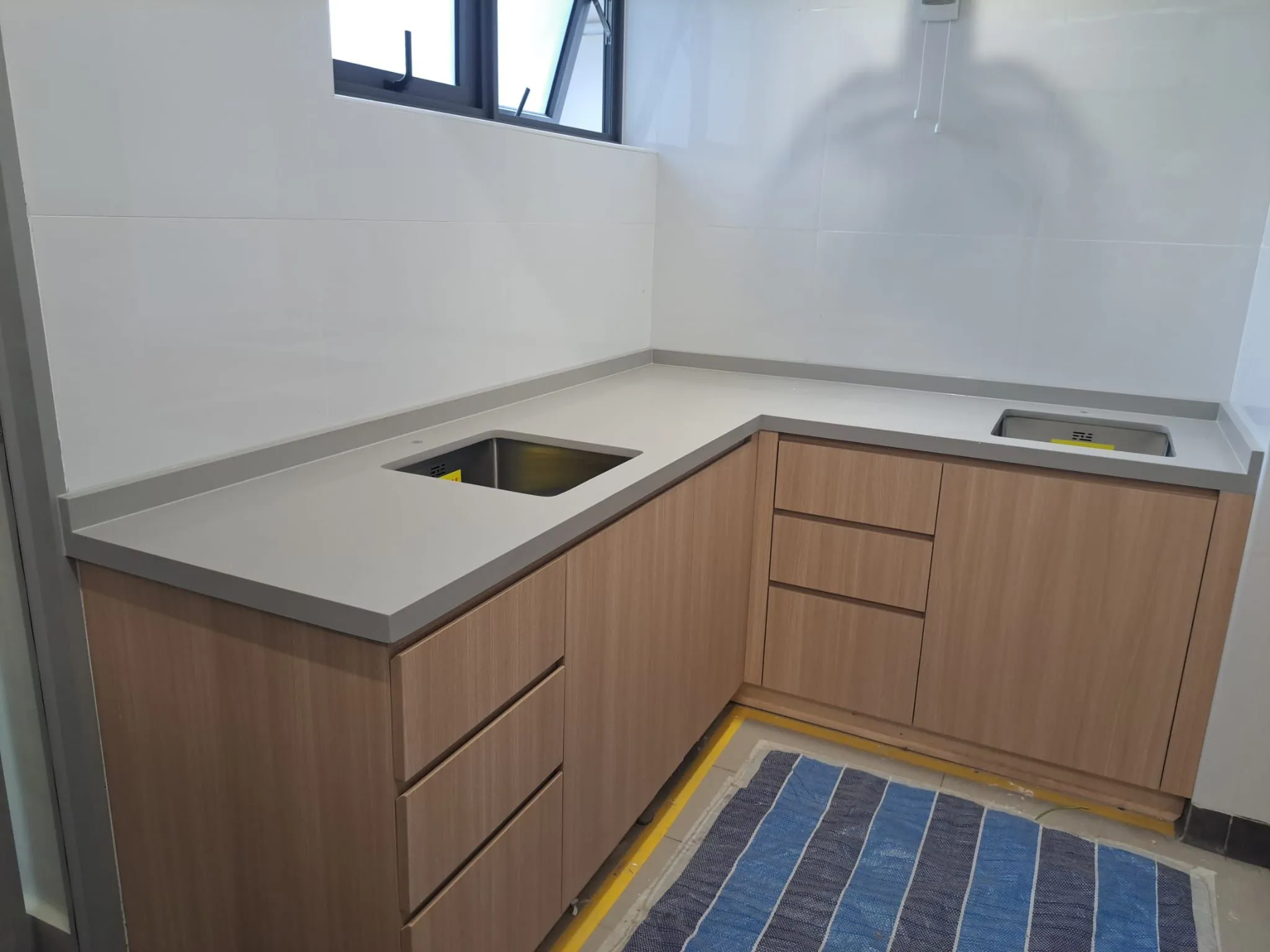
HDB’s renovation framework is built around one core principle: changes must not compromise the structural integrity of the building or create a nuisance for neighbours. That sounds straightforward, but in practice it covers a wider range of work than most homeowners expect.
The key distinction is between cosmetic works and structural or wet works. Cosmetic works, such as repainting walls, replacing cabinet doors, or swapping out light fittings, generally do not require HDB approval. Structural and wet works, including hacking floor or wall tiles, relocating the kitchen sink, or removing walls, almost always do.
According to HDB’s renovation guidelines, you must engage an HDB-registered renovation contractor for works that fall under the permit category. Hiring an unregistered contractor for regulated works is a violation that can result in penalties for both the contractor and the flat owner.
Works that typically require a permit in a kitchen setting include:
Critically, structural elements such as columns, beams, and load-bearing walls cannot be hacked or modified under any circumstances. According to Direct Renovation Contractor (2026), hacking structural pillars or beams carries a fine of up to S$5,000, and you will still be required to reinstate the damage at your own cost.
Many homeowners are surprised to learn that obtaining a renovation permit is not particularly complicated, provided you are working with a registered contractor. Here is how the process typically works:
If you are planning work on a resale flat, the process has a few additional considerations around existing fittings and the condition of original structures, and the resale hdb kitchen renovation in singapore page covers the nuances of working with pre-existing layouts and legacy fittings.
Your kitchen layout is one of the most regulated areas within your flat. HDB imposes specific restrictions to ensure that mechanical, electrical, and plumbing (MEP) systems are not compromised.
Gas points cannot be relocated by your renovation contractor. Any changes to gas supply lines must be carried out by a SP Group-licensed gas contractor. Attempting to redirect gas piping independently is both illegal and genuinely dangerous.
Wet areas (sinks, washing points) can generally be shifted within the kitchen space, but the new position must maintain adequate drainage gradients and cannot result in water intrusion into adjacent dry areas.
Ventilation is a firm requirement. Your kitchen must retain an adequate ventilation opening, and you cannot block or seal the existing exhaust point. If you are installing a hood, it must be properly ducted and cannot vent into common corridors.
Kitchen entrances can be modified in terms of door style, but the overall opening size is restricted. Removing a kitchen door entirely is permitted in many cases, provided the open-plan result still meets fire safety separation requirements.
For homeowners planning a BTO flat kitchen fit-out, where the shell is brand new and layout decisions happen early, the bto kitchen renovation by flat type singapore resource gives flat-type-specific guidance that helps you plan before the keys are even handed over.
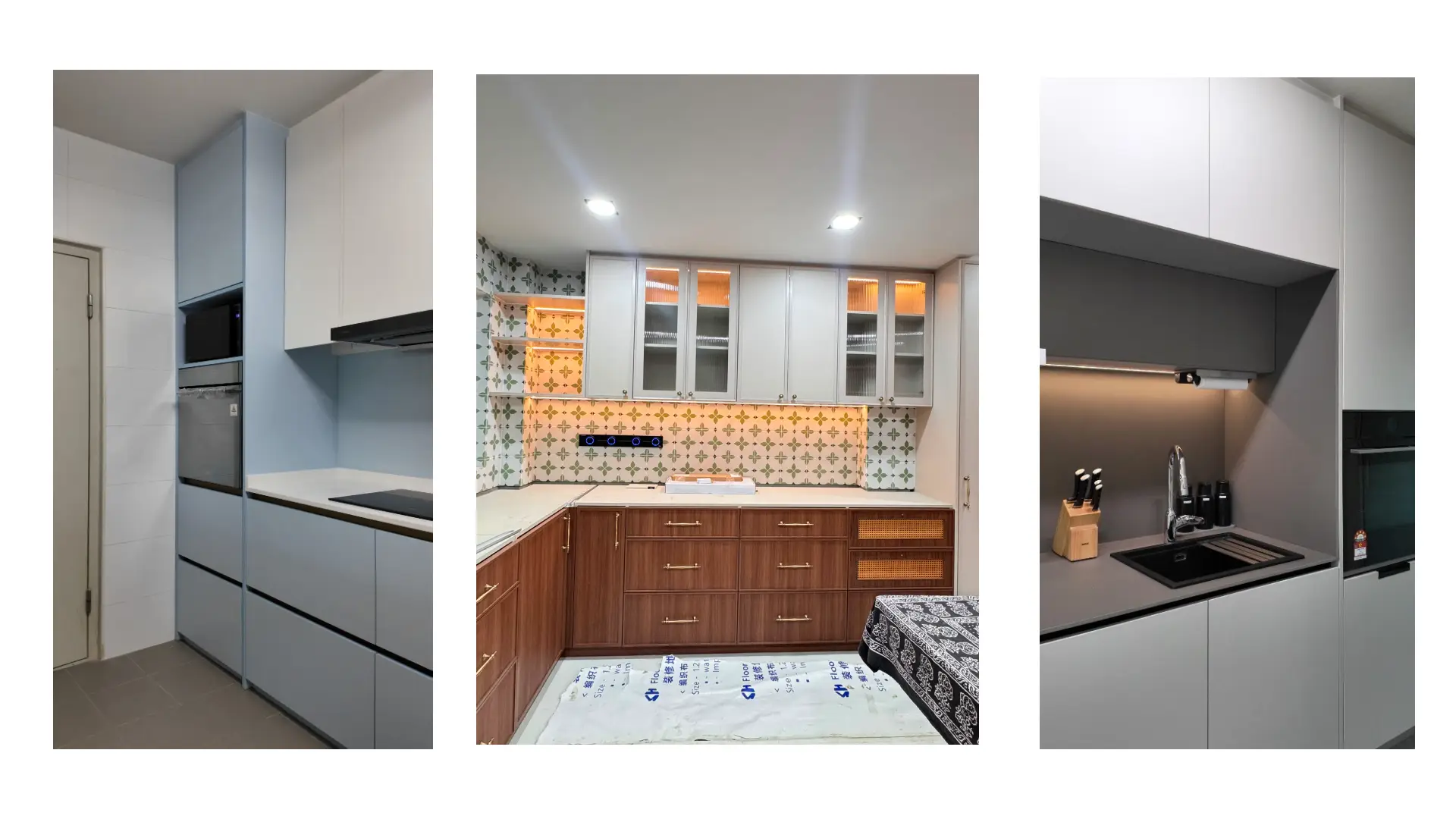
The materials you choose for your kitchen cabinets, countertops, and walls do not just affect aesthetics and budget. Some choices have direct implications for HDB compliance, longevity in Singapore’s humidity, and resale appeal.
Aluminium kitchen cabinetry has become one of the most practical choices for HDB kitchens precisely because it sidesteps many durability issues associated with timber in humid environments, as detailed in the aluminium kitchen units singapore resource. It is waterproof, termite-resistant, and does not warp. At T Se7en Alucraft, custom aluminium solutions are engineered specifically for Singapore’s climate, drawing on over 30 years of carpentry and fabrication experience.
Tile selection matters for compliance too. Floor tiles in wet kitchen areas must be slip-resistant (a minimum Coefficient of Friction rating is recommended by the Building and Construction Authority). Wall tiles that are too heavy can also be a structural concern if applied over existing tiles without hacking, so always confirm with your contractor whether overlay tiling is within the permitted load tolerance.
Cabinet door styles have no HDB restriction per se, but some homeowners want guidance on what performs well in Singapore kitchens, which is why the shaker style kitchen cabinets singapore page is a useful reference for understanding how this particular profile works in local conditions and what customisation options are available.
Material | Waterproof | Termite-Resistant | Approx. Lifespan | Relative Cost |
|---|---|---|---|---|
| Aluminium | Yes | Yes | 20+ years | Mid to high |
| Solid Wood | No | No | 8-12 years | High |
| MDF/Plywood | No | No | 5-10 years | Low to mid |
| PVC/Acrylic | Yes | Yes | 10-15 years | Mid |
| Stainless Steel | Yes | Yes | 15-20 years | High |
Budget planning is where many homeowners get caught off guard, particularly when hidden compliance costs (permit fees, reinstatement of unapproved prior works, licensed contractor premiums) are not factored in.
According to Interior Diary (2026), kitchen renovation in Singapore typically costs S$15,000 to S$50,000 for an HDB flat, depending on the scope of work, material choices, and flat size. Carpentry and masonry alone account for over 60% of renovation expenses in Singapore, according to KIVO Design Studio (2025), which explains why cabinet and countertop decisions have such an outsized impact on your total spend.
According to RevoSpaces (2025), a modern and efficient kitchen can add 15-20% to your property’s resale value, which gives more context to spending on quality finishes and durable materials.
The renovation industry in Singapore has also grown substantially. Renovation investments have grown 15 to 20% annually, with total industry projections reaching S$37.2 billion for 2024 to 2025, according to Haus Bedroom (2025). This growth has contributed to contractor price increases, so budgets set two or three years ago may no longer reflect current market rates.
Typical HDB kitchen cost breakdown:
Before committing to a final design and budget, using a kitchen renovation checklist singapore is a practical way to make sure nothing critical is overlooked during the planning phase.
The 9creation HDB Kitchen Renovation Guidelines resource outlines several recurring violations that homeowners and contractors commit, often unintentionally. Knowing these in advance is considerably cheaper than correcting them after the fact.
Using an unregistered contractor is the single most common and most avoidable mistake. The appeal is usually price: unregistered contractors frequently quote lower, but the risk of non-compliant work and the liability it creates for the flat owner is substantial.
Exceeding approved scope happens when renovation work expands beyond what was submitted in the permit application. If your contractor starts additional hacking or shifting of fixtures that were not in the original plan, that work is unapproved even if the permit itself is valid.
Incorrect waterproofing in the kitchen is a persistent issue. HDB requires a minimum waterproofing membrane in all wet areas, and it must extend a minimum height up the wall. Incomplete waterproofing leads to water seepage complaints from the flat below, which can result in reinstatement orders.
Noise and working hours violations are frequently reported and can result in your renovation being halted. Make sure your contractor is fully briefed on permitted working hours before work begins.
One of the most valuable steps you can take before finalising your kitchen design is visiting a showroom where you can see full-scale displays rather than relying on product images online. T Se7en Alucraft’s Woodlands showroom is set up specifically for this: full kitchen displays, working cabinet mechanisms, and direct access to design consultants who understand HDB compliance requirements.
While you are planning your kitchen, it is also worth considering integrated storage elsewhere in the home, as the wardrobes in singapore guide covers how custom aluminium wardrobes can be designed to complement your kitchen renovation with consistent material and finish choices across rooms.
As of September 2024, approximately 70% of HDB flats built before 1998 have undergone the Home Improvement Programme (HIP), according to TSe7en (2026). If your flat has gone through HIP, some original fittings may have been upgraded, which can affect what further modifications are permitted or necessary.
HDB renovation permits are flat-owner responsibilities. Even if your contractor applies on your behalf, you are legally accountable for any violations.
Gas point relocation is never a renovation contractor’s job. It must be handled by an SP Group-licensed gas contractor, and the timeline for this should be built into your project schedule.
Renovation noise restrictions are strictly enforced in HDB estates. A single neighbour complaint can result in a stop-work order from HDB.
Waterproofing warranties vary significantly between contractors. Always ask for a written warranty on waterproofing works, particularly in the kitchen wet area.
Overlay tiling (placing new tiles over existing ones) is permitted in some cases but must not exceed load tolerances. Confirm with your contractor before proceeding.
HDB renovation permits are the flat owner’s legal responsibility, not the contractor’s. Even when your contractor submits the application on your behalf, any violation found during or after the renovation falls on you as the homeowner.
Gas point relocation is never within a renovation contractor’s scope. It must be coordinated with an SP Group-licensed gas contractor, and the lead time for this work should be factored into your overall project schedule from the very beginning.
Overlay tiling, placing new tiles directly over existing ones, is permitted in certain situations but must not breach structural load tolerances. Always get written confirmation from your contractor before proceeding, as this is a common area where assumptions lead to compliance issues.
Waterproofing in the kitchen wet area is a mandatory requirement, not an optional upgrade. HDB requires a minimum membrane height up the wall, and incomplete waterproofing that causes seepage to the flat below can result in a reinstatement order at your own expense.
Renovation working hours in HDB estates are strictly enforced. Permitted hours are Monday to Friday 9am to 6pm, and Saturday 9am to 1pm. A single neighbour complaint can trigger a stop-work order that delays your entire project.
The renovation permit must be physically displayed at your flat entrance for the full duration of works. This is a legal requirement under HDB’s renovation conditions, and failing to display it is itself a violation even if the underlying work is fully approved.
Getting your kitchen renovation right the first time means having the right team behind you before a single tile is hacked. At T Se7en Alucraft, our design consultants have over 30 years of experience navigating HDB requirements and crafting custom aluminium kitchen solutions built for Singapore’s climate. Every project we handle is designed to be compliant, durable, and genuinely beautiful.
Book your free consultation with T Se7en Alucraft and get expert advice on layout, materials, and HDB compliance tailored specifically to your flat. Visit our Woodlands showroom or schedule a WhatsApp or video call session at a time that suits you.
Call us at +65 9615 9273, email sales@tse7en.com, or head to www.tse7en.com to book your appointment today.
Navigating hdb kitchen renovation rules singapore is not about memorising a long list of restrictions. It is about understanding which works require permits, which materials and contractors are compliant, and where the real costs sit before you commit to a design. The homeowners who run into trouble are almost always those who skipped the planning stage or assumed their contractor would handle compliance without any involvement on their part.
Your kitchen is likely the highest-use space in your home, and in Singapore’s resale market, it is one of the first things buyers assess. Getting it right means working with experienced professionals who understand both the creative and regulatory dimensions of the job. T Se7en Alucraft’s team is available at the Woodlands showroom, over a video call, or via WhatsApp to help you plan a kitchen that is built to last, fully compliant, and worth every dollar you spend. Reach out at +65 9615 9273 or visit www.tse7en.com to take the first step.
A kitchen redo for S$10,000 is achievable, but it will require careful prioritisation and realistic expectations about scope.
At S$10,000, you are likely looking at a cabinet replacement, a new countertop, and possibly a sink swap, without tile hacking or any structural changes. If your existing tiles are in good condition and your layout stays the same, a cosmetic-focused renovation at this budget is very much within reach. The moment you add hacking, waterproofing, or plumbing relocation, costs climb quickly, and S$10,000 becomes tight for anything beyond a small kitchen in a three-room flat.
A full kitchen redo for S$5,000 is very difficult in Singapore’s current market, but a partial refresh targeting specific elements is possible.
At this budget, you might replace cabinet door fronts rather than full cabinet boxes, install a new sink, or retile a small backsplash area without hacking. According to Interior Diary (2026), full HDB kitchen renovations typically start from S$15,000, so S$5,000 is better framed as a budget for surface-level updates rather than a comprehensive renovation. Working with a consultant to identify the highest-impact changes within this figure is the most practical approach.
S$25,000 sits in the mid-range for an HDB kitchen renovation in Singapore and represents a reasonable budget for a thorough, quality finish.
Based on industry data from Interior Diary (2026), HDB kitchen renovations range from S$15,000 to S$50,000 depending on scope, flat size, and material choices. At S$25,000, you can typically cover full cabinet replacement with quality materials such as aluminium or solid surface, tile hacking and replacement, updated plumbing, proper waterproofing, and new lighting. It is not excessive for a kitchen that will serve your household for the next 15 to 20 years, particularly when you consider that a well-executed kitchen can add 15 to 20% to your property’s resale value, according to RevoSpaces (2025).
S$10,000 can cover a new kitchen if your definition of “new” focuses on cabinetry and fixtures rather than a full structural overhaul.
For a three-room HDB flat with a compact kitchen footprint, S$10,000 may be sufficient to replace all cabinets, install a new countertop, and update the sink and tap, provided the existing tile and layout are retained. For larger flats or more extensive works, this budget will cover only a portion of the full scope. It is worth getting at least two or three itemised quotes from HDB-registered contractors so you can see exactly where the money goes and where trade-offs are being made.
A realistic budget for an HDB kitchen renovation in Singapore in 2025 falls between S$15,000 and S$35,000 for most homeowners undertaking a mid-range renovation.
The lower end of this range suits smaller flats where the scope is limited to cabinetry, countertops, and basic tile work without major layout changes. The upper end reflects larger kitchens, premium materials such as custom aluminium cabinetry or quartz surfaces, tile hacking, waterproofing, and full electrical and plumbing updates. Keep in mind that carpentry and masonry alone account for over 60% of renovation expenses in Singapore, according to KIVO Design Studio (2025), so cabinet choices are the single biggest lever you have on your total spend. Always build in a contingency of 10 to 15% for unexpected findings, particularly in resale flats where original construction quality can vary.
Speak to a professional now and get personalized consultation and guidance for your next renovation. Work with a team you can trust!
Home Blog HIP is HDB’s upgrading programme for older flats. It covers compulsory repairs such as concrete defects and ageing waste pipes at a very...



One Response