

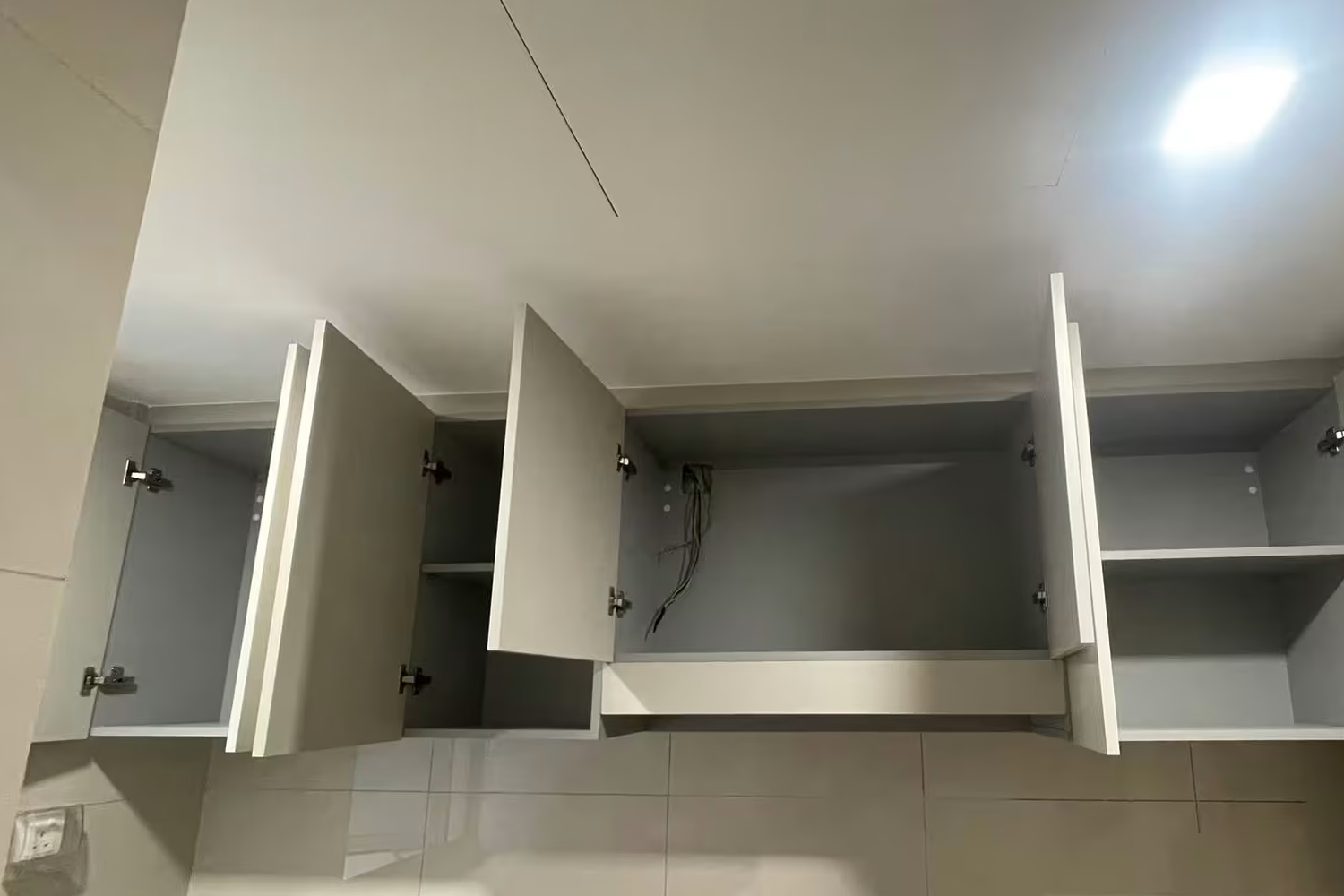

Kitchen Cabinet Repair vs Replacement: What Singapore Homeowners Should Know
When your kitchen cabinets start showing wear, the first question is whether to repair what you have or invest in a full replacement. Kitchen cabinet repair vs replacement is a decision that hinges on the condition of your cabinets, your renovation budget, and how much longer you need them to last.
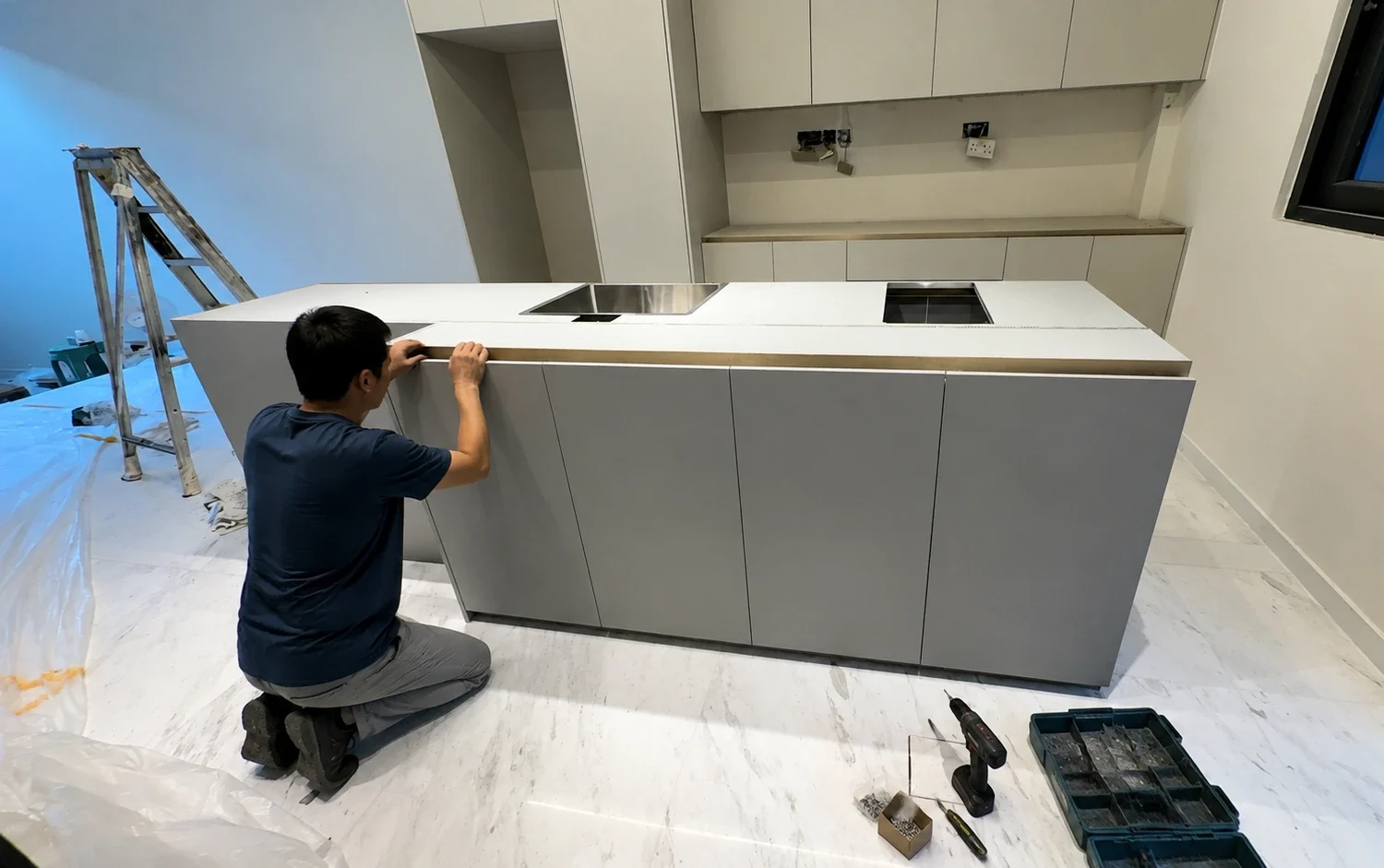
Key Takeaways
- Repairing or refacing cabinets can save you 50-70% compared to full replacement, according to Angi.
- Superficial damage such as peeling laminate, loose hinges, or minor scratches rarely justifies a full replacement.
- Full replacement makes sense when cabinet boxes are structurally compromised, warped, or infested with pests.
- In Singapore’s humid climate, material choice matters greatly — aluminium cabinets offer significantly better long-term durability than wood.
- The layout and size of your kitchen, whether you have a 3 room hdb kitchen renovation project or a larger condo unit, directly affects whether repair or replacement is the more cost-effective route.
- Always get a professional assessment before committing to either option, visible damage is not always the full picture.
Singapore’s kitchens work hard. Between the heat, humidity, and daily cooking, cabinets take a battering over the years. Whether you are living in a compact HDB flat or a larger private property, the condition of your kitchen cabinetry plays a significant role in both the functionality and visual appeal of your home. This article breaks down the key differences between repairing and replacing your kitchen cabinets, so you can make a confident, informed decision.
Assessing the Damage: When Repair Is the Smarter Call

Not every cabinet problem demands a full overhaul. In many cases, targeted repairs can restore both appearance and function at a fraction of the cost of replacement. The key is understanding which problems are cosmetic and which signal deeper structural issues.
Cosmetic issues that are straightforward to repair include:
- Peeling or bubbling laminate surfaces
- Scratched or faded cabinet doors
- Loose, squeaky, or broken hinges
- Sticky or misaligned drawer runners
- Minor water stains on cabinet exteriors
These are surface-level problems. A skilled carpenter or cabinet specialist can address them without dismantling the entire kitchen. If the internal box structure of your cabinet is solid and square, spending on targeted repairs makes clear financial sense.
Singapore’s climate adds a layer of complexity here. Timber and MDF cabinets are particularly prone to swelling, warping, and delamination in humid conditions. If your cabinets are less than 10 years old and only showing surface wear, repair or refacing is almost always the right move. If they are older and the damage runs deeper into the box structure, you need to think more carefully.
Cost Comparison: What You Actually Pay for Each Option
This is where numbers matter. According to Angi, cabinet refacing costs typically range between S$5,400 and S$12,200 (approximately USD$4,000 to USD$9,000), while full replacement can run between S$20,300 and S$47,300 (approximately USD$15,000 to USD$35,000). Cabinet refacing typically costs USD$150 to USD$400 per linear foot, with most homeowners spending around USD$6,000, based on 2026 data from Angi.
Refacing saves homeowners 50-70% compared to a full replacement, which is a substantial difference when you are working within a defined renovation budget.
For context within Singapore, condo kitchen renovation cost singapore projects tend to carry higher overall price tags due to larger kitchen footprints and premium finish expectations. In these scenarios, refacing or selective repair can be an especially smart way to modernise the kitchen without triggering a full-scale renovation spend.
| Option | Approximate Cost (SGD) | Scope |
|---|---|---|
| Minor repairs (hinges, runners, handles) | S$200 to S$800 | Cosmetic and mechanical fixes |
| Cabinet refacing (new doors, new surfaces) | S$5,400 to S$12,200 | Visual overhaul, same box structure |
| Full cabinet replacement | S$20,300 to S$47,300+ | Complete new installation |
| Full kitchen renovation (mid-range HDB) | S$30,000 to S$60,000+ | Cabinets, surfaces, appliances |
Note: These figures are converted from verified USD benchmarks. Actual SGD pricing in Singapore will vary based on material, contractor, and flat type. Always request itemised quotes from at least three contractors.
It is also worth considering the most expensive part of a kitchen renovation before budgeting, cabinetry consistently ranks at the top, which makes the repair-vs-replacement decision even more consequential for your overall spend.
When Full Replacement Is the Right Decision
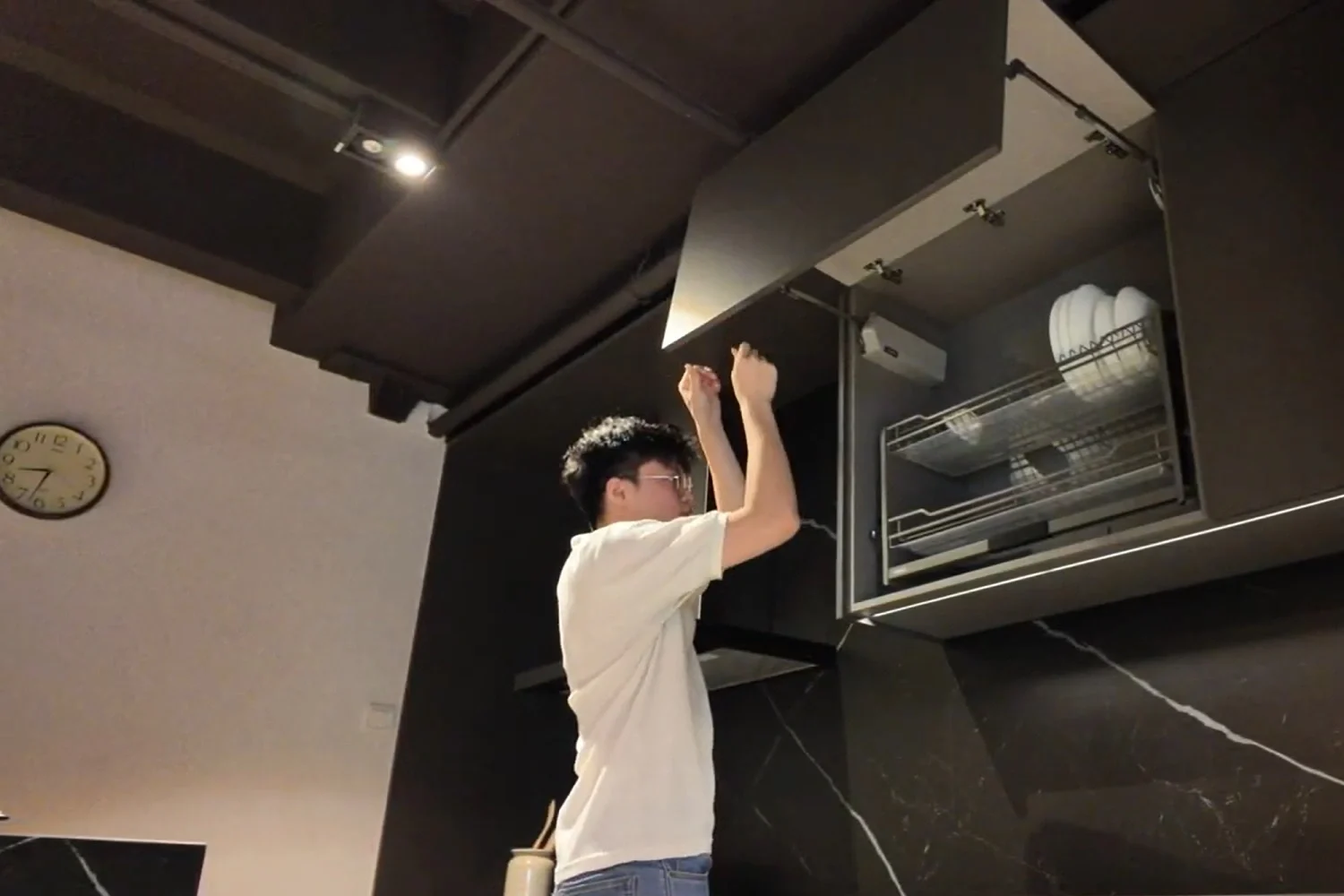
There are situations where no amount of patching will serve you well. Replacement becomes the logical choice when the underlying cabinet structure is compromised. Key signs include:
- Cabinet boxes that are warped, swollen, or out of square
- Persistent mould or mildew inside the cabinet, particularly at the base
- Termite or pest damage to timber frames
- Cabinets that are pulling away from walls due to failing fixings in tiles or concrete
- Water damage that has penetrated the internal panels and caused delamination of MDF or plywood cores
Beyond structural integrity, full replacement makes sense during a broader renovation project. If you are reconfiguring your kitchen layout, switching from a closed kitchen vs open kitchen hdb arrangement, or significantly upgrading your appliances, keeping old cabinets while everything else changes often looks and feels inconsistent.
The global kitchen cabinet market was valued at USD$115.64 billion in 2024 and is projected to reach USD$236.22 billion by 2033, growing at a CAGR of 8.26%, according to SkyQuest. This sustained growth reflects strong consumer appetite for both upgrades and replacements worldwide, and Singapore is no exception as homeowners increasingly prioritise well-designed, durable kitchens.
How Material Choice Affects the Repair-vs-Replacement Equation
The material your current cabinets are made from significantly shapes your options. Timber and MDF cabinets, while attractive, are more vulnerable to Singapore’s humidity and are harder to repair cleanly once internal moisture damage sets in. Laminate surfaces can be refaced, but if the substrate has swollen, the new laminate will not adhere properly or lie flat.
Aluminium cabinets sit at the other end of the spectrum. Because aluminium does not warp, rot, or harbour mould, the repair-vs-replacement decision is less frequently triggered by humidity damage. Components such as hinges, drawer runners, and door panels can be replaced individually without needing to address structural deterioration. For homeowners considering a long-term solution, aluminium cabinetry from a specialist like T Se7en Alucraft offers a durability advantage that extends the interval between costly replacement cycles.
For those planning a galley kitchen design singapore layout, where cabinets line both sides of a narrow corridor, the choice of material is especially important. Every centimetre matters in a galley configuration, and having cabinets that are structurally sound and easy to maintain over time reduces the disruption of future repairs significantly.
The ROI Perspective: Does Replacing Cabinets Add Home Value?
For homeowners thinking about resale, the return on kitchen investment is a legitimate consideration. The 2025 U.S. Houzz Kitchen Trends Study, which gathered data from 1,620 Houzz users between June and July 2024, found that the median spend on kitchen renovations rose to USD$60,000. The Home Improvement Research Institute’s 2025 Project Decision Study noted that the median total spend on kitchen remodels was USD$9,500, with an average of USD$16,000 for projects above USD$5,000.
Minor kitchen remodels, including cabinet refacing and hardware updates, return 113% nationally according to 2026 data from NKBA, Zonda, Houzz, and NAR. This means that for resale purposes, targeted investment in your kitchen can generate more value than it costs, provided you focus on the right areas. A full cabinet replacement is not always necessary to achieve a high-impact result.
For a 5 room hdb kitchen renovation project, the larger kitchen footprint means more cabinet surface area to consider. In these cases, a combination approach, repairing structurally sound cabinet boxes while replacing doors and hardware, can yield a like-new appearance at considerably less cost than a full replacement.
According to a Statista survey, 85% of respondents upgraded their cabinets as part of major kitchen feature upgrades in 2023 and 2024, making cabinetry the single most commonly addressed element in kitchen renovations globally.
5 Steps on How to Approach the Decision: A Practical Framework
Rather than guessing, use a structured approach to assess your specific situation before committing to a course of action.
Step 1: Inspect the cabinet boxes. Tap along the internal panels. Soft spots or hollow sounds suggest moisture damage. Check corners for mould or warping.
Step 2: Test all mechanisms. Open and close every drawer and door. Hinges and runners are inexpensive to replace. If mechanisms fail frequently across multiple cabinets, it may indicate age-related wear throughout.
Step 3: Assess the surface. If laminate is peeling, check whether the substrate beneath is still flat and rigid. If yes, refacing is viable. If the board is swollen or crumbly, replacement of that unit is more appropriate.
Step 4: Consider your broader goals. Are you renovating for comfort and function, or preparing to sell? Are you changing the layout? Your answers shape whether spot repair, full refacing, or complete replacement serves you best.
Step 5: Get professional quotes. Contact a specialist to assess the scope accurately. T Se7en Alucraft’s consultants can help you evaluate your current cabinetry and recommend the most cost-effective path forward. Reach them at +65 9615 9273 or at sales@tse7en.com.
Repair, Reface, or Replace: Matching the Solution to the Situation
| Situation | Recommended Action |
|---|---|
| Loose hinges and sticky drawers | Repair: replace hardware |
| Peeling laminate, solid box structure | Reface: new doors and surfaces |
| Mould inside cabinet base, swollen panels | Replace affected units or full set |
| Planning a layout change | Full replacement |
| Budget-constrained, cabinets under 10 years old | Repair or reface |
| Cabinets over 20 years old, multiple issues | Full replacement |
| Upgrading to aluminium for longevity | Full replacement with aluminium |
With over 30 years of experience in the carpentry and custom aluminium fixture industry, T Se7en Alucraft has helped Singapore homeowners across HDB flats, condominiums, and commercial spaces make this exact decision wisely. Their custom-made aluminium kitchen cabinets are designed specifically to perform in Singapore’s humidity, offering a long-term alternative that reduces the frequency of this repair-or-replace dilemma in the first place.
Cabinet sales have dropped 5.2% year-over-year as of July 2025, with stock cabinets falling over 10%, according to the KCMA July 2025 report. This suggests that more homeowners are opting for selective repair and refacing over outright replacement, a trend that aligns with the cost savings outlined earlier and reflects a more considered approach to renovation spending.
Whether you are weighing up kitchen cabinet repair vs replacement for a small flat or a large family home, the right answer depends on the specific condition of your cabinets, the scope of your renovation plans, and how long you intend to stay in the property. With clear criteria and the right professional advice, this decision becomes considerably more straightforward.
Things to Know
- Refacing only works when the existing cabinet box is structurally sound. If the carcass is warped, swollen, or mould-damaged, new doors and surfaces will not sit correctly and the result will look worse than the original.
- In Singapore, HDB guidelines may affect what structural changes you can make during a kitchen renovation. Always check with HDB or your contractor before removing and replacing built-in cabinetry, as additional permits or approvals may be required.
- Aluminium cabinets have a significantly longer service life than MDF or timber equivalents in humid climates. Choosing aluminium during a replacement project reduces the likelihood of facing this same decision again in five to eight years.
- Hardware upgrades alone, such as new handles, hinges, and drawer runners, can dramatically refresh the appearance of tired cabinets without touching the doors or boxes. This is the lowest-cost entry point for cabinet improvement and is often overlooked.
- Not all contractors offer the same quality of refacing work. Ask to see completed projects and request references before committing. Poor refacing, particularly around edge banding and door alignment, is difficult and costly to correct after the fact.
- The age of your cabinets is a useful but incomplete guide. A ten-year-old timber cabinet in a poorly ventilated kitchen may be in worse condition than a twenty-year-old aluminium cabinet in a well-maintained space. Physical inspection always tells more than age alone.
Book a Cabinet Assessment With T Se7en Alucraft Before You Spend a Dollar More
If you are still unsure whether to repair or replace your kitchen cabinets, a professional assessment will give you a clear answer and a realistic cost picture before you commit to anything. Book your appointment with T Se7en Alucraft today and speak directly with a consultant who understands Singapore kitchens, Singapore humidity, and Singapore budgets. With over 30 years of experience in custom aluminium cabinetry, the team can assess your current cabinets, recommend the most cost-effective path forward, and provide a no-obligation quote tailored to your home. Call +65 9615 9273, email sales@tse7en.com, or visit www.tse7en.com to schedule your consultation now.
The Bottom Line on Kitchen Cabinet Repair vs Replacement
Choosing between repairing and replacing your kitchen cabinets is not a one-size-fits-all decision. It depends on the structural condition of your existing cabinetry, the scope of any broader renovation plans, your budget, and how long you intend to stay in your current home. For most Singapore homeowners dealing with surface wear on cabinets that are still structurally sound, refacing or targeted repair delivers excellent results at a significantly lower cost than full replacement.
Where damage runs deeper, where layouts need to change, or where you want a truly future-proof solution in Singapore’s demanding climate, full replacement with a durable material like aluminium is the smarter long-term investment. T Se7en Alucraft has been helping Singapore homeowners navigate exactly this decision for over 30 years. Reach out to the team at +65 9615 9273 or email sales@tse7en.com to arrange a professional assessment and get a clear, honest recommendation for your kitchen.
Frequently Asked Questions
The clearest signs include structural damage such as warped or swollen cabinet boxes, persistent mould inside the carcass, pest damage, and cabinets that are pulling away from walls.
If you also notice that doors no longer close properly despite hinge adjustments, that internal panels feel soft or spongy to the touch, or that the cabinet layout no longer suits your cooking needs, replacement is likely the more practical route. Cosmetic wear alone, such as faded surfaces or peeling laminate over a solid box, does not usually justify full replacement.
Yes, in most cases damaged kitchen cabinets can be repaired, provided the internal box structure remains solid and square.
Common repairs include replacing hinges, drawer runners, door handles, and laminate surfaces. Water-stained exteriors can often be sanded, refinished, or refaced. The exception is when damage has penetrated the carcass itself, causing swelling, delamination of the internal board, or mould growth within the panel. At that point, repair becomes a short-term fix rather than a durable solution, and replacement of the affected units is the better investment.
Start by identifying whether the damage is cosmetic or structural, then address each issue systematically, beginning with the lowest-cost fixes such as hardware replacement before moving to surface restoration.
Tighten or replace loose hinges and worn drawer runners first, as these account for most functional complaints in older cabinets. If doors are warped slightly, adjustable hinges can sometimes compensate. For surface damage, peeling laminate can be re-adhered with contact adhesive on small areas, or the door can be replaced entirely if the damage is extensive. Repainting or refinishing cabinet exteriors is also a cost-effective option when the substrate is still flat and intact. For older timber or MDF cabinets in Singapore homes, check the base panels carefully for moisture ingress before committing to any surface work, as hidden moisture will undermine any repair carried out above it.
Cabinet refacing is the most comprehensive way to transform the appearance of your kitchen without replacing the existing cabinet boxes.
Refacing involves fitting new door fronts, applying new veneer or laminate to the exposed surfaces of the cabinet boxes, and updating all hardware. The result looks virtually identical to a new kitchen installation at a fraction of the cost. Beyond refacing, you can also repaint cabinet doors, replace handles and knobs for an immediate visual lift, add soft-close mechanisms to existing hinges, and install interior organisers to improve functionality. These incremental changes, done together, can make a kitchen feel significantly fresher without any structural work or the cost and disruption of full replacement.
A well-built kitchen with quality materials should last between 15 and 25 years before a full replacement becomes necessary, though individual components such as hinges, handles, and worktops may need attention sooner.
The material of your cabinetry plays the largest role in determining lifespan. Timber and MDF kitchens in Singapore’s humid environment often show significant wear within 10 to 15 years, particularly in poorly ventilated spaces or near cooking areas with heavy steam exposure. Aluminium kitchens, by contrast, are far more resistant to warping, moisture, and pest damage, and can comfortably exceed 20 years with minimal maintenance. The quality of the original installation, the frequency of cleaning, and how well the kitchen is ventilated all influence how long your kitchen will remain fully functional and visually presentable before replacement becomes worthwhile.
Still Unsure?
Speak to a professional now and get personalized consultation and guidance for your next renovation. Work with a team you can trust!
Best Materials for Kitchen Cabinets in Singapore
Home Blog HIP is HDB’s upgrading programme for older flats. It covers compulsory repairs such as concrete defects and ageing waste pipes at a very...
One Response