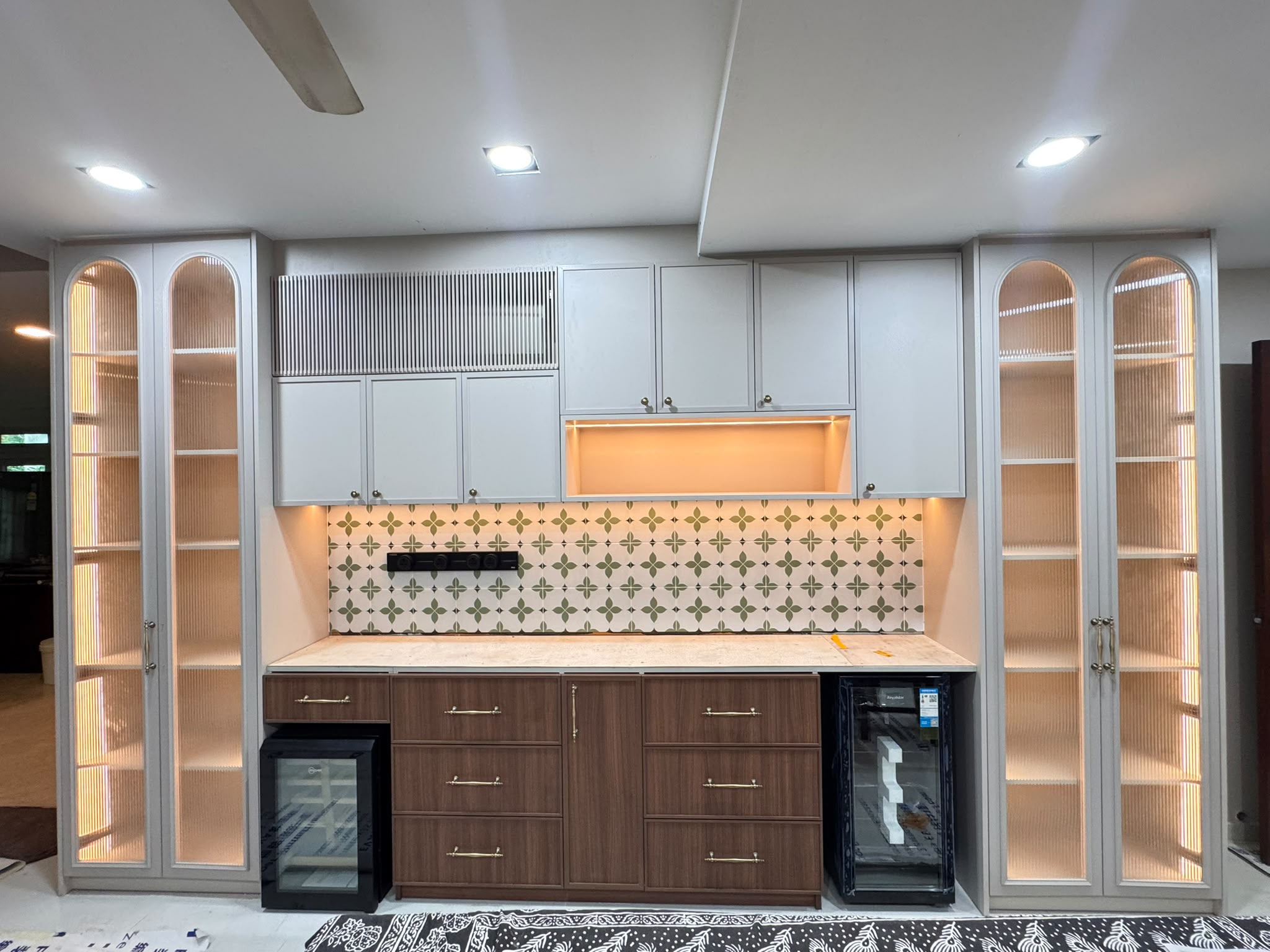
The 27 Greenleaf Ave aluminium kitchen renovation showcases how modern Singapore homes are shifting toward custom aluminium kitchen cabinetry systems designed for humidity resistance, durability, and premium aesthetics.
Unlike traditional wood-based kitchens that degrade in tropical climates, this project demonstrates a long-term solution built around bespoke aluminium fabrication, integrated lighting, and architectural detailing.
For homeowners planning a similar transformation, the foundation usually starts with structured planning through a professional kitchen renovation service in Singapore, where layout, material selection, and workflow design are mapped before fabrication begins.
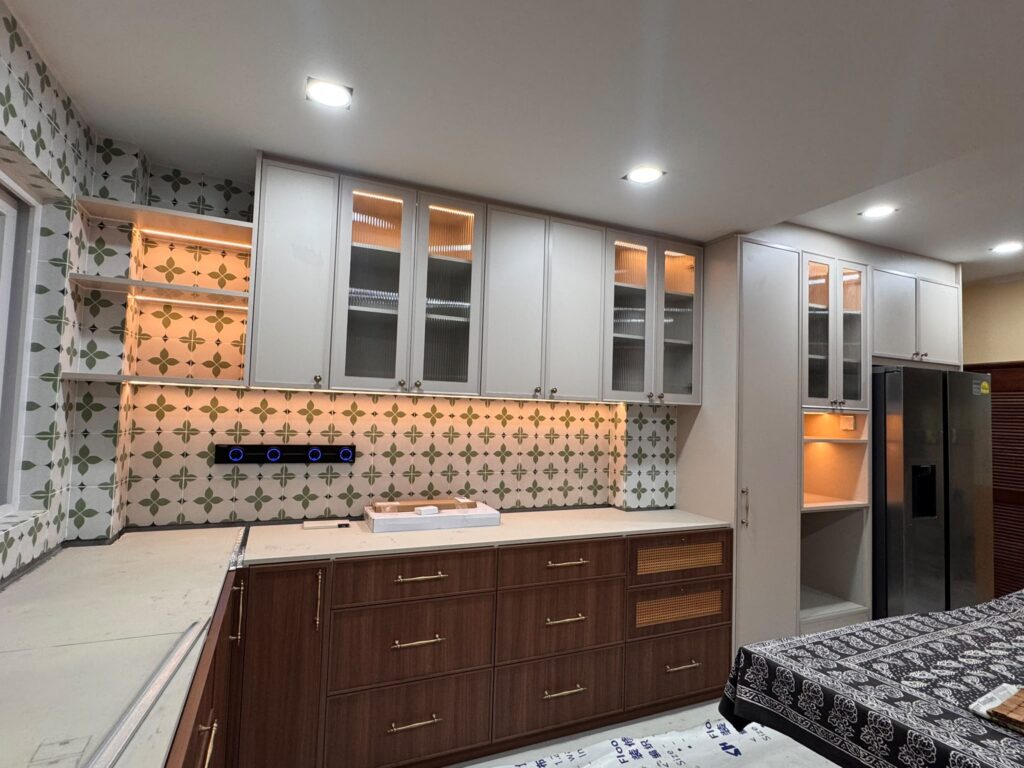
Singapore’s climate creates long-term challenges for traditional carpentry materials. Constant humidity, heat exposure, and frequent cooking activity often lead to swelling, mold growth, and structural deformation in wood-based cabinets.
This is why more homeowners are transitioning toward aluminium kitchen cabinet systems in Singapore, which offer:
To understand material performance differences in detail, many homeowners review comparisons such as aluminium vs wood kitchen cabinets in Singapore or explore deeper humidity resistance engineering in aluminium kitchen cabinets for humid climates.
These resources highlight why aluminium is becoming the dominant material in modern Singapore renovations.
This kitchen was designed around three core principles:
Instead of a standard linear kitchen, the layout uses vertical framing elements like arched display towers to create spatial height and depth.
All cabinetry is built using aluminium-based systems to ensure durability and design uniformity across the entire kitchen.
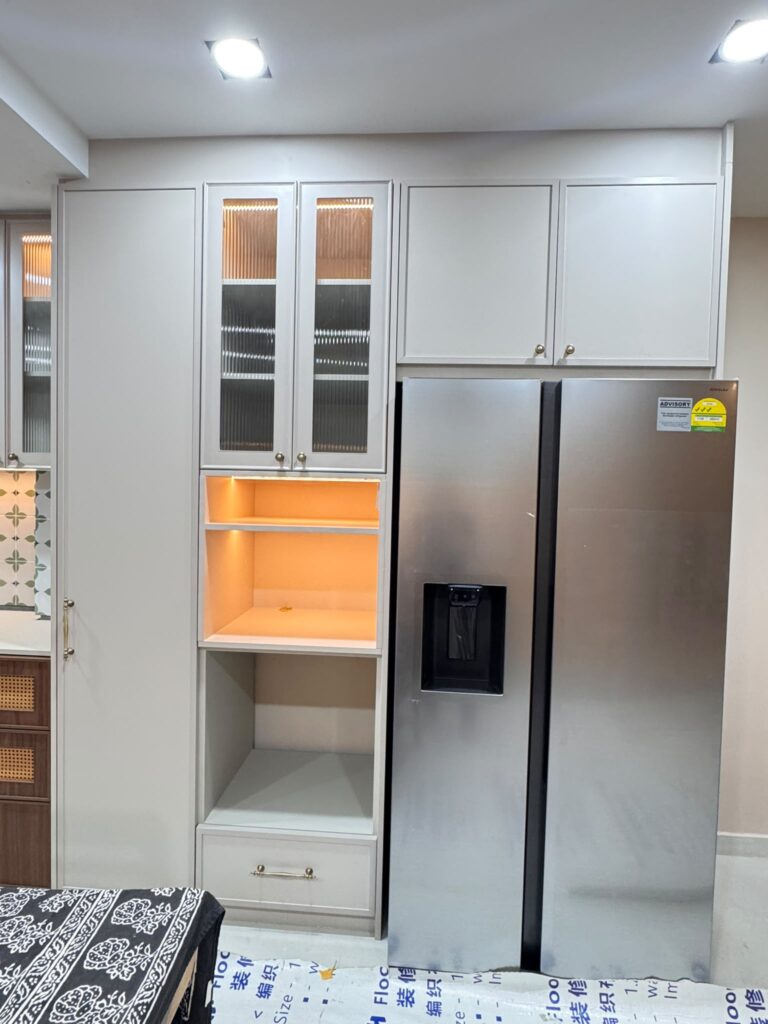
Appliances, lighting, and storage are seamlessly integrated into the structure instead of being added as separate components.
For homeowners who want to understand how such design decisions are planned, a structured cabinet design consultation process is typically the first step.
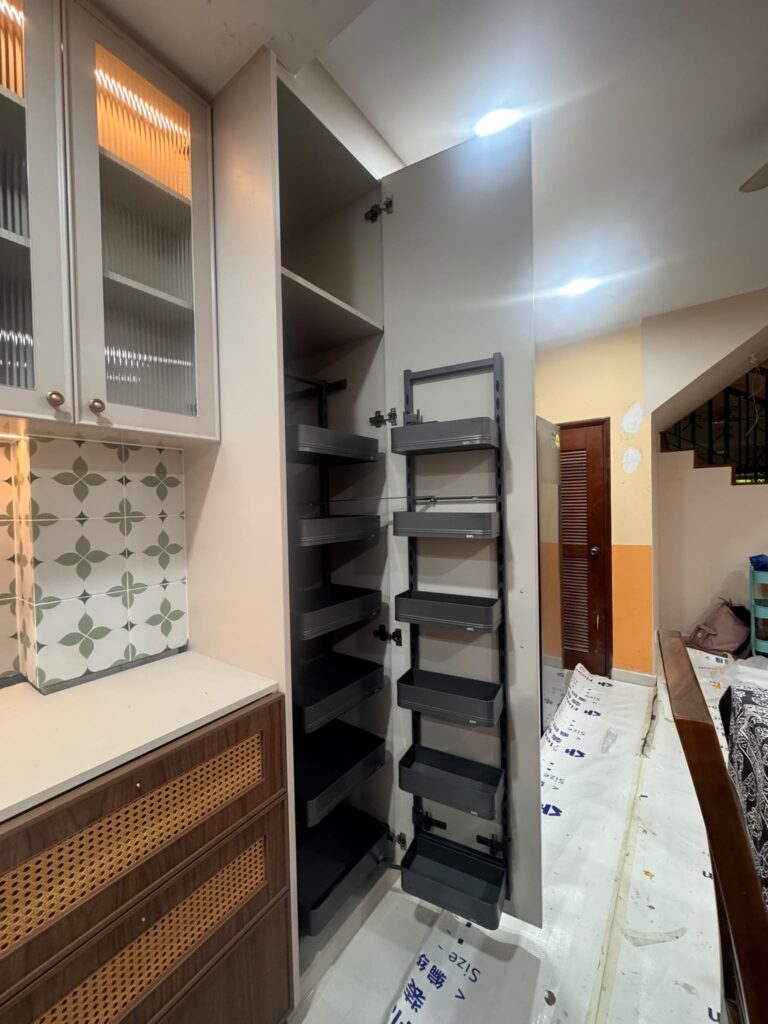
Full-height aluminium storage systems are used to maximise kitchen efficiency in narrow Singapore layouts.
This system includes:
For similar systems:
Bespoke Aluminium Accessories
Installation standards:
Aluminium Fixture Installation
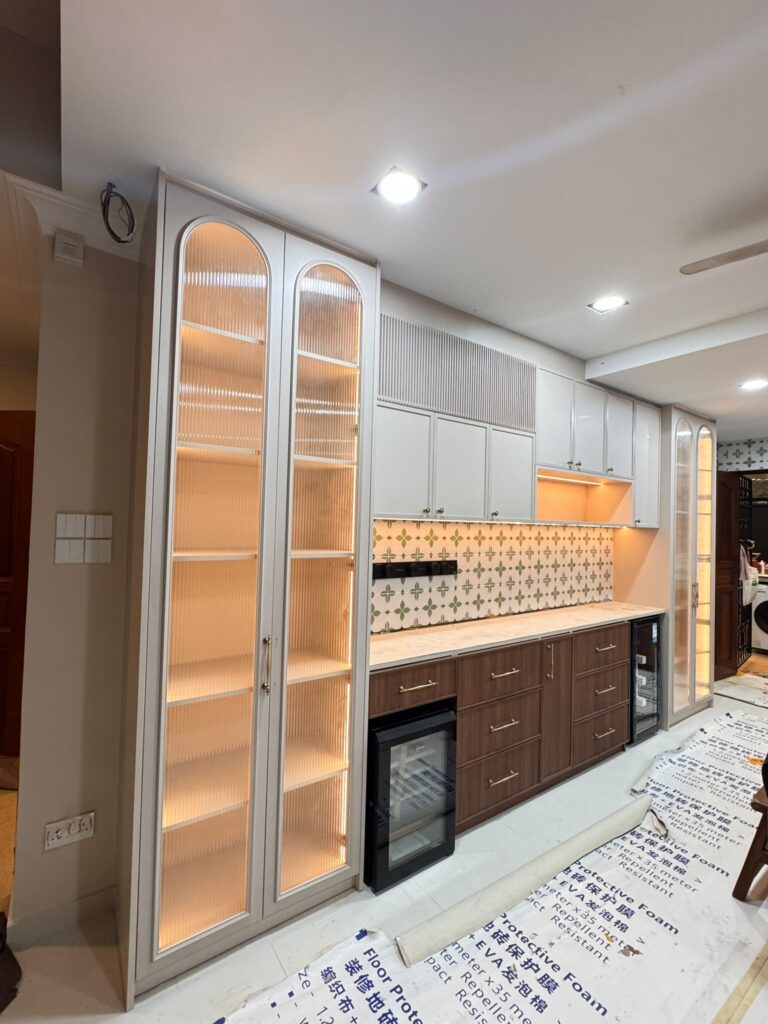
One of the most distinctive elements of this kitchen is the arched fluted glass aluminium display towers, which serve as both storage and visual focal points.
Fluted glass is increasingly used in Singapore interior design because it:
These display towers are also internally lit using warm LED systems, which elevates the entire kitchen atmosphere at night.
For similar architectural cabinet forms, homeowners often explore curved kitchen cabinet designs in Singapore or browse top modern kitchen cabinet design trends for inspiration.
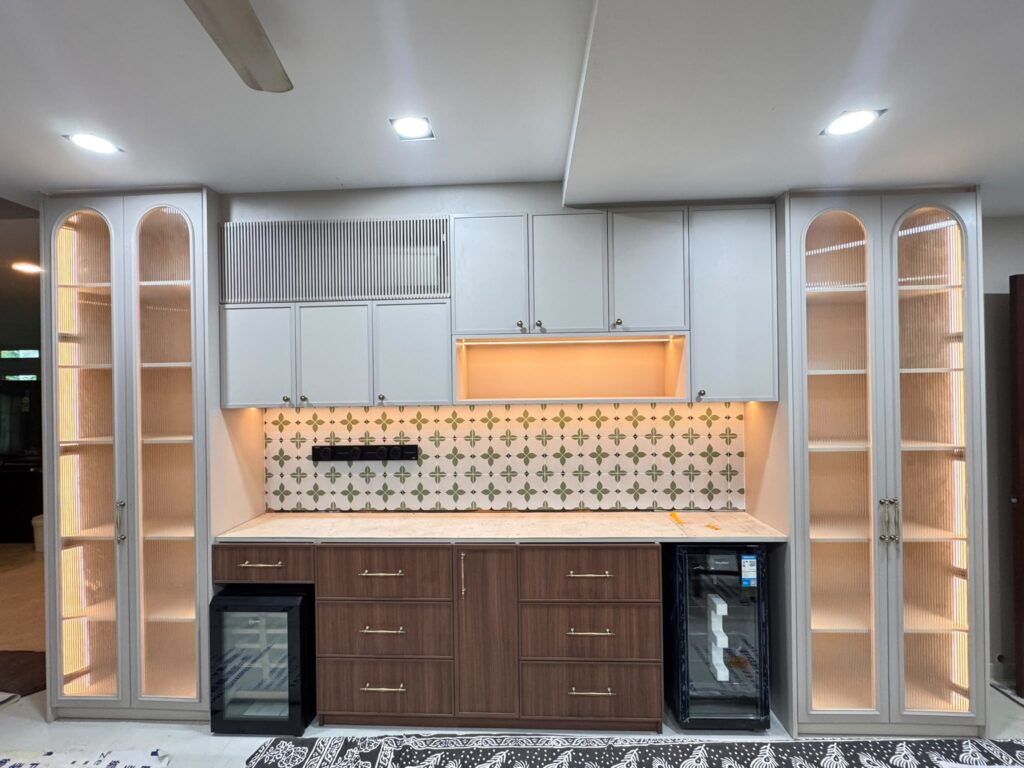
The cabinetry in this project follows a two-tone material strategy:
This combination creates a balanced visual structure where warmth is anchored at eye level while lighter tones expand spatial perception above.
This design style aligns with modern Scandinavian-inspired kitchen aesthetics, which are increasingly popular in Singapore interior design.
Homeowners exploring color psychology and material trends often refer to trending aluminium kitchen cabinet colors in Singapore or compare finishes in grey kitchen cabinet design guides.
The backsplash in this kitchen uses botanical-patterned cement tiles, introducing visual contrast against the clean aluminium surfaces.
Unlike standard subway tiles, cement tiles provide:
This makes them ideal for homeowners aiming for a more curated interior expression rather than a purely functional kitchen space.
For material coordination and surface pairing strategies, homeowners often study kitchen countertop materials in Singapore or explore durability comparisons in best kitchen countertop materials guide.
Lighting plays a critical role in this kitchen’s visual identity.
The design uses multiple lighting layers:
This layered lighting approach enhances both functionality and mood, especially in evening use conditions.
For technical implementation, homeowners often reference cabinet lighting installation services in Singapore or explore energy-efficient design strategies in energy-efficient kitchen design Singapore.
Another key feature is the seamless integration of built-in beverage cooling units within the lower cabinet system.
Instead of placing appliances externally, they are embedded directly into the cabinetry layout to maintain visual continuity and workflow efficiency.
This type of integration is commonly used in premium kitchen renovations where space optimization and aesthetic consistency are priorities.
For similar storage-based planning approaches, see kitchen storage cabinet solutions in Singapore or explore functional countertop designs in kitchen countertop storage cabinets.
Creating a kitchen like 27 Greenleaf Ave typically follows a structured workflow:
Define layout, usage patterns, and design direction
https://www.tse7en.com/interior-design/design-consultation/
Choose aluminium finishes, glass systems, and hardware components
https://www.tse7en.com/cabinet-maker/bespoke-aluminium-accessories/
Custom aluminium cabinetry is manufactured based on exact measurements
Cabinets, lighting systems, and appliances are installed as a unified system
https://www.tse7en.com/renovation-contractor/aluminium-fixture-installation/
For full workflow understanding, homeowners often study kitchen cabinet installation processes in Singapore before starting renovation.
The 27 Greenleaf Ave project reflects several key 2026 design shifts:
For broader context on renovation evolution, see modern kitchen renovation trends in Singapore or explore full interior direction in modern luxury interior design Singapore.
This type of kitchen is ideal for:
For real project references across regions, see:
The 27 Greenleaf Ave aluminium kitchen renovation demonstrates how modern Singapore kitchens are evolving into fully integrated architectural environments rather than purely functional cooking spaces.
Through the use of:
The 27 Greenleaf Ave aluminium kitchen renovation is a Singapore residential kitchen project featuring custom aluminium cabinetry, fluted glass display towers, integrated LED lighting, cement tile backsplash, and built-in refrigeration, designed for humid tropical conditions and long-term durability.
Aluminium was used because it is resistant to Singapore’s high humidity, does not warp or swell like wood, and provides long-term structural stability, making it suitable for low-maintenance kitchen environments.
Fluted glass is used in the display towers to diffuse internal LED lighting, reduce visual clutter, and create layered depth and texture, enhancing the overall modern luxury aesthetic of the kitchen.
The integrated LED lighting system enhances usability and aesthetics by providing under-cabinet lighting, internal shelf illumination, and display lighting that highlights materials such as glass and cement tiles.
Yes. Aluminium kitchen cabinets are highly suitable for Singapore homes because they perform well in humid environments, require minimal maintenance, and maintain structural integrity over long-term daily use.
Speak to a professional now and get personalized consultation and guidance for your next renovation. Work with a team you can trust!
Home Blog When choosing between aluminium profile and panel kitchen cabinets, profile designs use an extruded aluminium frame with an infill (glass, acrylic, or compact...