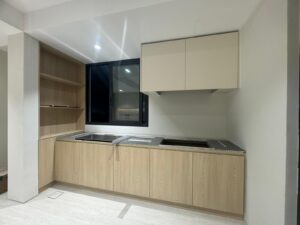
A 5 room HDB kitchen renovation in Singapore typically costs S$15,000–S$50,000+, depending on materials, layout, and scope of works. Larger 5-room flats allow more flexible designs like L-shaped, U-shaped, or island kitchens with better storage and dining integration. Choosing durable materials and the right contractor helps control costs and improve long-term functionality and value.
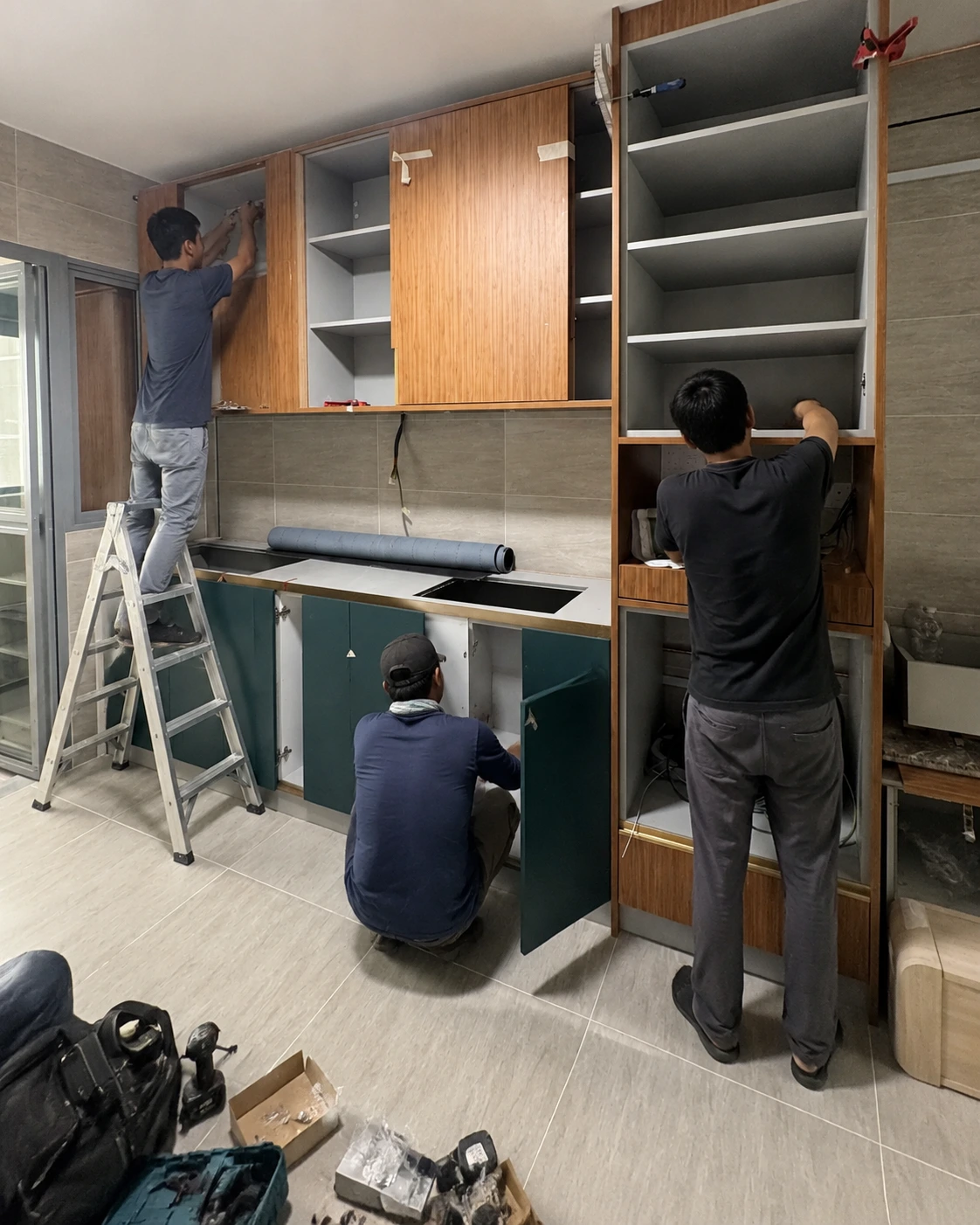
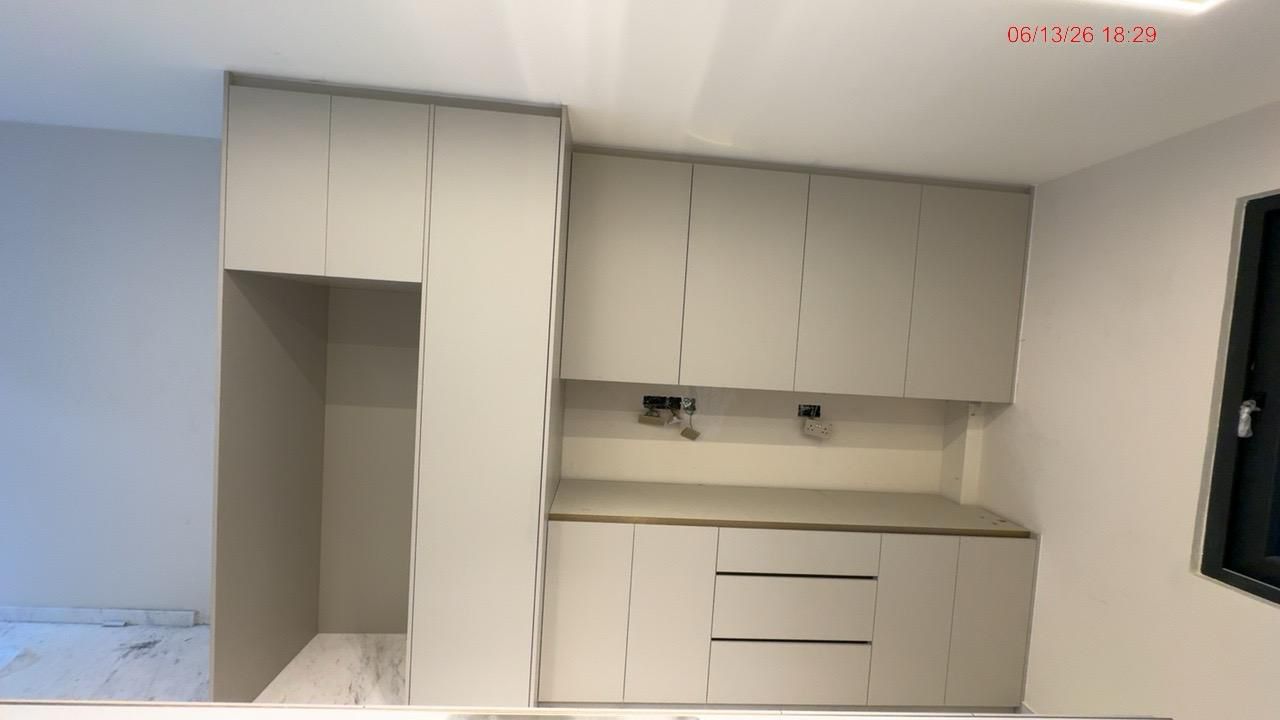
Before any renovation work begins, it is important to understand the regulations that govern HDB renovations in Singapore. These guidelines are designed to maintain building safety, minimise inconvenience to neighbours, and ensure that renovation works meet structural requirements.
One of the most important considerations is whether any hacking work is required. While homeowners may wish to create open-concept kitchens by removing walls, not all walls can be altered. Structural walls are strictly protected and require approval if any modifications are proposed.
Waterproofing is another critical requirement, particularly in older resale flats. Kitchen floors are exposed to frequent moisture, and damaged waterproofing membranes can eventually lead to leakage issues that affect neighbouring units.
Homeowners should also be aware that renovation works must be carried out by contractors who comply with HDB requirements. Working hours are regulated, and certain noisy activities such as hacking are subject to additional restrictions.
Consulting an experienced contractor early in the planning process can help ensure compliance while avoiding unnecessary delays.
Cost is often the first question homeowners ask when planning a renovation. While there is no universal figure that applies to every project, understanding the major cost drivers can help establish realistic expectations.
Kitchen renovations generally fall into three categories: basic refreshes, mid-range upgrades, and premium transformations. The final cost depends largely on the materials chosen, the complexity of the design, and the condition of the existing kitchen.
A simple renovation that focuses primarily on replacing cabinetry, countertops, and finishes may cost significantly less than a complete overhaul involving hacking, plumbing relocation, electrical rewiring, and custom carpentry.
| Renovation Scope | Estimated Cost |
| Basic Refresh | S$15,000–S$25,000 |
| Mid-Range Renovation | S$25,000–S$40,000 |
| Premium Renovation | S$40,000–S$50,000+ |
Homeowners renovating resale flats should generally budget toward the higher end of these ranges, as older kitchens often require additional remedial works.
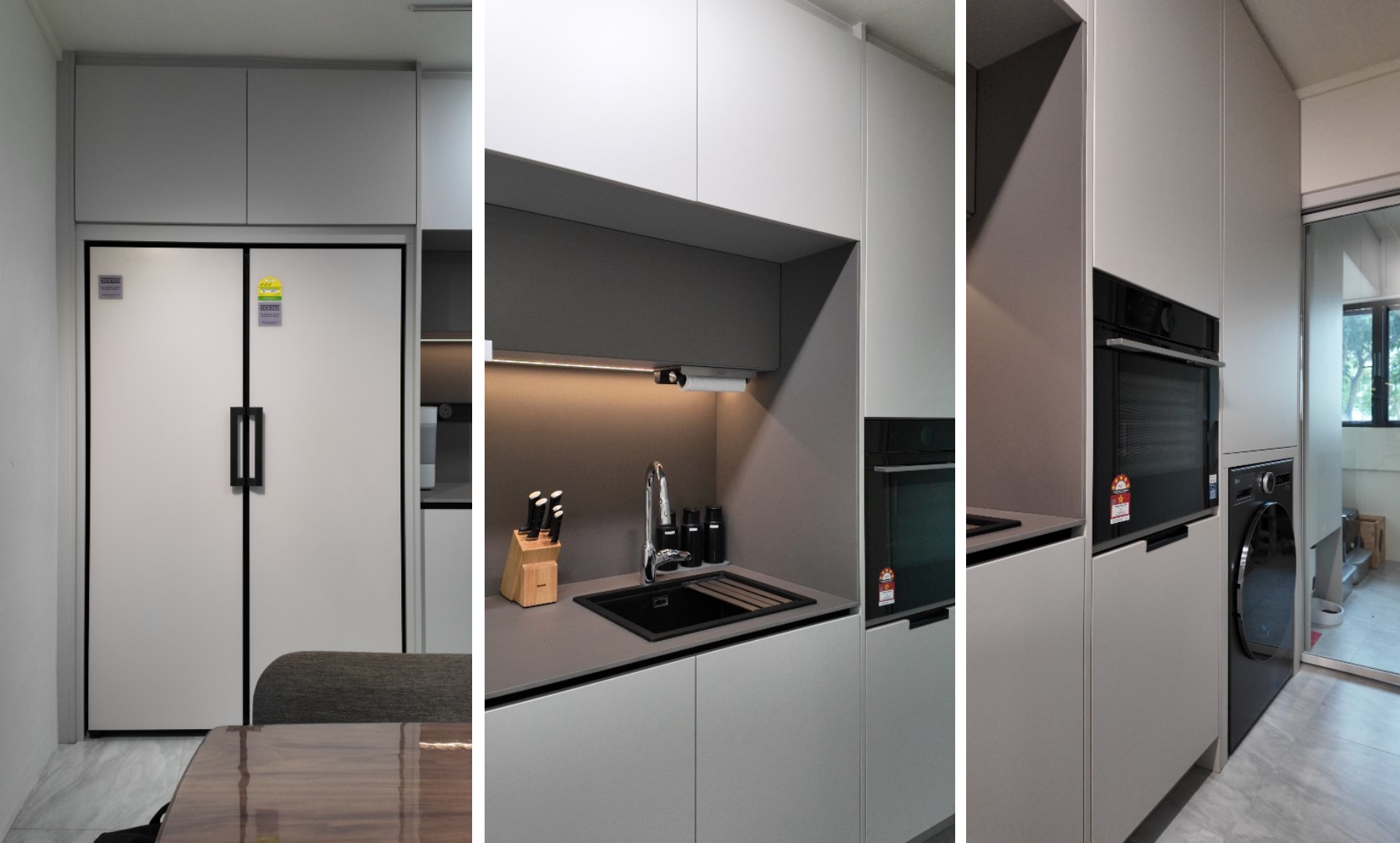
The layout of a kitchen determines how efficiently it functions. Even the most expensive finishes cannot compensate for a poorly planned workflow.
Among Singapore homeowners, the L-shaped kitchen remains one of the most popular configurations because it balances storage, preparation space, and openness. This layout works particularly well in 5-room flats where homeowners want to maintain visual connectivity with adjacent living or dining spaces.
For larger kitchens, U-shaped layouts offer substantial countertop space and storage. The continuous work surfaces make meal preparation efficient while keeping essential appliances within easy reach.
Island kitchens have also grown in popularity over the past decade. A well-designed island can serve as a preparation area, casual dining space, and social hub. Families often use kitchen islands for breakfast, homework sessions, and informal gatherings.
Galley kitchens remain practical for homeowners who prioritise cooking efficiency. With workstations positioned on opposite sides, movement between preparation, cooking, and cleaning areas becomes highly efficient.
The ideal layout ultimately depends on the size of the household, cooking habits, and available floor space.
The wet and dry kitchen concept has become increasingly common in Singapore, particularly among larger households that cook regularly.
A wet kitchen serves as the primary cooking zone where heavy food preparation takes place. Activities such as stir-frying, deep-frying, and extensive meal preparation are usually confined to this area. Because of the higher levels of heat, grease, and moisture, wet kitchens are designed with practicality and easy maintenance in mind.
The dry kitchen functions as a cleaner and more visually appealing extension of the home. It is often used for coffee preparation, light cooking, entertaining guests, or displaying decorative appliances and kitchenware.
For families that cook frequently, separating these functions offers several advantages. The dry kitchen remains neat and welcoming for visitors, while the wet kitchen handles the more demanding aspects of daily cooking.
Many 5-room HDB homeowners find that this dual-kitchen concept provides the ideal balance between functionality and aesthetics.
Kitchen cabinets often represent the largest single investment within a kitchen renovation budget. While colour and design receive significant attention, the cabinet material itself has a greater impact on durability and maintenance.
Traditional wood-based cabinets remain popular because they offer a wide range of finishes and design flexibility. They can complement various interior styles, from Scandinavian and Japandi designs to classic contemporary homes.
However, Singapore’s climate presents unique challenges. High humidity levels and constant exposure to moisture can gradually affect certain wood-based materials. Over time, lower-quality cabinets may experience swelling, warping, or deterioration around frequently exposed areas.
Aluminium cabinets have become increasingly attractive to homeowners seeking a long-term solution. Unlike traditional wood products, aluminium is naturally resistant to water, termites, and corrosion. This makes it particularly suitable for kitchens where durability is a priority.
| Feature | Aluminium Cabinets | Wood Cabinets |
| Waterproof | Excellent | Moderate |
| Termite Resistance | Excellent | Moderate |
| Maintenance | Low | Medium |
| Lifespan | Long | Moderate |
| Cost | Higher Initial Cost | Lower Initial Cost |
At T Se7en Alucraft, custom-made aluminium kitchen solutions are designed specifically for Singapore homes, combining durability with modern aesthetics.
Selecting the right countertop involves balancing appearance, durability, and maintenance requirements.
Quartz remains one of the most popular choices among Singapore homeowners because it is non-porous, durable, and relatively easy to maintain. Its wide range of colours and finishes also makes it suitable for various design styles.
Sintered stone has emerged as a premium option due to its exceptional resistance to heat, scratches, and stains. Many homeowners appreciate its ability to withstand intensive daily use without compromising appearance.
Granite continues to attract homeowners who prefer natural stone aesthetics. Every slab features unique patterns, making each installation distinctive.
Solid surface countertops offer a more budget-friendly alternative while providing a seamless appearance and repairable surface.
The best choice depends on how heavily the kitchen is used and the homeowner’s willingness to perform ongoing maintenance.
Kitchen design trends have shifted towards creating spaces that feel timeless rather than trend-driven. Homeowners are increasingly prioritising longevity, functionality, and simplicity over short-lived design fads.
Minimalist kitchens continue to dominate because they create a sense of spaciousness and organisation. Clean lines, concealed storage, and uncluttered surfaces contribute to a calmer environment.
Two-tone cabinetry remains highly popular, particularly combinations featuring darker lower cabinets paired with lighter upper cabinets. This approach adds visual interest without overwhelming the space.
Ceiling-height cabinets are also becoming increasingly common. By extending storage upwards, homeowners maximise available space while creating a cleaner visual profile.
Integrated appliances further enhance the seamless appearance of modern kitchens. Refrigerators, dishwashers, and ovens are increasingly concealed behind matching cabinet panels for a cohesive look.
Natural textures such as wood grains, stone finishes, and earthy colour palettes continue to perform well because they remain attractive regardless of changing trends.
Renovating a resale kitchen is often more complex than working with a newer property.
Many older kitchens require substantial preparatory work before new materials can be installed. Existing tiles, cabinets, and countertops may need to be removed completely. Plumbing systems sometimes require upgrades, particularly in older developments where infrastructure may no longer meet modern requirements.
Electrical systems are another common consideration. Modern kitchens rely heavily on appliances, and older wiring may not be sufficient to support current power demands safely.
Waterproofing is also frequently replaced during resale renovations. Although this adds to the overall budget, it provides peace of mind and helps prevent future maintenance issues.
Because of these additional requirements, resale kitchen renovations generally cost more and take longer to complete than comparable projects in newer flats.
Many renovation regrets stem from decisions made during the planning stage rather than during construction.
One common mistake is focusing exclusively on appearance while overlooking functionality. A visually impressive kitchen may still be frustrating to use if storage, workflow, and appliance placement are poorly considered.
Another issue is underestimating future storage needs. Families often accumulate more kitchen equipment over time, making additional storage valuable in the long run.
Poor lighting design can also affect daily usability. Task lighting above preparation areas is just as important as decorative lighting features.
Some homeowners attempt to reduce costs by selecting lower-quality materials. While this may reduce initial expenditure, replacement and repair costs can quickly outweigh the savings.
Careful planning remains the most effective way to avoid these common pitfalls.
A successful renovation begins long before construction starts. The planning phase establishes the foundation for every decision that follows.
Homeowners should begin by identifying their priorities. Some may focus on increasing storage capacity, while others prioritise aesthetics or entertaining capabilities. Understanding these goals helps guide design decisions.
Budgeting should follow shortly after. Establishing a realistic budget, including a contingency allowance of at least 10% to 15%, helps minimise financial surprises later.
Material selection should balance appearance, durability, and maintenance requirements. Visiting showrooms and viewing samples in person often provides a clearer understanding than online research alone.
Obtaining multiple quotations remains one of the most effective ways to evaluate pricing and identify differences in scope. Comparing detailed quotations rather than total figures provides a more accurate assessment of value.
Finally, homeowners should carefully review drawings, timelines, and specifications before committing to any contractor.
Your kitchen should be designed around the way you live, cook, and entertain.
At T Se7en Alucraft, we combine over 30 years of carpentry expertise with innovative aluminium solutions to create kitchens that are durable, waterproof, and built for Singapore living. Every project is tailored to your space, lifestyle, and renovation goals.
Whether you are renovating a resale flat or planning a complete kitchen transformation, our experienced consultants can guide you through every stage of the process.
Phone: +65 9615 9273
Email: sales@tse7en.com
Website: www.tse7en.com
Book Your Appointment: https://www.tse7en.com/contact-us/
Ask about WhatsApp consultations, video call design sessions, and virtual showroom tours.
A full 5 room HDB renovation typically costs between S$30,000 and S$80,000+, while kitchen renovations generally range from S$15,000 to S$50,000+.
The final cost depends on the property’s condition, renovation scope, materials selected, and whether extensive hacking or structural modifications are required.
A 5-room HDB flat is generally suitable for 4 to 6 occupants.
Actual occupancy depends on HDB regulations, household composition, and individual living arrangements.
An old HDB kitchen renovation typically costs between S$20,000 and S$50,000+.
Older kitchens often require additional waterproofing, rewiring, plumbing upgrades, and demolition works, which contribute to higher renovation costs.
An old HDB kitchen renovation typically costs between S$20,000 and S$50,000+.
Older kitchens often require additional waterproofing, rewiring, plumbing upgrades, and demolition works, which contribute to higher renovation costs.
Kitchen renovation costs in Singapore generally range from S$10,000 to S$50,000+.
Basic renovations occupy the lower end of the range, while premium renovations with custom cabinetry, premium surfaces, and extensive modifications command higher budgets.
Kitchen renovation costs in Singapore generally range from S$10,000 to S$50,000+.
Basic renovations occupy the lower end of the range, while premium renovations with custom cabinetry, premium surfaces, and extensive modifications command higher budgets.
Most homeowners spend between S$20,000 and S$50,000+ when renovating an ageing HDB kitchen.
The final amount depends on the kitchen’s condition, material choices, and extent of required upgrades.
Speak to a professional now and get personalized consultation and guidance for your next renovation. Work with a team you can trust!
Home Blog HIP is HDB’s upgrading programme for older flats. It covers compulsory repairs such as concrete defects and ageing waste pipes at a very...



7 responses