A kitchen island in Singapore typically costs between S$3,000 and S$15,000, depending on size, materials, and added features. If you are building one from scratch, expect to pay between S$75 and S$180 per square foot.
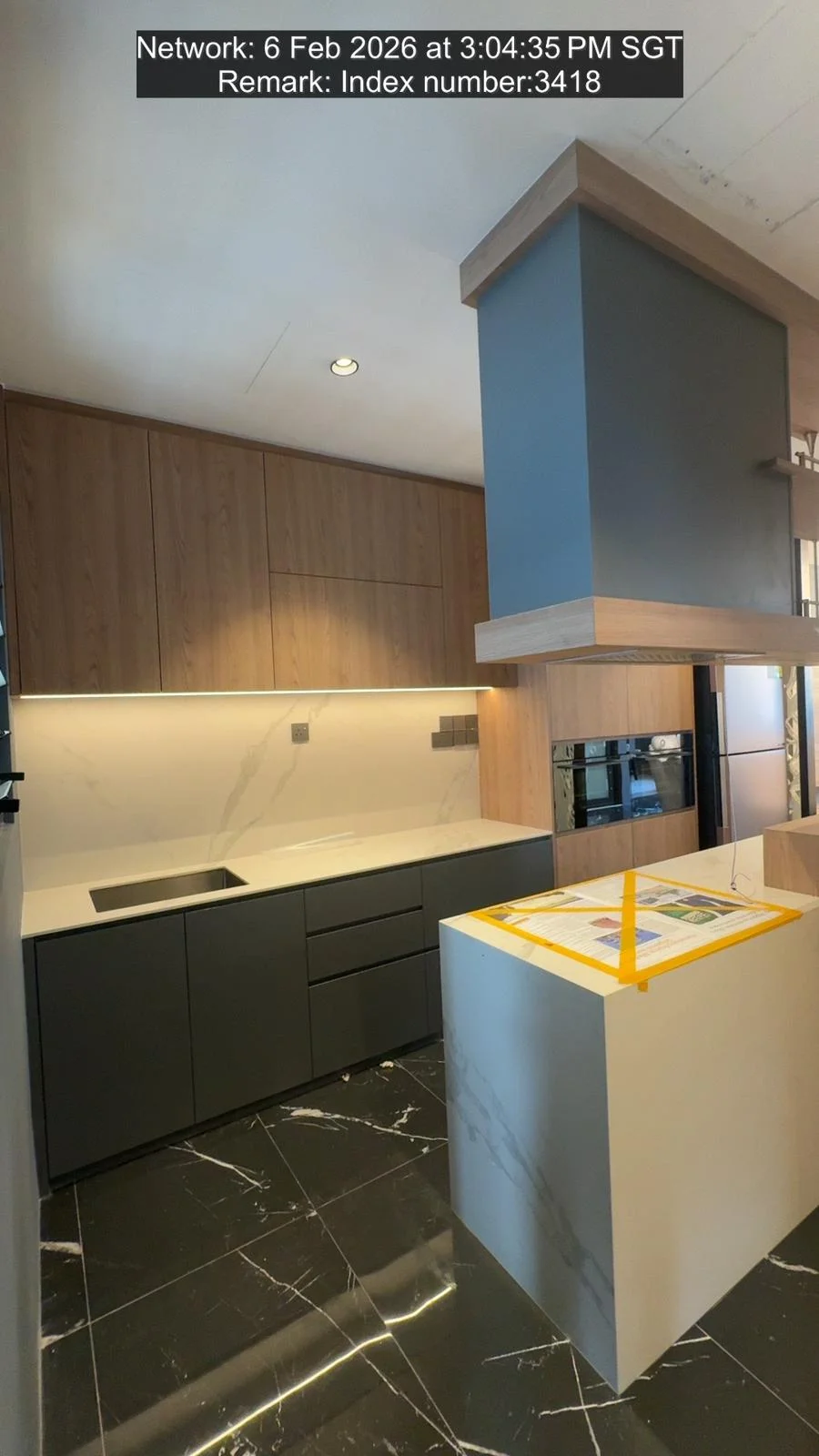
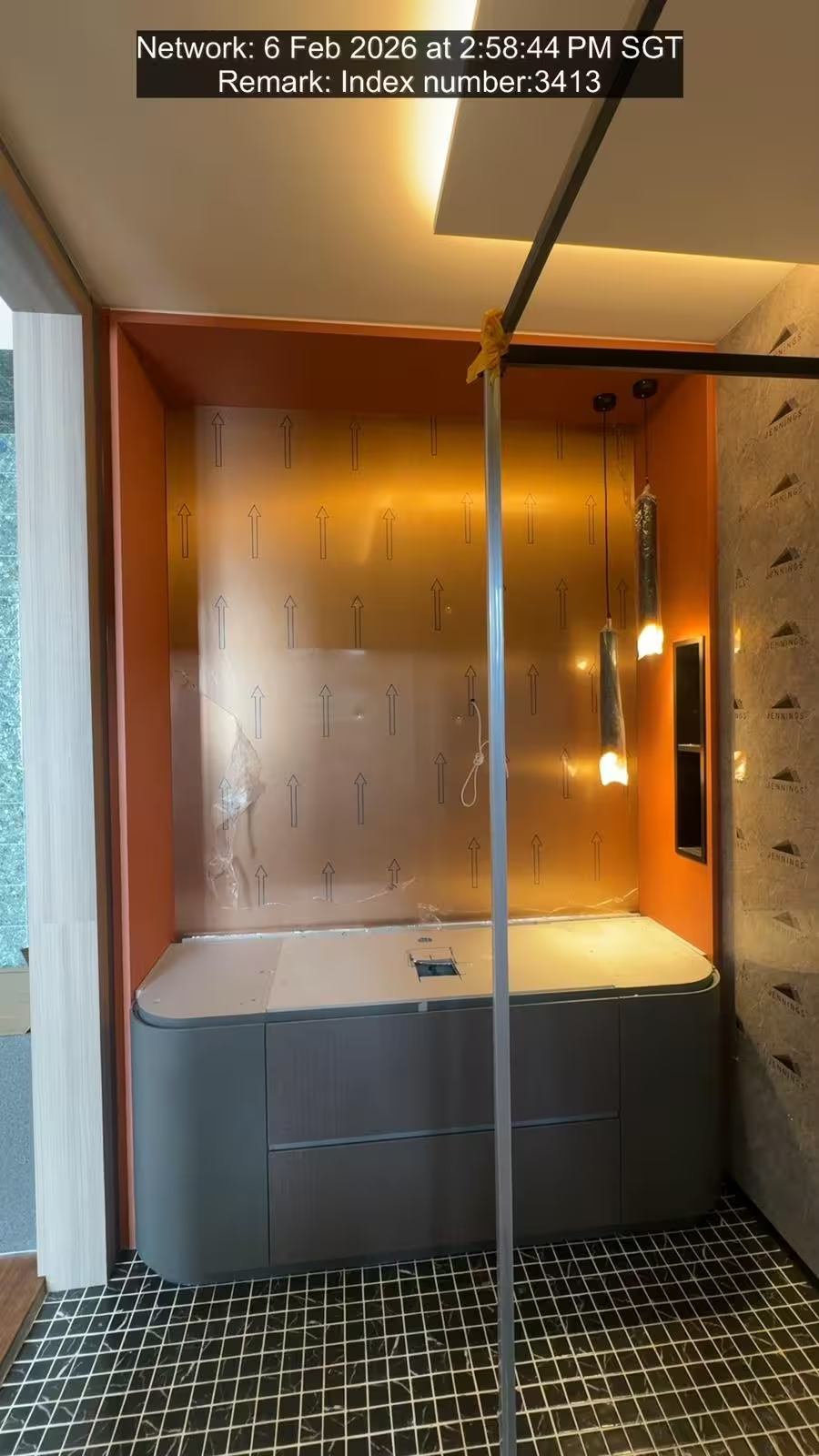
Before you fix a number in your head, it helps to understand why two kitchen islands that look similar can differ in price by several thousand dollars. The final figure depends on a combination of factors that interact with one another.
Size and footprint are the most obvious drivers. A compact island measuring around 90 cm by 120 cm will cost far less than an L-shaped or double-tier configuration. In Singapore’s typically compact HDB flats and condominiums, space itself is a constraint, which can limit your options but also keeps costs in check.
Materials account for a significant portion of the budget. Laminate and MDF are the most affordable options, but they can warp over time in Singapore’s humidity. Solid wood looks premium but requires maintenance. Aluminium, quartz, and engineered stone countertops sit in the mid-to-upper tier. Aluminium cabinetry in particular has gained traction because it is waterproof, fireproof, and resistant to termites — properties that matter greatly in Singapore’s tropical climate.
Integrated features push costs up considerably. An island with a built-in hob, a sink, electrical outlets, or deep drawer storage requires more complex fabrication and additional plumbing or electrical work. Each addition is a separate line item.
Labour and installation are often underestimated. Carpentry rates, delivery logistics, and the complexity of fitting an island into an existing kitchen layout all contribute. If walls or flooring need adjustment, those costs stack up quickly.
Before committing, it is worth going through a detailed kitchen renovation checklist singapore to map every potential expense before the first nail goes in.
Understanding how the market is structured helps you set realistic expectations. Below is a general pricing framework based on available data for Singapore in 2025.
Budget Tier | Estimated Cost (S$) | Typical Specifications |
|---|---|---|
| Entry-Level | S$3,000 to S$5,000 | Stationary island, laminate top, basic storage |
| Mid-Range | S$5,000 to S$9,000 | Custom build, quartz or solid surface top, integrated storage |
| Premium | S$9,000 to S$15,000+ | Full custom, premium materials, sink/hob integration, feature lighting |
Stationary kitchen islands, which require no plumbing or electrical work, sit at the lower end around S$3,000 to S$5,000, according to the 9creation 2025 cost breakdown. Fully bespoke builds with premium finishes can climb well past S$15,000 once installation and feature integration are factored in.
For those renovating a resale flat, costs may be higher because existing infrastructure may need upgrading. Reading up on resale hdb kitchen renovation in singapore before you plan will help you anticipate these additional considerations.
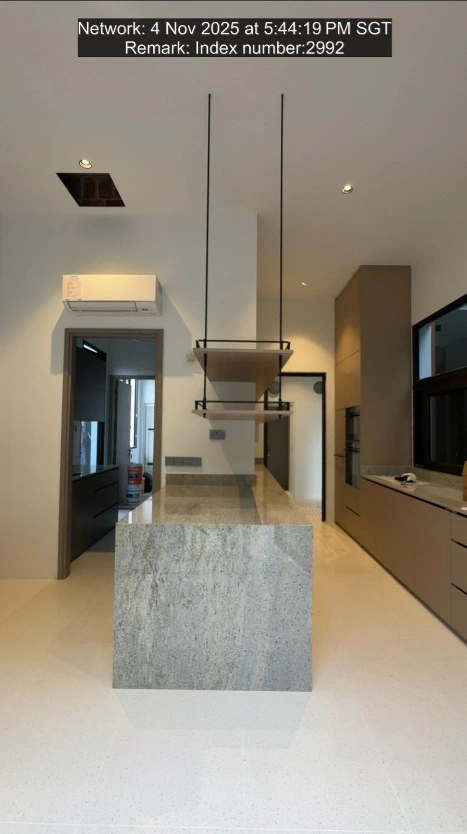
Singapore’s housing landscape is dominated by HDB flats, and any renovation here must comply with the Housing & Development Board’s guidelines. Not all kitchens have the floor space to accommodate an island, and structural changes require prior approval.
The HDB renovation guidelines state that works affecting structural elements, wet areas, or load-bearing walls need to be carried out by an approved contractor. If your island installation involves plumbing (for a sink) or electrical work, you will need a licensed plumber and a Licensed Electrical Worker respectively.
Understanding the hdb kitchen renovation rules singapore is an essential step before you commit any budget, particularly if you are planning to knock down any internal partitions or extend the kitchen footprint.
For condo owners, the management corporation (MCST) may have its own set of bylaws, so checking with your building management before starting any works is equally important.
This is one of the most common questions homeowners face, and the answer is not purely aesthetic. Each material has trade-offs that are particularly relevant to Singapore’s environment.
Aluminium kitchen cabinets and islands offer a number of advantages for the local climate. They are waterproof, which means no swelling or warping during the humid months. They are also termite-resistant and do not emit formaldehyde, which is an increasingly important consideration for families with young children or health-conscious homeowners. Maintenance is straightforward, and the lifespan far exceeds that of standard wood composites. T Se7en Alucraft, with over 30 years of experience in Singapore’s carpentry and aluminium industry, specialises in exactly this category, producing custom aluminium kitchen islands and cabinets built to withstand Singapore’s tropical conditions.
You can explore some of the available options through the aluminium kitchen units singapore range to get a sense of what custom aluminium fabrication looks like in practice.
Wood and wood composites remain popular for their warmth and versatility. Solid wood looks exceptional but comes at a premium and can respond poorly to humidity over time. MDF with laminate is the most budget-friendly option but may not last as long. Veneer offers a middle ground, providing the appearance of wood with slightly better moisture resistance.
Engineered stone and quartz countertops are widely chosen for island surfaces because they are non-porous, stain-resistant, and available in a wide range of finishes. They pair well with both aluminium and wood cabinetry.
For homeowners who want a classic look, shaker style kitchen cabinets singapore offer a timeless option that can complement an island design beautifully, particularly in larger condo kitchens where there is room to carry the visual style through the whole space.
Many homeowners focus on material costs and are caught off-guard by labour and installation fees. These can account for 20 to 35 percent of your total kitchen island budget, depending on the complexity of the project.
Key labour cost components include:
It is also worth asking your contractor about what happens after the installation. Warranty terms, defect liability periods, and after-sales support vary between firms. T Se7en Alucraft, for instance, provides end-to-end support from design consultation through to post-installation follow-up, which is part of why homeowners tend to return for subsequent projects.
Singapore’s interior design scene has its own distinct flavour, shaped by a mix of space constraints and a strong preference for functional aesthetics. Several design directions are gaining traction in 2025.
Minimalist with integrated storage remains the dominant trend in HDB homes, where every square centimetre counts. Islands with concealed drawers, pull-out shelves, and hidden bins are particularly popular.
Japandi and Scandi-influenced designs combine clean lines with natural textures. Pale wood tones paired with matte surfaces or soft stone countertops are a common choice.
Two-tone islands where the island cabinetry is a contrasting colour to the perimeter cabinets have become a signature look in larger condominiums. Navy, forest green, and charcoal are frequently paired with white or light grey kitchen surrounds.
Multi-functional islands with breakfast bar overhangs, built-in wine racks, and even small prep sinks have grown in popularity as homeowners look to consolidate dining and cooking into one zone, particularly given Singapore’s compact living conditions.
For a broader view of how Singapore homeowners are approaching storage-led design across the home, the wardrobes in singapore guide offers useful perspective on how integrated cabinetry thinking translates from kitchen to bedroom and beyond.
According to Style Degree’s kitchen island design breakdown, HDB-friendly island designs are increasingly focused on portability and modularity, allowing homeowners to adapt their layout without major structural intervention.
When planning a kitchen renovation, it helps to understand how island costs sit within the broader picture of cabinetry spending. According to Renovation Contractor Singapore’s 2025 guide, full kitchen cabinet sets in Singapore can range from S$3,000 for basic laminate configurations to upwards of S$15,000 for premium materials with custom joinery.
This means that adding a kitchen island represents a meaningful additional investment on top of your base cabinetry costs. The combined outlay for a full kitchen renovation including cabinetry, countertops, appliances, and an island can easily reach S$25,000 to S$50,000 for a well-specified mid-range project.
A useful reference point: the Singapore renovation market is growing steadily, with total industry projections reaching S$37.2 billion for 2024 to 2025, according to Haus Bedroom (2025). This reflects a population that is investing meaningfully in their living spaces, and kitchen renovations represent one of the highest-value categories within that spend.
The Singapore Furniture and Home Decor Market is also projected to expand from USD 1,130 million in 2025 to USD 1,552 million by 2031, at a forecast compound annual growth rate of 5.43 percent, indicating sustained consumer interest in quality home interiors.
Understanding the full picture of kitchen island cost Singapore homeowners actually face, from materials and fabrication through to labour, compliance, and feature integration, puts you in a far stronger position when speaking to contractors and comparing quotes. Costs range meaningfully from S$3,000 at the entry level to well above S$15,000 for a premium bespoke build, and the right choice for your home depends on your space, your cooking habits, and your long-term plans for the property.
T Se7en Alucraft has spent over 30 years helping Singapore homeowners make exactly this kind of decision with confidence. Whether you are planning a simple stationary island or a fully custom aluminium build with integrated features, the next step is a straightforward one: contact the team at T Se7en Alucraft via +65 9615 9273 or sales@tse7en.com, or visit www.tse7en.com to schedule your consultation and get a cost breakdown built around your specific home.
Getting the right guidance from the start is what separates a kitchen island you will love for twenty years from one that causes headaches six months in. At T Se7en Alucraft, our consultants bring over 30 years of hands-on experience in custom aluminium cabinetry, helping Singapore homeowners design kitchen islands that are built for durability, daily use, and the realities of local living. Book your appointment with T Se7en Alucraft today and get a personalised consultation that covers materials, sizing, HDB compliance, and a clear cost breakdown tailored to your home. Call us on +65 9615 9273, email sales@tse7en.com, or reach out via WhatsApp to schedule a video call or virtual showroom tour at a time that suits you.
In Singapore, a kitchen island should cost between S$3,000 and S$15,000 depending on size, materials, and integrated features.
A basic stationary island with a laminate surface sits at the lower end of that range, around S$3,000 to S$5,000. A fully custom build using quartz countertops, aluminium cabinetry, and integrated plumbing or electrical fittings will push well past S$9,000. Your budget should also account for labour, installation, and any HDB compliance requirements, which can add meaningfully to the total.
The average kitchen island cost Singapore homeowners pay falls between S$5,000 and S$9,000 for a mid-range custom build with decent materials and standard storage features.
According to the 9creation 2025 cost guide, stationary islands start at around S$3,000, while bespoke builds with premium finishes can reach S$15,000 or beyond. The average figure shifts depending on whether the island is freestanding or built-in, and whether it includes any wet or electrical work. Getting multiple quotes from licensed contractors is the best way to establish what the average looks like for your specific requirements.
Kitchen cabinet costs in Singapore range from approximately S$3,000 for basic laminate configurations to S$15,000 or more for premium custom joinery, according to Renovation Contractor Singapore’s 2025 guide.
The material you choose drives much of the variation: MDF with laminate sits at the budget end, while solid wood, aluminium, and engineered stone finishes command higher prices. Aluminium kitchen cabinets are increasingly popular because they are waterproof and termite-resistant, properties that make them a sound long-term investment in Singapore’s humid climate. A full kitchen renovation including cabinets, countertops, appliances, and an island can total S$25,000 to S$50,000 for a well-specified mid-range project.
For most Singapore homeowners with sufficient kitchen space, a kitchen island adds meaningful functional value and is widely considered worth the investment.
An island provides additional prep surface, extra storage, and often doubles as a casual dining or socialising spot, which is particularly useful in open-plan condo layouts. In HDB flats, the answer depends heavily on the floor plan: a four-room or five-room flat with a larger kitchen can usually accommodate an island comfortably, while smaller flats may find the clearance requirements too restrictive. According to an HDB Renovation Survey (2024), 78 percent of homeowners renovate to add personality to their homes, and a kitchen island is one of the most visible ways to achieve that. If your space allows it and your budget is realistic, the return in daily usability and resale appeal is generally positive.
The latest kitchen island trends in Singapore for 2025 centre on multi-functionality, two-tone cabinetry, and materials that hold up well in the local climate.
Minimalist islands with fully integrated storage, including concealed drawers and pull-out bins, remain dominant in HDB homes where space efficiency is non-negotiable. Two-tone designs, where the island is finished in a contrasting colour such as navy or forest green against white perimeter cabinets, have become a signature look in larger condominiums. Japandi-influenced aesthetics combining clean lines with natural textures are also gaining ground. On the materials side, aluminium cabinetry paired with quartz or sintered stone countertops is increasingly the specification of choice for homeowners who want longevity without ongoing maintenance.
Speak to a professional now and get personalized consultation and guidance for your next renovation. Work with a team you can trust!
Home Blog HIP is HDB’s upgrading programme for older flats. It covers compulsory repairs such as concrete defects and ageing waste pipes at a very...



3 responses