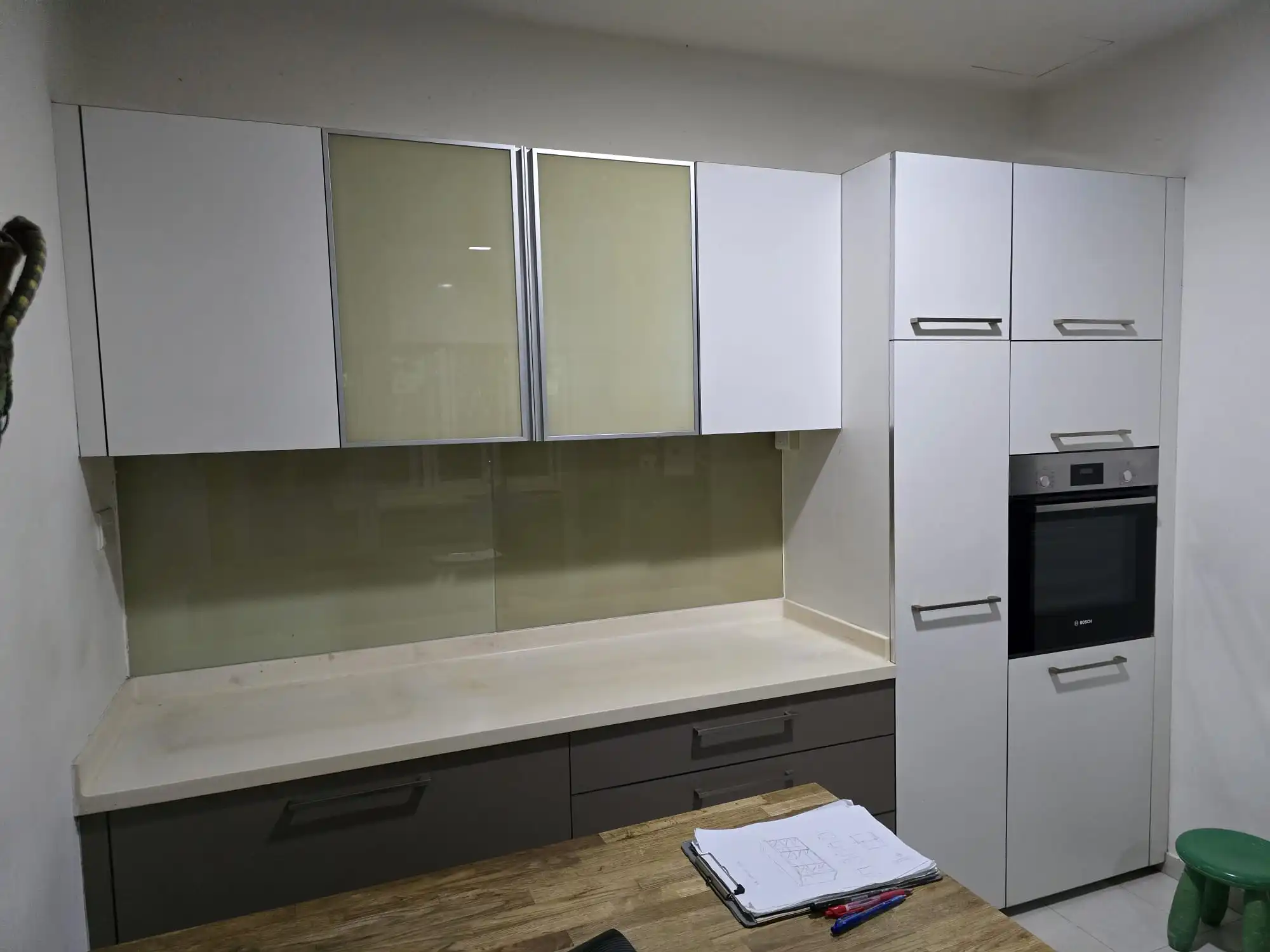
Kitchen cabinet hardware includes the hinges, drawer runners, handles, lift-up systems, pull-out fittings, and internal accessories that make cabinets open, close, slide, lift, and stay aligned. In Singapore kitchen renovations, the most important hardware choices are usually hinges, drawer runners, and handles because they directly affect durability, daily usability, noise control, storage access, and long-term maintenance.
Good cabinet hardware should match the cabinet layout, door size, drawer load, material, and daily workflow. A well-planned kitchen does not only look good after installation; it should also feel smooth, quiet, stable, and easy to use years after renovation.
For broader planning, review Kitchen Cabinets Singapore.
Kitchen cabinet hardware refers to the functional components that allow cabinet doors, drawers, and storage sections to open, close, slide, lift, and stay aligned.
The main hardware categories usually include:
Each category affects a different part of cabinet performance. Hinges control door movement and alignment. Drawer runners control sliding performance and weight support. Handles affect grip and ease of use. Lift-up and pull-out systems improve access in specific cabinet zones.
Cabinet hardware is not only a finishing detail. It affects how the kitchen works every day.
In practical terms, hardware affects:
Poor hardware planning can lead to misaligned cabinet doors, stiff drawer movement, limited storage access, and avoidable service issues after installation.
Cabinet hinges connect cabinet doors to the cabinet body. They determine how the door opens, how smoothly it closes, and how accurately it sits after adjustment.
Key hinge considerations include:
Soft-close hinges slow the closing motion of the cabinet door. This reduces impact, improves closing control, and helps the cabinet feel quieter in daily use.
Standard hinges perform the basic opening and closing function without a built-in soft-close mechanism. They can still work well when the hinge quality matches the door size and installation is accurate.
Concealed hinges are commonly used in modern kitchen cabinets because they are hidden when the cabinet door is closed. They also allow adjustment after installation in many cabinet systems.
Drawer runners control how drawers open, close, and carry weight. In many kitchens, drawer performance has a direct effect on workflow because drawers often store cookware, utensils, and frequently used items.
Key runner considerations include:
Partial-extension runners do not expose the full drawer depth when opened. They may suit lighter-use zones, but rear access is more limited.
Full-extension runners improve access to the entire drawer interior. This is especially useful in compact kitchens and deeper storage units.
Soft-close runners improve movement control and reduce abrupt closing impact.
These systems are often selected when smoother movement and better drawer support are priorities. The main issue is whether the runner system matches drawer width, load, and usage frequency.
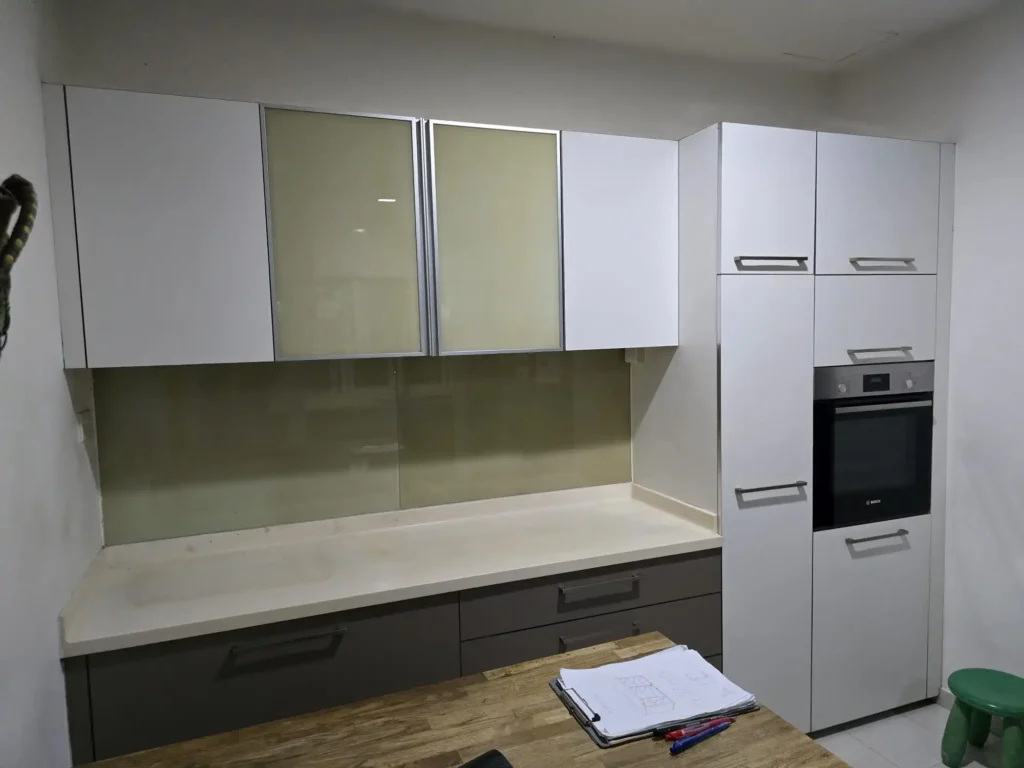
Cabinet handles affect both usability and cabinet appearance. They are touched frequently, so grip comfort and placement matter.
Handle selection should consider:
A good handle should be easy to grip, easy to clean, and proportionate to the cabinet front. For style-led options, review Choosing Top Cabinet Handles in Singapore.
Handleless systems reduce visible hardware on the cabinet front. Common options include finger-pull details and push-to-open systems.
These systems can create a cleaner appearance, but they should still be reviewed for daily practicality, cleaning behavior, and alignment accuracy.
Lift-up hardware is often used for upper cabinet doors that open upward instead of sideways. This can improve access in some layouts, especially where side-opening doors feel restrictive.
Lift-up systems should be selected based on:
Pull-out systems improve access to storage zones that are harder to use with fixed shelving alone. They are especially useful when kitchen workflow and organization are priorities.
Common examples include:
For related storage and fitting ideas, review Kitchen Cabinet Accessories Singapore and Kitchen Storage Cabinets.
These hardware categories usually have the biggest functional impact:
These can be useful when the cabinet design or layout benefits from them:
These often improve user experience when budget allows:
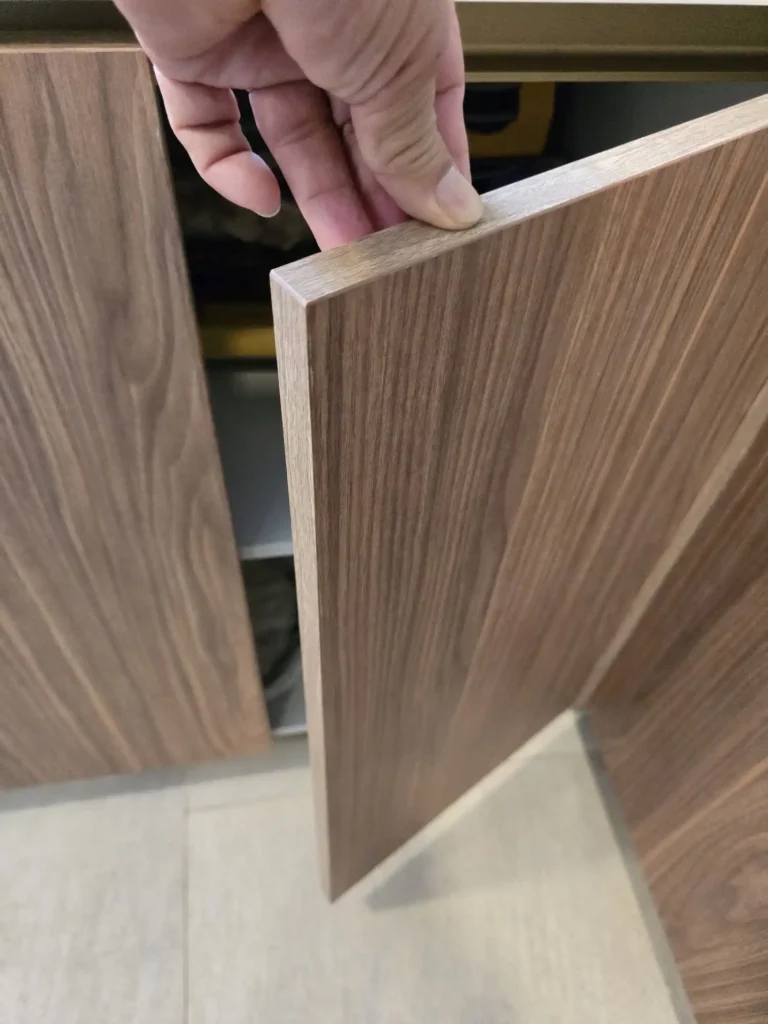
The hardware that usually affects daily use the most includes:
Repeated-access zones usually show hardware weaknesses first. That is why these areas should be prioritized during planning.
When the renovation budget is limited, prioritize hardware in this order:
It is usually better to choose reliable essential hardware across the whole kitchen than to overspend on low-impact upgrades.
Yes. Cabinet material and cabinet construction can affect hardware compatibility, installation method, and long-term performance.
This is especially relevant when comparing cabinet systems in humid conditions or when reviewing different cabinet materials. Related comparisons include Aluminium vs Wood Kitchen Cabinets Singapore and Aluminium vs Melamine Kitchen Cabinets Singapore.
Before selecting hardware, confirm the full cabinet plan first.
Use this checklist:
For pre-purchase review, see Kitchen Cabinet Quotation Checklist Singapore.
Before fabrication or installation, ask the contractor to confirm:
Dimensional planning also matters, so this stage should align with Kitchen Cabinet Site Measurement.
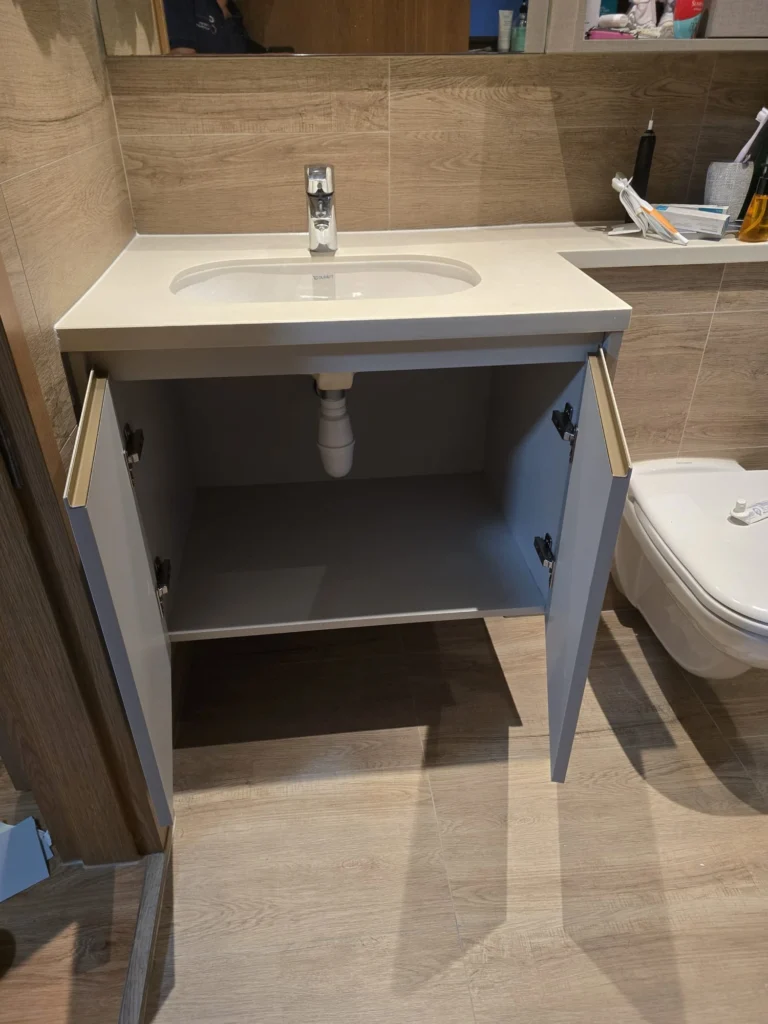
Even good hardware can perform poorly if installation is inaccurate. Door alignment, hinge placement, runner leveling, handle centering, and front-panel spacing all affect the final result.
During installation, the contractor should verify:
For more on fitting workflow, review Kitchen Cabinet Installation Process Singapore.
Because hardware includes moving parts, it is often the first area where small alignment or usage issues appear after installation.
When reviewing a cabinet project, ask:
For aftercare expectations, review Kitchen Cabinet Warranty Guide Singapore.
Some common hardware mistakes include:
In Singapore kitchen renovations, hardware planning often needs to consider:
Maintenance planning is also affected by cleaning conditions and moisture-prone zones, especially around sink areas.
Kitchen cabinet hardware plays a direct role in how a kitchen performs after renovation. Hinges, drawer runners, handles, lift-up systems, and pull-out fittings affect daily usability, storage access, movement quality, and long-term maintenance. For Singapore homeowners, the best approach is to evaluate hardware as part of the full cabinet system so that layout, cabinet material, installation quality, and aftercare work together.
Planning a new kitchen cabinet project in Singapore? Speak with T Se7en Alucraft after your layout and storage needs are clear so you can review cabinet hardware, fitting options, installation details, and warranty coverage before fabrication starts.
The most important hardware usually includes hinges, drawer runners, and frequently used handles because these components affect daily use, movement quality, and long-term cabinet performance.
Soft-close hinges are often worth considering because they reduce door impact, improve closing control, and help cabinets feel quieter and smoother in daily use.
Soft-close hinges slow the door during closing, while standard hinges do not include that controlled closing function.
Full-extension runners are often better for kitchens that need deeper drawer access, especially in compact layouts or high-use storage zones.
Yes. Drawer runners affect movement smoothness, weight support, storage access, and long-term usability.
On a renovation budget, prioritize hinges, drawer runners, and handles first.
Yes. Cabinet hardware includes moving parts, so it affects adjustment needs, wear over time, and after-installation servicing.
Hardware should be chosen after the cabinet layout, door types, and storage needs are confirmed, but before fabrication and installation begin.
Homeowners should confirm hinge type, runner type, soft-close inclusion, handle system, pull-out fittings, and any post-installation adjustment process before fabrication.
Speak to a professional now and get personalized consultation and guidance for your next renovation. Work with a team you can trust!
Home Blog HIP is HDB’s upgrading programme for older flats. It covers compulsory repairs such as concrete defects and ageing waste pipes at a very...