Accurate kitchen cabinet site measurement helps homeowners get a more reliable quote, avoid fitting mistakes, and reduce renovation delays. Before requesting a kitchen cabinet quote in Singapore, measure wall lengths, ceiling height, cabinet depth, countertop area, appliance sizes, sink position, window height, door clearance, plumbing points, electrical points, and any obstructions.
Site measurement is one of the most important steps in kitchen renovation planning. Whether you are choosing custom cabinets, modular cabinets, aluminium kitchen cabinets, or ready-made cabinets, correct measurements help contractors understand your kitchen layout and prepare a more accurate quotation. For a wider property comparison, you can also read T Se7en Alucraft guide to kitchen renovation.
This guide explains what to measure before getting a kitchen cabinet quote, how to record measurements clearly, and why professional site measurement is still needed before fabrication begins.
The key to obtaining an accurate kitchen cabinet quote lies in correct site measurements. Here’s a breakdown of the essential dimensions you need to consider before you receive your quote.
The first step in ensuring accurate site measurements for your kitchen cabinets is measuring the available cabinet space. You will need to measure both height and width.
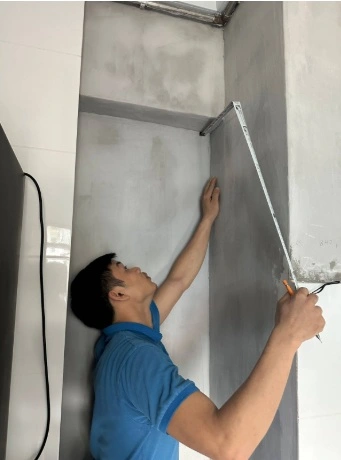
Height of Cabinet Spaces: Measure from the floor to ceiling to determine the maximum height for your cabinets. Take into account any obstructions such as lights, ventilation systems, or ceiling slopes.
Width of Cabinet Spaces: Measure the width available for your upper cabinets (wall-mounted) and base cabinets (floor-mounted). Make sure to measure at multiple points along the wall since walls often have irregularities that could affect the fit of your cabinets.
Depth of Cabinet Spaces: Standard base cabinets are typically 24 to 30 inches deep. Make sure to also account for countertop overhangs, pipes, and electrical outlets.
To make sure your measurements are perfect, you can always consult a kitchen cabinet contractor in Singapore who can offer professional guidance and ensure your cabinets fit perfectly.
Accurately measuring your countertop space is essential for ensuring that the countertop fits perfectly with the cabinets. This is especially important when calculating the countertop material needed and getting an accurate price.
Length of the Countertop: Measure the total length of the countertop where your cabinets will be installed, including any overhangs for seating areas or extended countertop space.
Width of Countertops: Standard countertop widths range from 24 to 30 inches, but some designs, like kitchen islands, may require wider surfaces.
Sink and Appliance Cutouts: If your countertop will feature a sink, stove, or other appliances, measure the dimensions for the required cutouts. Be sure to consider plumbing and electrical connections that may affect placement.
Want to know more about possible delays? Check out our Kitchen Renovation Timeline Delays Checklist to stay on track during your project.
Measuring the door and window locations is important to ensure your cabinets don’t interfere with natural light, ventilation, or room functionality.
Height and Width of Doors: Measure all kitchen doors (entry doors, pantry doors) to ensure cabinets don’t block these spaces or interfere with their functionality. Be sure to measure door swings for proper clearance.
Window Placement: Measure the height from the floor to the bottom of your windows and the width across. This will allow you to place cabinets without obstructing light or airflow.
It is essential to measure the floor and wall space in your kitchen to determine how many cabinets can fit, both in terms of height and width.
Floor Space: Measure the total square footage of your kitchen floor to ensure that the kitchen remains functional and spacious. Overcrowding the kitchen with too many cabinets can affect the overall flow and function.
Wall Space: Measure the available wall space where wall-mounted cabinets will be placed. This ensures that the wall cabinets fit properly without interfering with electrical outlets or light switches.
When comparing kitchen renovation quotes, it’s important to know the difference between an itemized quote and a package quote. Our article on Itemized vs Package Kitchen Renovation Quotes can help you understand the details.
If you have built-in appliances (e.g., refrigerator, dishwasher, oven), these will impact the placement of your cabinets. These appliances need dedicated spaces, so it’s essential to measure accurately.
Height, Width, and Depth of Appliances: Measure your built-in appliances, ensuring the cabinetry can accommodate them.
Clearance for Appliances: Make sure there’s enough clearance for the appliance doors to open without obstruction. Measure the depth and width to account for appliances like refrigerators that have doors which swing out.
When measuring for your kitchen cabinets, ensure accuracy with these best practices:
Double-Check Dimensions: Measure twice, especially for larger spaces or irregular walls. Even small differences can result in misfitting cabinets.
Use Professional Measuring Tools: Consider using a laser measure for precise results. This is especially helpful for measuring large spaces or non-standard areas like angled walls.
Take Photos of Your Kitchen Layout: When possible, take clear photos to help visualize the space and share them with your contractor. This helps ensure there’s no confusion about your measurements.
Need Help with Your Kitchen Cabinet Measurements? Schedule a Free Consultation Today!
Having a kitchen layout plan will help ensure you measure the right areas and understand the space better. Use this layout to mark where cabinets, countertops, and appliances will be.
If you’re uncertain about your measurements or want the most accurate results, schedule a consultation with a professional measuring service. They’ll ensure that everything is measured precisely, reducing the chance for error.
Once the measurements are complete, share them with your contractor. This ensures the quote is based on the exact dimensions of your kitchen and that the installation process will run smoothly.
Singapore’s humid climate and moisture levels mean that certain materials, like particleboard or wood, may be vulnerable to water damage. Accurate kitchen cabinet measurements help to ensure your cabinets are fitted properly and protect your investment.
For a more in-depth understanding of how moisture affects your kitchen cabinets, see our guide on How to Prevent Moisture Damage in Your Kitchen Cabinets.
Accurate site measurements for your kitchen cabinets are essential for ensuring that everything fits perfectly and your renovation goes smoothly. By measuring your cabinet spaces, countertops, floor space, and built-in appliances, you can receive an accurate quote and avoid costly mistakes.
If you’re ready to start your renovation and need professional help, consider reaching out to our kitchen cabinet contractor in Singapore for expert advice and guidance on the best kitchen design for your space.
For more about our kitchen cabinets in Singapore, visit our page to explore various designs and options that fit your needs. You can also read our helpful resources, such as the Kitchen Renovation Timeline Delays Checklist and How to Choose the Best Kitchen Cabinet Materials.
Measuring for kitchen cabinets is crucial for getting an accurate quote. Start by measuring the height, width, and depth of the spaces where the cabinets will go. Don’t forget to measure the countertop space for any cutouts like sinks or stoves. You also need to consider the door and window placements, floor space, and the size of any built-in appliances like your fridge or dishwasher.
Many kitchens in Singapore have slightly uneven walls, which can make cabinet installation tricky. It’s important to measure the space at multiple points along the wall to account for irregularities. If your walls are significantly slanted or uneven, consider opting for custom kitchen cabinets to ensure a perfect fit. You may also want to consult with a kitchen cabinet contractor to help with precise measurements.
Yes, you can measure your kitchen cabinets yourself, but accuracy is key. Use a high-quality measuring tape and check each dimension at least twice to avoid errors. If you feel unsure about your measurements, it’s always a good idea to get professional assistance to ensure everything is accurate.
To measure for kitchen countertops, first measure the length and depth of the countertop area. Don’t forget to include cutouts for sinks, stoves, or any other appliances that will be installed. For accurate results, especially if you’re going for custom countertops, it’s best to take your measurements twice.
Answer:
For built-in appliances such as fridges, dishwashers, or ovens, measure the height, width, and depth of each appliance. Make sure to leave enough space for clearance so the appliance doors can open fully. For the best results, make sure your contractor uses these measurements to plan cabinet placement effectively.
Speak to a professional now and get personalized consultation and guidance for your next renovation. Work with a team you can trust!

Home Blog When choosing between aluminium profile and panel kitchen cabinets, profile designs use an extruded aluminium frame with an infill (glass, acrylic, or compact...