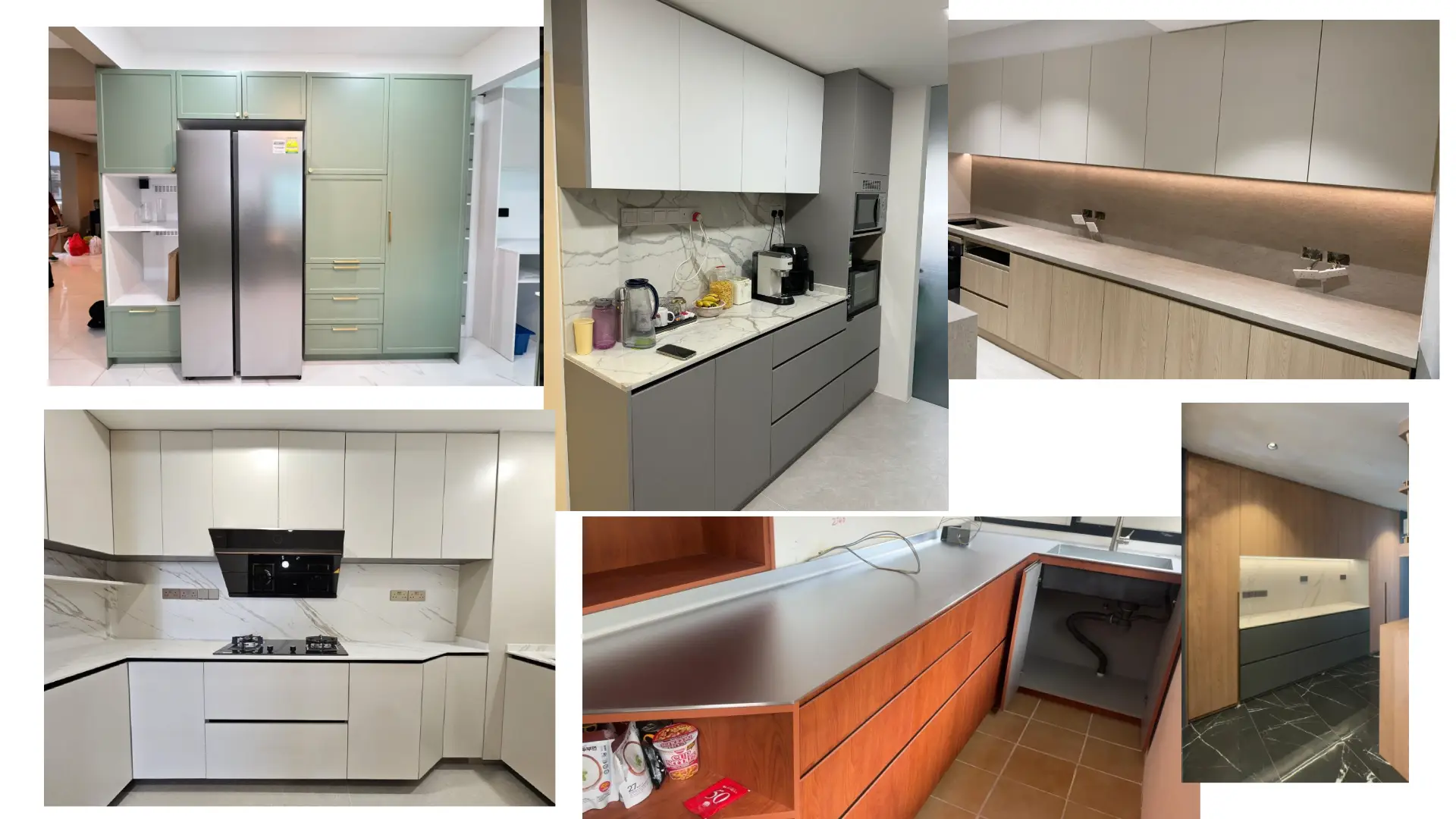

If you’ve decided on an aluminium kitchen cabinet for your renovation, the next big decision isn’t whether aluminium is the right material — it’s how it should look. Apart from choosing traditional laminate like you would for plywood carpentry, aluminium kitchen cabinets today come in a surprisingly wide range of colours and finishes, from powder coat, PET-G, laminated solid colour, to soft woodgrain textures that are nearly impossible to tell apart from real timber.
This guide walks through every major finish and colour option available for aluminium kitchen cabinets in Singapore, how they perform in real HDB and condo kitchens, and how to choose one that suits your space, lighting, and lifestyle — not just what looks good in a showroom photo.
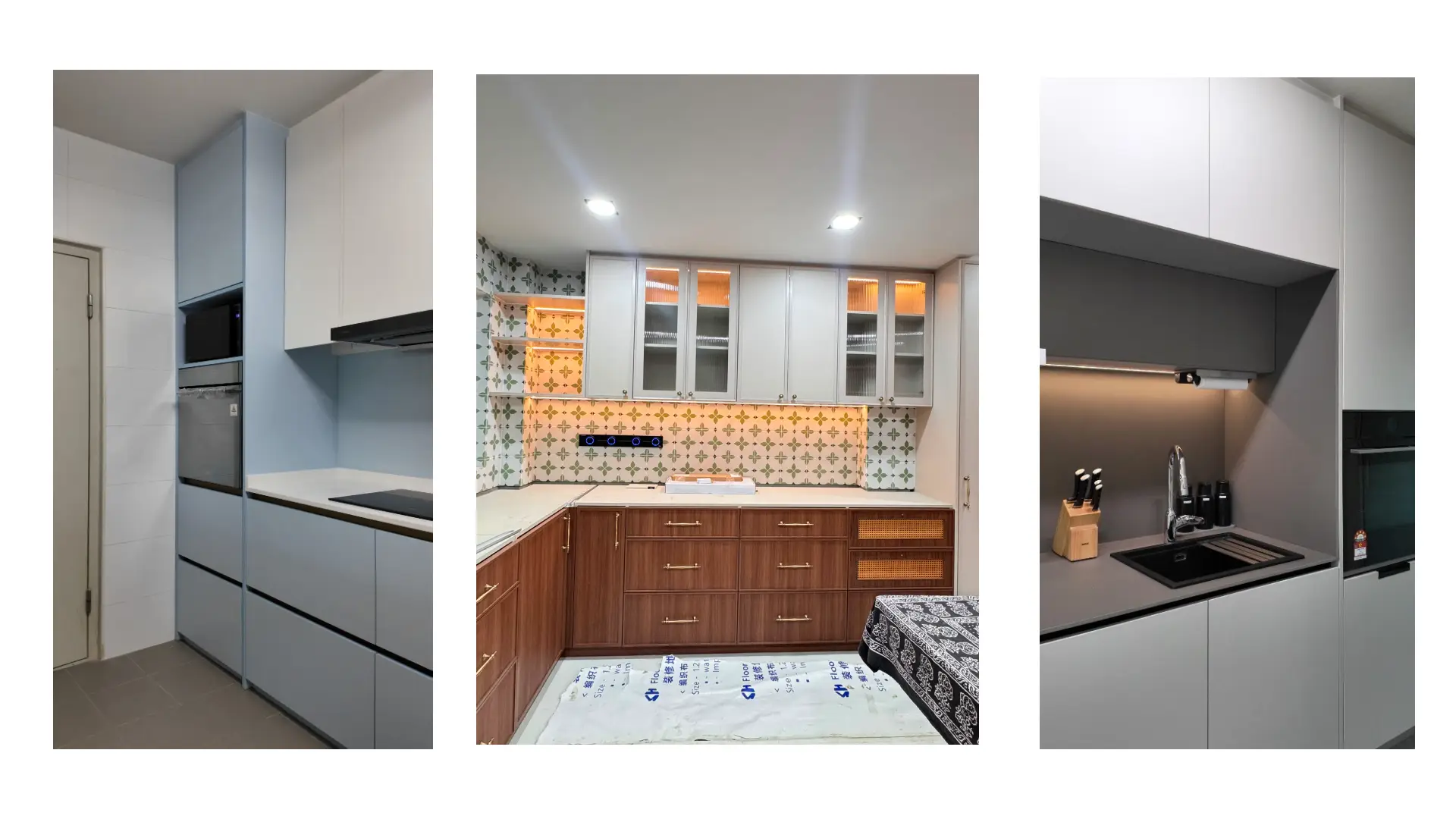
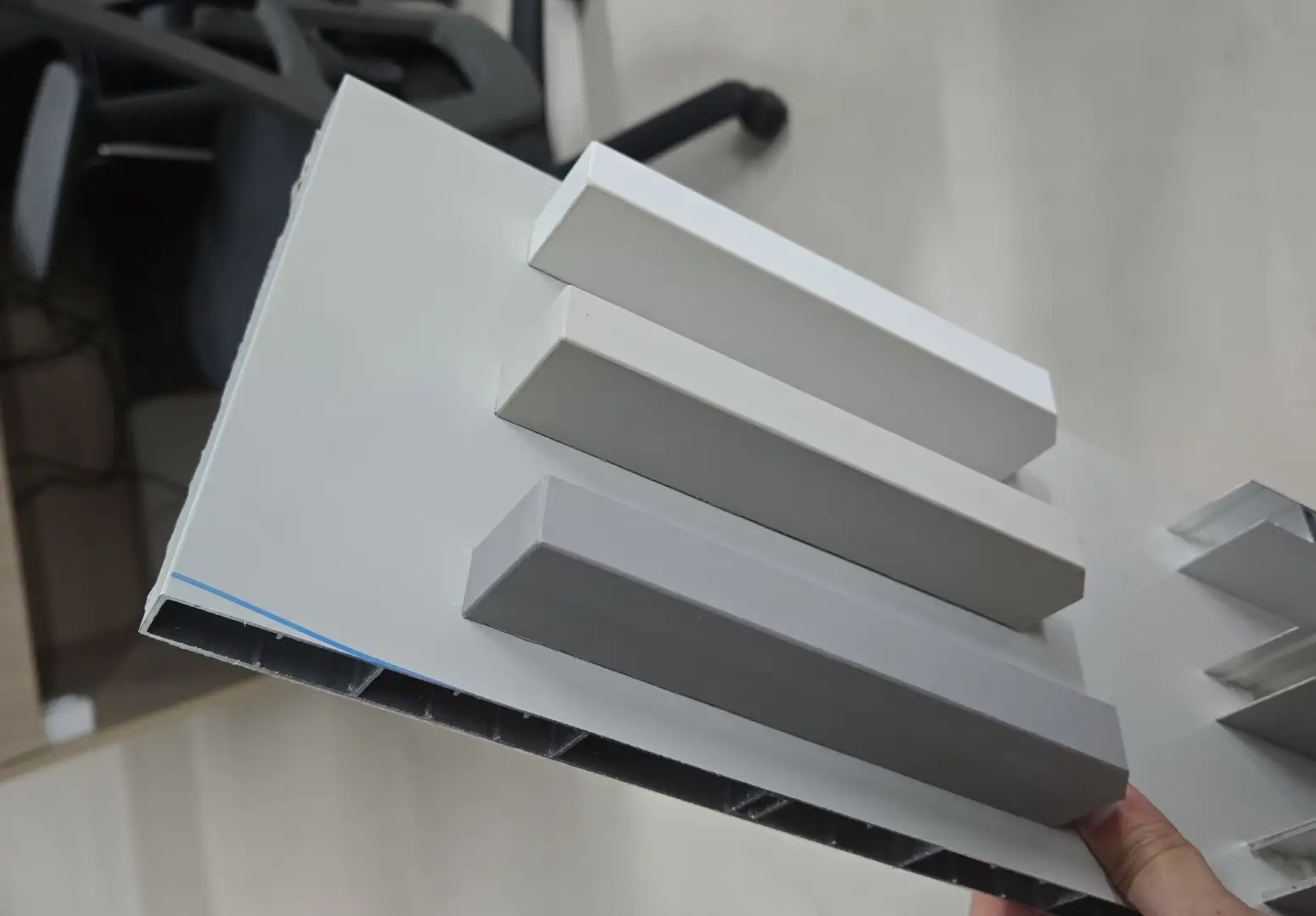
Aluminium kitchen cabinets despite being panels just like plywood carpentry, are built slightly differently from the traditional carpentry. The cabinet frame is aluminium, but the visible panel — the part you actually see and touch — is usually a surface layer that’s coated on top of the panel surface. This construction method is exactly why colour and finish options are so flexible: the frame stays structural and rust-resistant, while the surface can be customized between paint finishes, laminates, or printed films without affecting the cabinet’s core strength and shear properties.
Solid-colour plastic laminate cabinets, where the colour is baked into a single material layer is also an option. With aluminium systems, manufacturers can layer different finishes — powder coating, UV printing, PVC film, or brushed metal texturing — onto the same base structure, which is why the catalogue of options keeps growing every year.
If you haven’t yet decided whether aluminium is the right material for your kitchen at all, it’s worth reading our guide on whether aluminium kitchen cabinets are the right choice for your home before diving into colours.
Before picking a colour, it helps to understand the finish categories, since the same colour can look completely different depending on which finish it’s applied with.
Powder coating is an electrostatically applied dry powder that’s cured under heat, forming a hard, even, non-reflective layer directly on the aluminium surface. It’s the most popular finish for aluminium kitchen cabinets in Singapore right now because it hides fingerprints and water spots far better than glossy surfaces — a real advantage in a humid, high-touch kitchen environment.
Matte finishes also tend to feel more premium and contemporary, which is why they dominate minimalist and Scandinavian-inspired kitchen designs.
Glossy aluminium cabinet panels reflect light and make small kitchens feel brighter and more spacious. The trade-off is maintenance: glossy surfaces show fingerprints, water marks, and dust more visibly, so they generally need more frequent wiping to stay looking sharp. Gloss finishes work well in kitchens with good ventilation and lower daily hand contact, such as a dry kitchen or display-style wet kitchen
This is one of the most requested finishes today because it delivers a genuine timber look — walnut, oak, teak — without any of the moisture, warping, or termite issues that come with real wood or wood veneer. The woodgrain pattern is typically UV-printed or laminated onto the aluminium panel with a textured overlay, so it has visual depth rather than looking like a flat photo of wood.
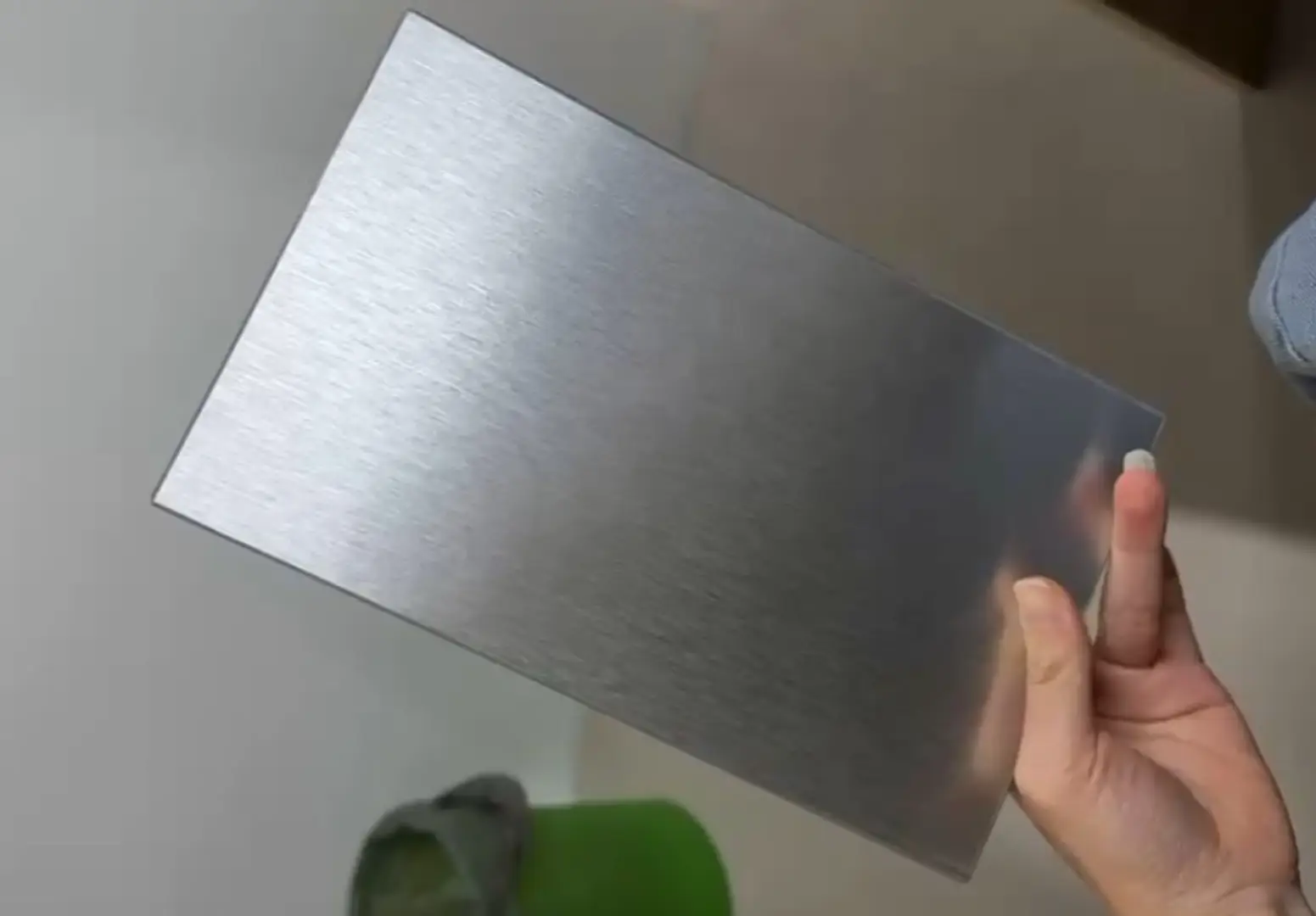
A brushed or metallic finish leaves the aluminium’s industrial character more visible, with fine linear texturing that catches light differently depending on the angle. This finish suits contemporary, loft-style, or “industrial minimalist” kitchens, and pairs particularly well with stainless steel appliances and black hardware.
This category covers flat, uniform colours — whites, greys, sage greens, navy blues — applied as a laminate or PVC film over the aluminium frame. It’s the most versatile finish in terms of colour range, since manufacturers can match almost any RAL or Pantone-style colour code.
Colour trends shift a little each year, but these have remained consistently popular in Singapore homes.
Matte black aluminium kitchen cabinets have become the signature look for modern Singapore kitchens over the past few years. They pair well with white or light-coloured countertops, gold or black hardware, and open-concept layouts. The main consideration: matte black can make a small, poorly lit kitchen feel closed-in, so it works best with good lighting or when balanced with a lighter countertop and backsplash.
Muted greens have moved from “trendy” to a mainstay choice, especially for homeowners who want warmth and personality without going too bold. Sage green aluminium cabinets tend to pair beautifully with brass hardware, timber flooring, and white stone countertops.
For homeowners who want the cosiness of a timber kitchen without the maintenance concerns, woodgrain-finish aluminium cabinets remain one of the top choices. They work especially well in open-plan HDB flats where the kitchen flows into the living area, since the warm tone bridges both spaces visually.
Still the safest and most resale-friendly option. White and off-white aluminium cabinets make small kitchens feel larger and brighter, and they’re the easiest colour to match with any countertop or backsplash material later on.
A middle ground between white and black, grey-toned aluminium cabinets are popular for homeowners who want a modern look without commiting to a high-contrast colour scheme. Greige (grey-beige) in particular pairs well with warm lighting.
A bolder but increasingly common choice, navy blue aluminium cabinets add depth and personality, especially in kitchens with brass or gold-toned fittings. It reads as more “designed” than black while still feeling grounded and timeless rather than trendy.
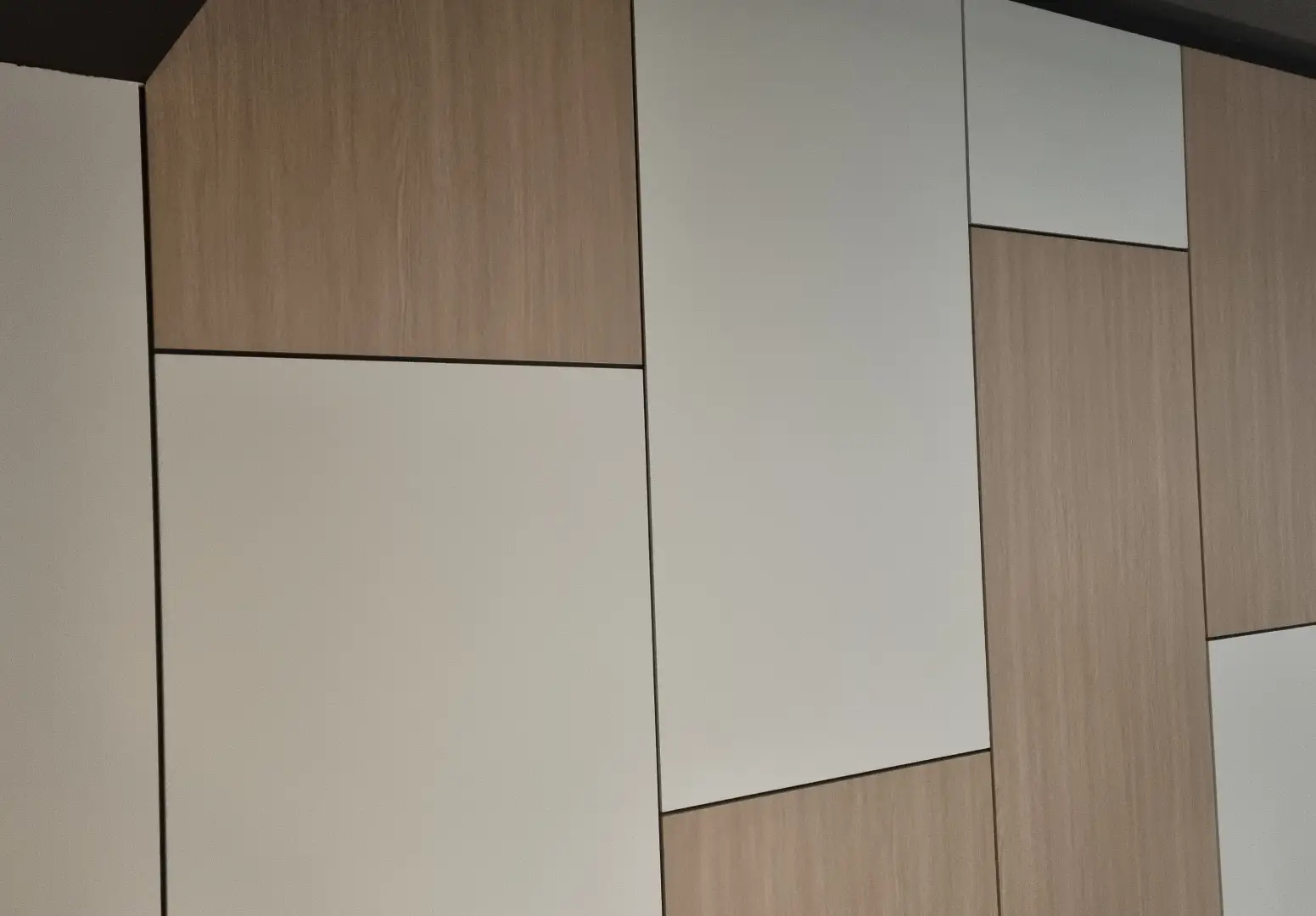
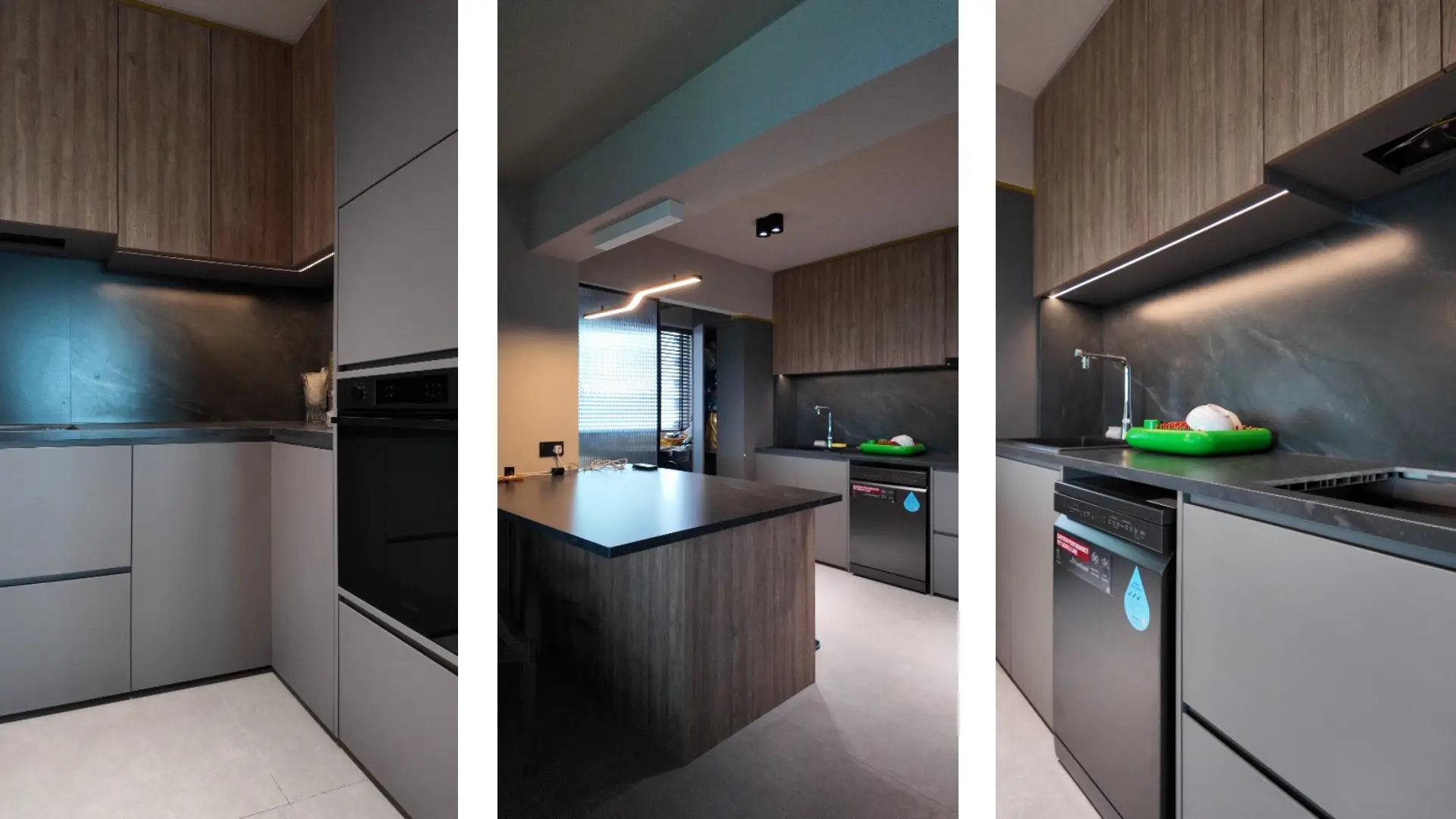
One advantage of aluminium cabinet systems is how easily two finishes can be combined on the same run of cabinets, since upper and lower cabinets — or the island versus the wall units — can be manufactured with different colours or finishes without compromising structural consistency.
Common two-tone combinations include:
If you’re planning a kitchen with an island, our article on custom aluminium kitchen cabinets with an island covers layout considerations that pair well with two-tone designs.
Rather than starting from “what colour do I like,” it’s worth working through these five factors first, since they narrow the options down to what will actually work well in your specific kitchen.
Kitchens with limited natural light — common in many HDB flats — generally look better with lighter colours or glossy finishes that reflect available light. Darker matte finishes can still work, but usually need stronger artificial lighting to avoid feeling flat or dim.
In smaller kitchens, lighter and glossier finishes create a sense of openness. In larger kitchens or those with an island, darker or bolder colours can be used more freely without making the space feel cramped, since there’s more surrounding negative space to balance it out.
If you cook frequently with oil or do a lot of wet-market prep, matte finishes are more forgiving day-to-day since they show fewer fingerprints and water spots than gloss finishes. Households with young children who touch cabinet surfaces often may also prefer matte for the same reason.
The cabinet colour doesn’t exist in isolation — it needs to work with your flooring, countertop, and backsplash. A general rule that works well in most Singapore homes: pick two of the three (cabinet, countertop, flooring) in neutral tones, and let the third carry more colour or texture.
If you’re renovating a home you plan to sell within 5-10 years, more neutral tones (white, light grey, light woodgrain) tend to appeal to a broader range of future buyers than very bold colours like navy or matte black.
While this guide focuses on aesthetics, finish choice does have some practical implications worth knowing:
None of these differences should be dealbreakers on their own — they’re more useful as a tiebreaker if you’re deciding between two finishes you like equally.
Choosing a colour purely from a small sample chip. Colours can look noticeably different at full cabinet scale and under your home’s actual lighting compared to a small physical sample or a screen. Where possible, ask your contractor for a larger sample panel or photos of the exact finish installed in a real kitchen.
Ignoring the kitchen’s orientation and lighting. A colour that looks great in a bright showroom under daylight-balanced lighting may look completely different under the warm-toned downlights common in Singapore kitchens.
Matching cabinets to current trends instead of the rest of the home. A striking colour might look great in isolation but clash with the flooring or living room finishes visible from an open kitchen layout.
Overlooking hardware and handle colour. Handle and hinge colour (chrome, black, brushed gold) significantly affects how a cabinet colour reads overall — the same cabinet colour can look completely different with black versus gold hardware.
@tse7en rattan drawer head with fluted glass door for cabinets with wainscoting design for landed kitchen renovation using aluminium but the same concept can also be done by our wooden carpentry joinery team as well #tse7en #aluminiumcabinet #cabinets ♬ original sound - T Se7en Alucraft | Singapore
In most cases, the surface finish is bonded or laminated onto the aluminium frame during manufacturing, so refinishing isn’t as straightforward as repainting a timber cabinet. It’s best to choose a colour and finish you’re confident about upfront, or consult your contractor about panel replacement options if you want to change the look later.
Scratches tend to be more visible on darker, especially glossy, surfaces because of the higher contrast against the underlying material. Matte finishes in any colour generally hide light surface marks better than gloss finishes.
Yes — the woodgrain pattern is a surface treatment, not a change to the underlying material, so durability is comparable to other aluminium cabinet finishes of the same type (powder-coated versus laminate/film).
Matte black and warm woodgrain tones are currently the two most requested finishes, though white and light grey remain the most common choice for buyers prioritising resale flexibility.
Yes, two-tone combinations are common and can be manufactured within the same cabinet system, such as a different colour or finish for the island versus the perimeter cabinets, or upper versus lower units.
The right aluminium kitchen cabinet colour and finish comes down to matching your kitchen’s lighting, size, and daily use with a look you’ll still be happy with years from now — not just what’s trending this season. Matte finishes offer the most forgiving day-to-day maintenance, woodgrain finishes bring warmth without the upkeep of real timber, and two-tone combinations offer a way to add personality without overcommitting to a single bold colour.
If you’re planning a kitchen renovation and want to see these finishes in person before deciding, get in touch with our team for a consultation — we can show you real finish samples and share examples from past projects similar to your kitchen layout.
Location: 39 Woodlands Cl, #05-21, Singapore 737856
Phone: +65 9615 9273
Email: marketing@tse7en.com
Website: https://www.tse7en.com
Follow Us on Social Media:
Speak to a professional now and get personalized consultation and guidance for your next renovation. Work with a team you can trust!
Home Blog HIP is HDB’s upgrading programme for older flats. It covers compulsory repairs such as concrete defects and ageing waste pipes at a very...