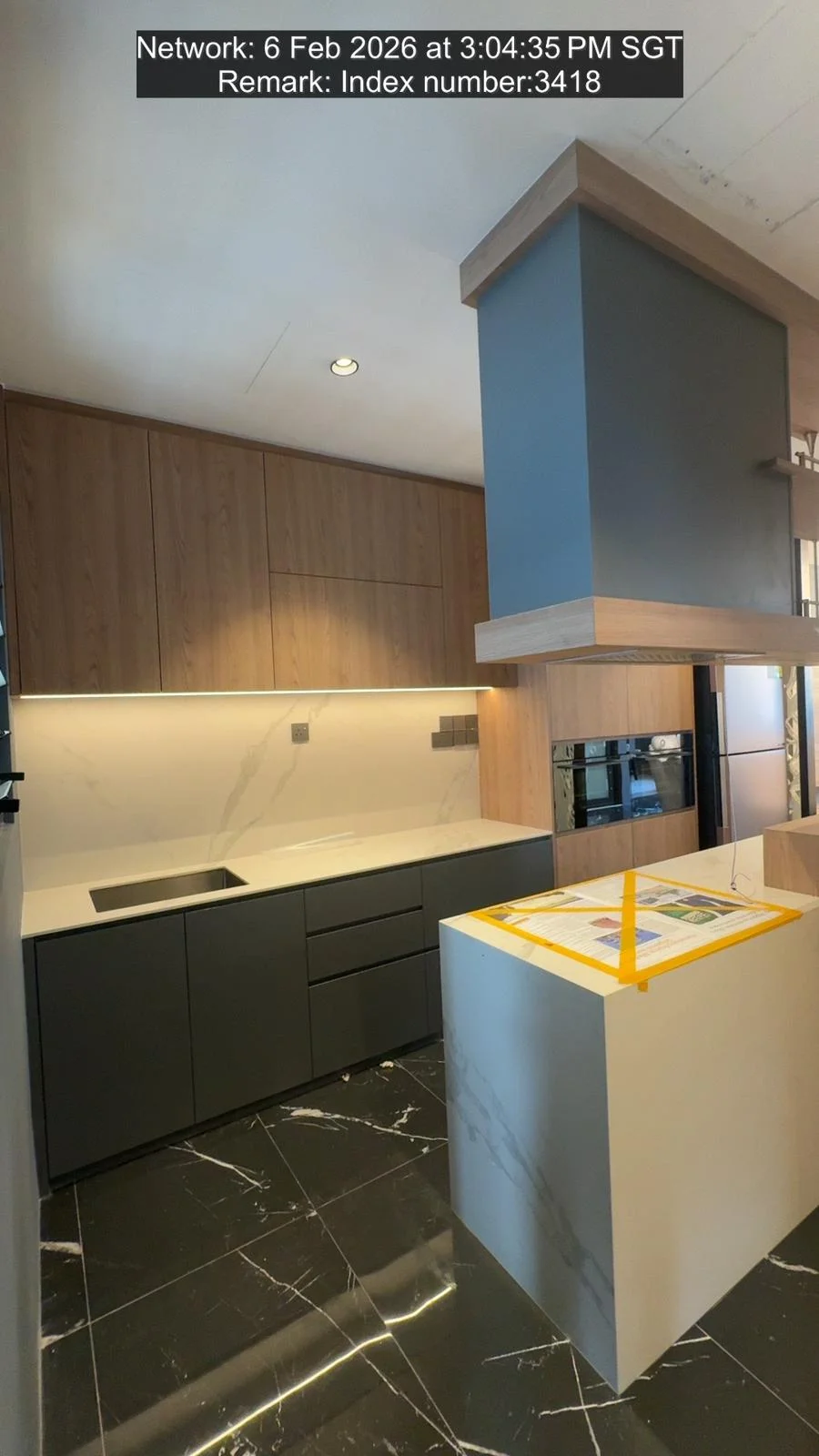
A custom kitchen cabinet with island should be planned around movement, storage, seating, and long-term material performance. In Singapore homes, aluminium cabinets are a practical option for kitchens because the material is not a cellulose-based food source for termites and aluminium naturally forms a protective oxide layer that improves corrosion resistance. The island should fit the room, not dominate it. It should support how you cook, clean, store, and move every day.
At T Se7en Alucraft, we design custom aluminium kitchen cabinets and islands for HDB flats, condos, and landed homes in Singapore. The goal is simple. Build a kitchen that looks clean, works smoothly, and stays practical over time.
@tse7en full house BTO renovation for aluminium kitchen cabinet, aluminium wardrobe, aluminium shoe cabinet with rotating shoe rack, HDB renovation upgrade should check this out #tse7en #aluminiumcabinet #aluminiumwardrobe #rotatingshoerack ♬ original sound - T Se7en Alucraft | Singapore
A kitchen island is not only a visual feature. It is a working cabinet system placed in the middle of the kitchen. It can add prep space, storage, seating, washing space, or appliance space. It can also improve workflow when it is planned correctly.
A poorly planned island creates the opposite result. It blocks movement. It reduces drawer access. It interrupts fridge clearance. It makes the kitchen look larger on paper but feel smaller in real use.
That is why island planning should start with function first. Before you choose the shape, colour, or countertop, define the main role of the island.
Will it be used for:
One island can handle more than one role, but every added function changes the cabinet design. A sink affects plumbing. Seating affects overhang and legroom. Appliances affect power points, ventilation, and internal storage.
If you are still comparing layouts, start with the guide on how to choose the right kitchen layout, including L-shape, U-shape, and island kitchens.
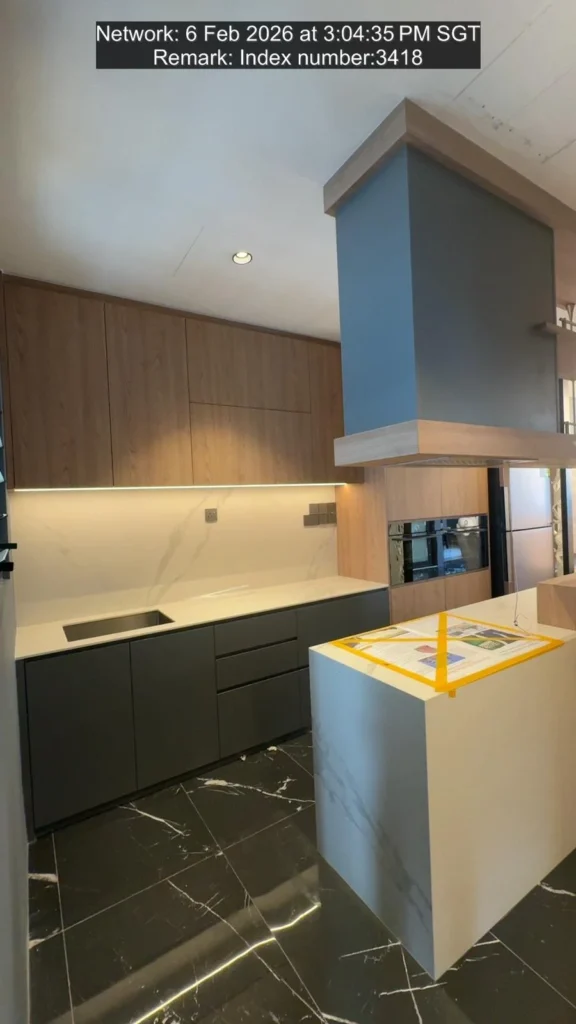
Singapore kitchens deal with daily exposure to humidity, water, steam, cooking residue, and frequent cleaning. Material choice matters because cabinets sit close to sinks, wet areas, service yards, and high-use worktops.
Aluminium is commonly chosen for kitchen cabinet systems because it is corrosion resistant and does not provide the cellulose termites feed on. That makes it a practical material for homeowners who want lower material-risk around moisture-prone areas and less concern about termite-related damage than with wood-based cabinet components.
This does not mean every aluminium cabinet is automatically the same. Cabinet performance still depends on design, fabrication quality, hardware choice, installation accuracy, and finishing details. The right question is not only “aluminium or wood?” The right question is “which cabinet system is best for this kitchen layout, this use case, and this level of daily wear?”
If you are comparing materials, read aluminium vs wood kitchen cabinets in Singapore. If your concern is wet areas, see waterproof aluminium kitchen cabinets.
A kitchen island works best when there is enough space around it for normal daily movement. The island should improve access, not create obstruction.
A good island layout should let you answer yes to these questions:
This is why real site measurement matters more than showroom impressions. Measure from the countertop edge, handle projection, appliance door swing, seating position, and walking path. Do not measure from the cabinet box alone.
For planning details, see kitchen cabinet site measurement and kitchen cabinet dimensions for Singapore HDB homes.
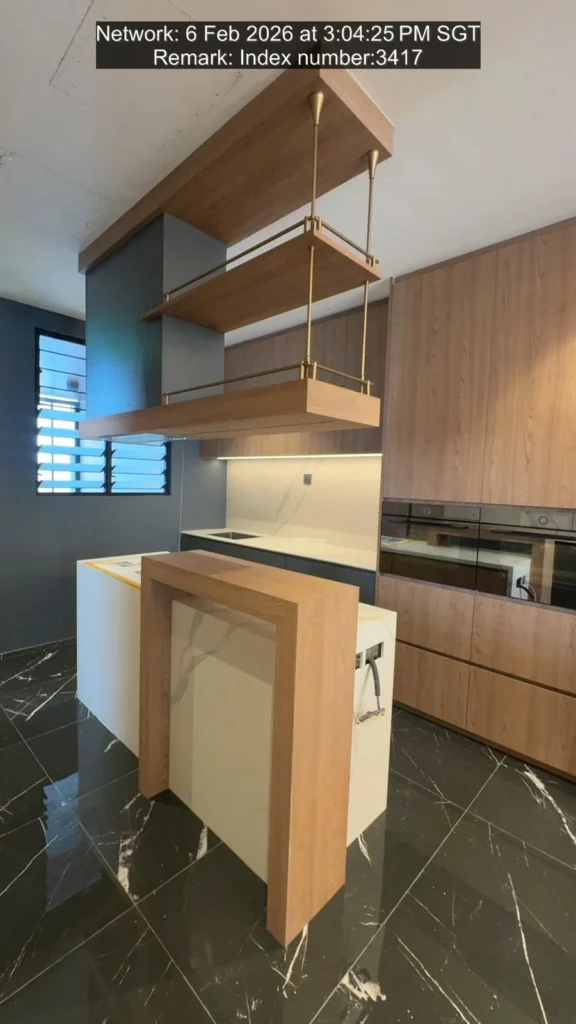
Not every kitchen should have a full island. In compact layouts, a peninsula may perform better.
A full island is usually better when:
A peninsula is usually better when:
This decision should be made before cabinet fabrication. Many homeowners choose an island because it looks premium, but a peninsula can be more efficient in smaller HDB or condo kitchens.
For smaller layouts, see small kitchen cabinet Singapore and kitchen cabinet planning tips for narrow HDB kitchens.
The first job of an island is to fit the room. Walkway problems are one of the most common reasons a new island feels wrong after installation. Check circulation with cabinet doors, drawers, stools, fridge doors, and appliances in use.
Decide early whether the island is mainly for drawers, door cabinets, pull-outs, open shelves, or integrated appliances. Storage planning should reflect daily use, not visual symmetry alone.
If the island includes seating, think beyond the idea of “bar stools.” You need comfortable legroom, enough overhang, safe circulation behind the stools, and a worktop height that matches the intended use.
A sink in the island can improve prep workflow, but it changes plumbing, storage, and cleaning patterns. A hob in the island can create a social cooking zone, but it may affect ventilation planning, splatter control, and worktop flexibility.
Microwave drawers, wine chillers, dishwashers, and power points can all be built into an island. Each addition changes cabinet depth, internal storage, power access, and servicing requirements.
Some islands are mainly for prep. Some are for serving. Some are for dining. Some try to do all three. The more roles you combine, the more carefully the layout needs to be balanced.
For most households, drawers are more practical than deep door cabinets in an island. Drawers make it easier to organise and reach cookware, utensils, containers, tableware, and pantry items. A deep cabinet with shelves can hold large items, but it often creates less visible and less efficient storage.
A practical island often uses a mixed storage system:
The best storage mix depends on how the kitchen is used. A family that cooks daily needs different island storage from a homeowner who mostly reheats food or entertains guests.
For more storage ideas, see kitchen storage cabinets. For detail upgrades, explore bespoke aluminium accessories.
The material decision should be made around environment, maintenance expectations, and lifespan goals.
Aluminium cabinets are often chosen when the homeowner wants a cabinet system that is less vulnerable to moisture-related material movement than many wood-based options and not vulnerable to termite feeding. Wood-look finishes can still be achieved through the surface finish, but the base cabinet system behaves differently from conventional wood-based construction.
Wood-based cabinet systems may still be suitable in some kitchens, especially when the kitchen is dry, the fabrication standard is high, and the homeowner prefers a specific finish or cost structure. The right comparison is not emotional. It is functional.
Ask these questions:
For a full comparison, see aluminium vs wood kitchen cabinets in Singapore.
Before you confirm a quotation, make sure these questions are answered clearly:
A kitchen island should solve daily problems. It should not create new ones.
Use the kitchen cabinet quotation checklist for Singapore before signing. You can also review the kitchen renovation timeline to understand what happens before fabrication, during installation, and after completion.
T Se7en Alucraft designs custom aluminium kitchen cabinets and islands around real site conditions, storage habits, movement planning, and Singapore’s home environment. The focus is not only on how the kitchen looks after renovation. The focus is on whether the cabinet system works well every day.
Homeowners typically look for practical layout advice, accurate site measurement, durable cabinet materials, and storage planning that matches real use. That is the role of a custom-built island. It should fit the room, support the workflow, and stay easy to maintain over time.
If your project includes a wider kitchen upgrade, you can also review kitchen renovation Singapore. For larger projects, explore full home renovation in Singapore or bathroom renovation Singapore.
A kitchen island should do more than fill space. It should improve movement, storage, seating, and daily workflow.
The right island size depends on how your kitchen is used, how much clearance the room can support, and whether the cabinet system matches the conditions of the home. In many Singapore kitchens, aluminium cabinets are a practical choice because they suit moisture-prone environments, reduce termite-related material concerns, and support long-term everyday use.
Before fabrication starts, the important questions are simple. Does the island improve circulation? Does it solve a real storage need? Does it support the way you cook, clean, and move through the kitchen every day?
At T Se7en Alucraft, we design custom aluminium kitchen cabinets and islands around actual site measurements, layout constraints, and homeowner habits. Whether you are planning for an HDB flat, condo, or landed home, the goal is the same: a kitchen that fits the space, works smoothly, and stays practical over time.
For personalised planning, book a cabinet design consultation before fabrication begins.
That depends on the kitchen environment and the homeowner’s priorities. Aluminium is a strong practical choice for many Singapore kitchens because it is corrosion resistant and not a cellulose food source for termites. It is especially relevant when moisture exposure and long-term maintenance are major concerns.
The kitchen is big enough for an island only if the island improves movement instead of restricting it. Check real circulation with countertops, drawer openings, appliance swing, handle projection, and stool positions included in the measurement.
In many kitchens, yes. Drawers usually make everyday storage easier to organise and access. Door cabinets still have a role for bulky items, but an island that uses mostly drawers often feels more efficient in daily use.
Often, yes. A peninsula can add worktop and storage space while using less circulation room. It is often the better solution when the kitchen cannot support clear access around all four sides of a full island.
Yes, but the design has to balance overhang, legroom, cabinet depth, and walkway space. A good island should let people sit comfortably without reducing cabinet access or blocking movement.
Yes. T Se7en Alucraft designs custom aluminium kitchen cabinets and islands based on actual site measurements, usage habits, and renovation goals for HDB flats, condos, and landed homes in Singapore.
Speak to a professional now and get personalized consultation and guidance for your next renovation. Work with a team you can trust!
Home Blog HIP is HDB’s upgrading programme for older flats. It covers compulsory repairs such as concrete defects and ageing waste pipes at a very...