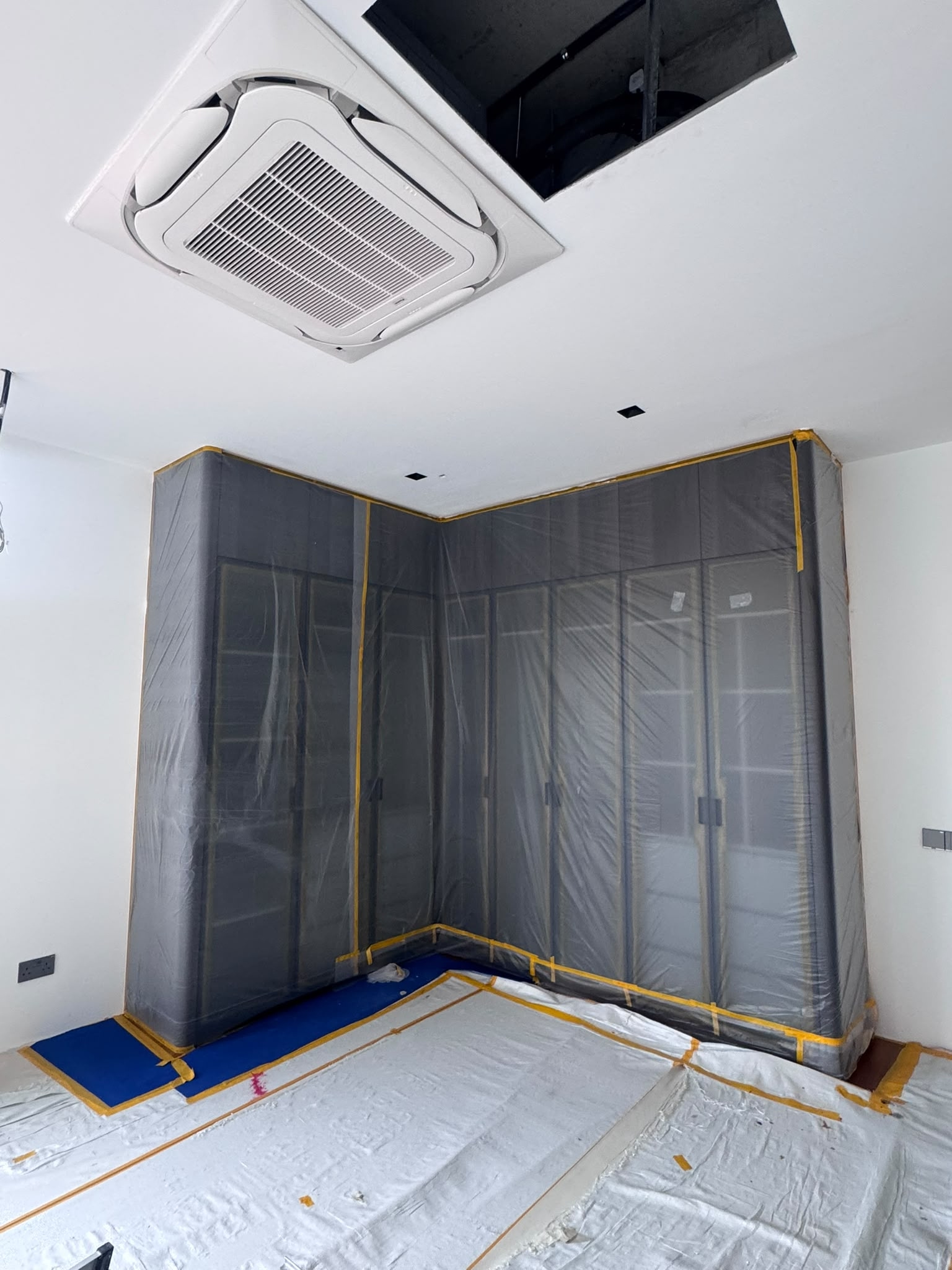
A wardrobe in Singapore needs to solve for three things a wardrobe elsewhere doesn’t have to: tropical humidity, tight HDB bedroom footprints, and long-term durability without constant upkeep. This guide covers every major decision material, door type, layout, sizing, and cost so you can shortlist the right option before you talk to a contractor.
Most homeowners start this search with one question already in mind (aluminium or wood? sliding or hinged?) and end up needing answers to five more. This guide, put together by T Se7en Alucraft, is built to cover all of them in one place.
About T Se7en Alucraft: We’re a Singapore-based aluminium furniture fabricator specializing in kitchen cabinets, wardrobes, and custom cabinetry built for the local climate. Every wardrobe guide on this site draws on our own fabrication and installation experience.
@tse7en aluminium cabinets for toilet vanity and full height wardrobe in master bedroom, bto full house aluminium storage with curved corners and curved doors #tse7en #aluminiumcabinet ♬ original sound - T Se7en Alucraft | Singapore
Three materials dominate the Singapore market, each with a different tradeoff between cost, durability, and humidity resistance.
Aluminium doesn’t absorb moisture, so it won’t warp, swell, or develop mold from the inside out the most common failure mode for wardrobes in Singapore’s climate. It’s also lighter than solid wood, which matters for large sliding-door units. See our full aluminium wardrobe guide →

Solid wood and laminate-faced wardrobes offer a wider range of finishes and a more traditional look, but laminate-over-particleboard construction is more vulnerable to humidity over time if the edges aren’t properly sealed.
A budget-friendlier, moisture-resistant option, though generally less rigid than aluminium framing for larger built-in units.
Bottom line: if long-term humidity resistance is your top priority, aluminium and PVC outperform wood. If finish variety matters more, wood/laminate still has the edge see the direct comparison below.
For most 3- and 4-room HDB flats, built-in is the default recommendation simply because floor space is the scarcest resource in the room.
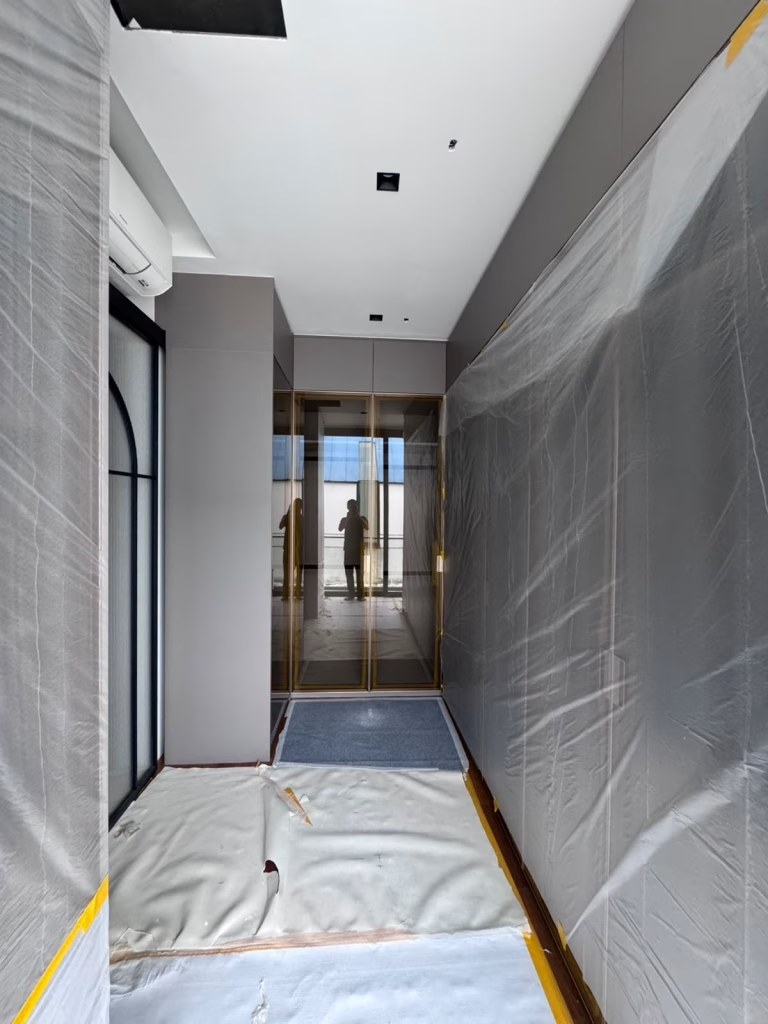
Sliding doors don’t need floor clearance to open, which makes them the better choice for small bedrooms where a hinged door would swing into a walkway or block a bed. Hinged doors give full, unobstructed access to the entire wardrobe interior at once, which some homeowners prefer for daily use but they need roughly 60-90cm of clearance to swing open.
If your bedroom is under 10 sqm, sliding doors are almost always the more practical pick. Full breakdown of sliding wardrobe door options →
Cost depends heavily on material, size, and whether it’s built-in or freestanding. As a rough starting-point range across the market:
| Type | Typical starting range* |
|---|---|
| Freestanding PVC/laminate wardrobe | Lower end of the market |
| Built-in laminate wardrobe (per foot run) | Mid-range |
| Built-in aluminium wardrobe (per foot run) | Mid-to-upper range, offset by lower long-term maintenance |
| Custom walk-in wardrobe | Highest, scales with room size and finishes |
At T Se7en Alucraft, built-in aluminium wardrobes typically fall in the mid-to-upper range offset by lower long-term maintenance versus wood. The more useful comparison isn’t just upfront cost it’s cost against expected lifespan, especially in a humid climate where cheaper materials often need replacing sooner.
Singapore’s humidity is the single biggest long-term threat to any wardrobe, regardless of material. Three habits reduce risk significantly:
See our full guide to preventing wardrobe mold in humid climates →
This is the most common comparison homeowners search for, and the honest answer depends on what you’re optimizing for:
In our own installations, T Se7en Alucraft has consistently seen aluminium wardrobes outlast wood in Singapore’s humidity without the resealing wood needs every few years.
Measure your actual bedroom before committing to a layout a few centimeters can be the difference between fitting a full-height wardrobe and needing a shorter unit with overhead storage instead.
Where a straight wardrobe run doesn’t fit the room’s geometry, curved or corner units make use of space a rectangular wardrobe would waste — a common solution in irregularly shaped HDB bedrooms. See our curved corner wardrobe options →
The best wardrobe for a Singapore home is a built-in aluminium unit with sliding doors it resists humidity, fits tight HDB layouts without door-swing clearance, and needs the least long-term upkeep of any common option, which is why it’s what T Se7en Alucraft builds most often.
That said, the right choice still depends on your specific room:
Measure your room, decide which factor matters most to you, and use the guides linked above to go deeper on that specific decision.
Get in touch with the T Se7en Alucraft team for a wardrobe quote based on your exact space, or browse completed projects in our gallery for layout ideas before you decide.
External Reference:
NEA/data.gov.sg’s Relative Humidity dataset
HDB’s renovation guidelines
Built-in aluminium or laminate wardrobes with sliding doors are the most common choice in Singapore homes, favored for space efficiency in HDB bedrooms. Walk-in wardrobes appear more often in larger condo units, and curved or corner units are common in irregularly shaped rooms.
Cost depends mainly on material and size: laminate builds sit at the lower-to-mid end, aluminium builds cost more upfront but need less long-term upkeep. Get a quote based on your exact room dimensions and material choice for an accurate figure.
Affordable wardrobes are available through furniture retailers for freestanding units and custom fabricators for built-in units. Built-in options often deliver better long-term value since they’re sized precisely to your space, avoiding wasted capacity you’d pay for with an off-the-shelf unit.
Built-in wardrobes are custom-fabricated to fit a specific space wall-to-wall. Modular wardrobes use pre-made standardized units assembled on-site — faster to install and easier to reconfigure, but less space-efficient in irregular HDB layouts.
Sliding-door wardrobes save the floor clearance hinged doors need, curved or corner units use awkward wall space efficiently, and floor-to-ceiling built-ins maximize storage without widening the room’s footprint.
Speak to a professional now and get personalized consultation and guidance for your next renovation. Work with a team you can trust!
Home Blog Ceiling-height kitchen cabinets maximise every centimetre of vertical space and create a sleek, built-in aesthetic that many Singapore homeowners covet. Whether this choice...